
Big Tech crash, oil volatility rattles markets: Will Bitcoin hold above $60K?

Key takeaways:
- Surging oil prices and rising producer inflation have pushed traders to price in a stricter US Fed monetary policy.
- Massive spot Bitcoin ETF outflows in June show the cryptocurrency is currently failing to act as a stock market hedge.
The Nasdaq 100 Index dropped 7.5% in the seven days leading up to June 10, wiping out $2.7 trillion in market value. The fallout represents more than twice the entire Bitcoin (BTC) market capitalization and has put traders on , especially as inflation data feels the heat from high oil prices. Traders now fear that Bitcoin support near $60,000 stands at risk.
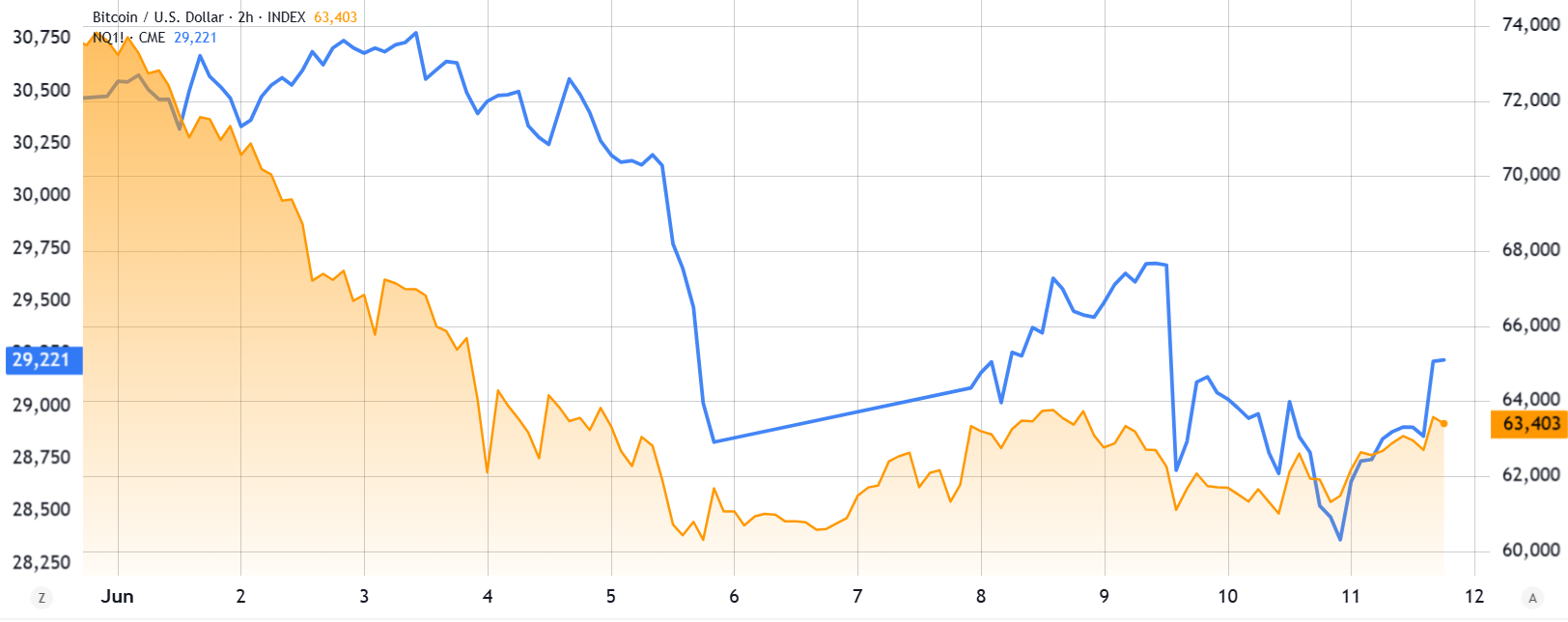
Nasdaq 100 futures (left) vs. Bitcoin/USD (right). Source:
The ongoing war in Iran has driven Brent crude oil prices above $90, prompting investors to fear an economic slowdown and to price in a tighter monetary policy for longer than previously anticipated. Regardless of job market conditions, money available for consumption tends to decline.
The US Labor Department reported Thursday that its producer price index jumped 6.5% from May 2025, the highest level since 2022. Traders now anticipate 40% odds of an interest rate increase by the US Fed by September, up from 5% one month prior, according to the CME FedWatch Tool.
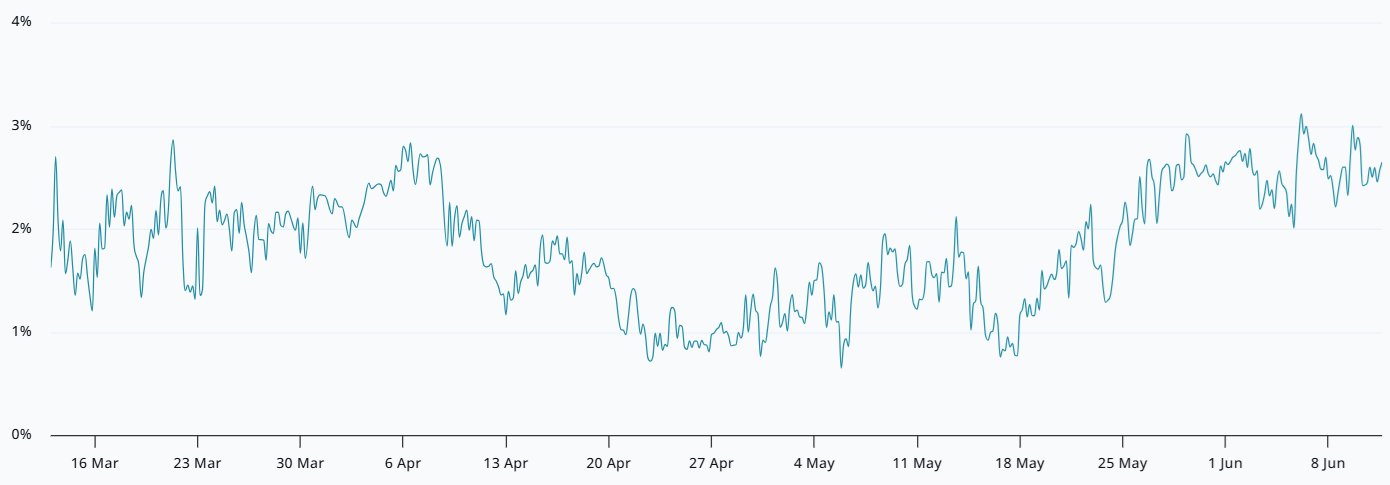
Bitcoin 2-month futures annualized basis rate. Source:
Bitcoin futures contracts traded below the 4% neutral premium relative to regular spot markets on Thursday, indicating low demand for bullish leverage. Meanwhile, the upcoming $75 billion SpaceX (SPCX US) IPO was oversubscribed by more than 2x, signaling investors are not yet ready to abandon hope of further tech sector growth.
AI infrastructure companies are in desperate need of cash to fuel their build-outs, which partially explains the negative market reaction. Google (GOOG US) announced plans to raise $80 billion, while Oracle (ORCL US) and Super Micro Computer (SMCI US) followed suit with $40 billion and $7 billion, respectively. The Friday debut of SpaceX shares will likely set the tone for upcoming IPOs.
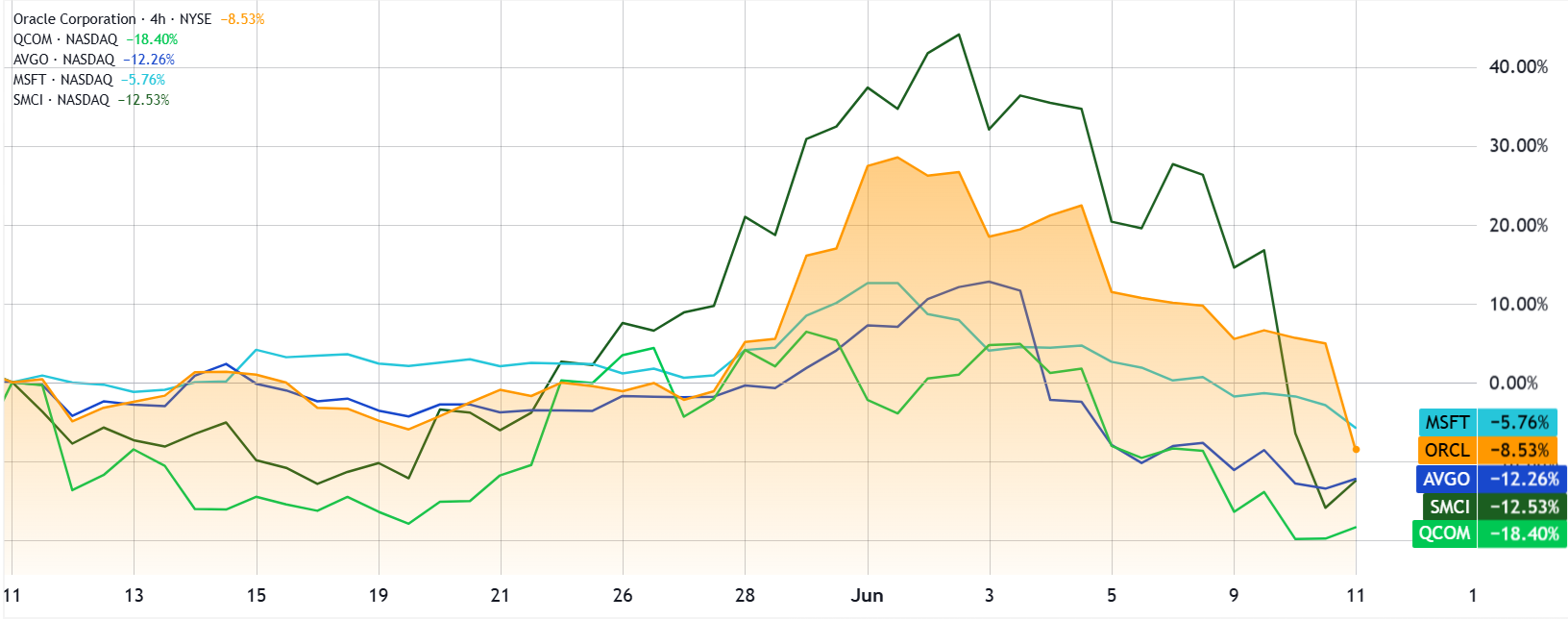
Selected AI sector stock performances. Source: TradingView & Cointelegraph
It seems premature to deem the AI sector a bubble after SpaceX marked the largest IPO in history at a $1.77 trillion valuation. Moreover, the US stock market reacted positively after US President Donald Trump called off planned strikes on Iran, citing renewed negotiations to reopen the Strait of Hormuz.
Strategy accumulation pause amid spot Bitcoin ETF outflows
Bitcoin’s decline coincided with Strategy’s (MSTR US) decision to temporarily halt its Bitcoin accumulation to reduce convertible debt. As a result, Strategy’s cash position declined to seven months of dividend coverage, while its preferred variable Stretch (STRC US) shares distanced themselves from the $100 level that would allow further equity issuance.
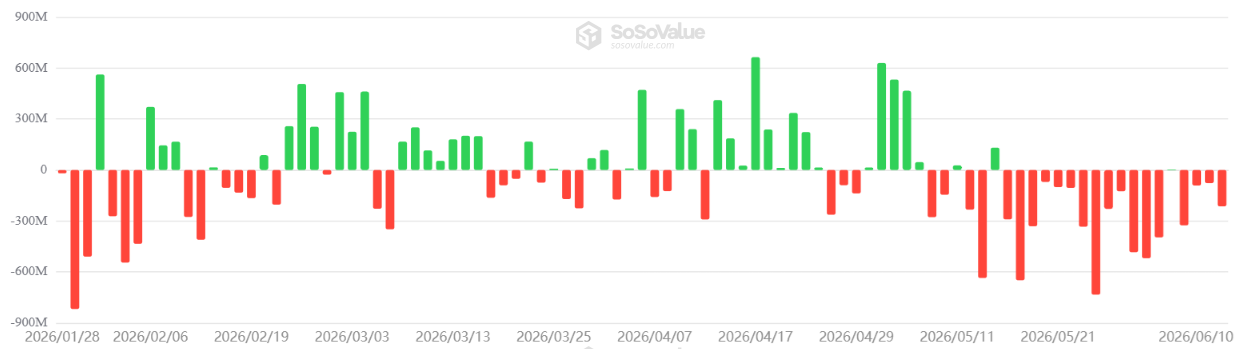
US-listed Bitcoin spot ETFs daily net flows, USD. Source: SoSoValue
The $1.9 billion in outflows from spot Bitcoin exchange-traded funds (ETFs) in June reinforced bearish sentiment, as the indicator serves as a proxy for institutional demand. Presently, Bitcoin can hardly be considered a hedge against an eventual stock market sell-off; the odds of a further correction below $60,000 should not be ruled out.
Disclaimer: The content of this article solely reflects the author's opinion and does not represent the platform in any capacity. This article is not intended to serve as a reference for making investment decisions.
You may also like
Federal Reserve meeting minutes: All 19 policymakers support a rate hike in September, but reasons vary; most expect further hikes this year, suggesting no urgency in October.
Most officials view a September interest rate hike as an "insurance" measure against stubborn inflation; a minority see it as a necessary step to curb inflation. Overall, there is no indication of a desire to push for consecutive rate hikes. The "New Fed News Agency" emphasized the minutes: "Most participants believe that it may be appropriate to raise interest rates again before the end of the year." Nearly all officials believe inflation remains elevated and the labor market is close to full employment. Many noted that, despite the rise in long-term U.S. Treasury yields, financial conditions are still conducive to economic growth. Some officials believe that AI will boost investment and productivity, but may also contribute to inflation. The minutes revealed that the U.S.-Japan joint intervention in July to support the yen was a U.S. Treasury action, with no Federal Reserve funds used.
Solana Consolidates After Sharp Expansion
FLOKI Recovery Tests Key Resistance
100 Million Barrels Shrinkage? Reports Say EU Believes Oil Reserve Release Plan Mainly Fulfills Previous Commitments, Not New Quotas
Last Friday, G7 member countries agreed to release up to 100 million barrels of crude oil and diesel reserves. The IEA had announced a plan to release 400 million barrels in March, and as of last Friday, about 75 million barrels had yet to be released. Most EU member states believe that this action is simply fulfilling previous commitments rather than adding new releases. Regarding the earlier-than-scheduled release of diesel stocks emphasized in last week's G7 agreement, EU member states consider it feasible, but on a limited scale.
Crypto prices
More


