

- Bitcoin ETFs posted five straight outflow sessions, yet BTC remained stable near key price levels.
- The Ethereum ETFs also saw continued outflow, with more general investor wariness.
- Ethereum ETFs also recorded continued outflows, reflecting broader caution among institutional investors.
Bitcoin Liquidity Shrinks as institutional investors reduced ETF exposure while Bitcoin traded near $63,600. Meanwhile, exchange withdrawals continued, reducing available supply despite steady market performance.
ETF Withdrawals Continue Across Bitcoin and Ethereum
A recent update from analyst continued withdrawals from spot Bitcoin ETFs. Net outflows reached $19.03 million on June 11. The figure marked a fifth consecutive day of outflows.
Spot Ethereum ETFs also experienced another session of withdrawals. Net outflows totaled $15.89 million during the same period. That extended Ethereum’s negative streak to three days.
The reported data showed caution among traditional investment participants. Capital left both Bitcoin and Ethereum investment products. However, the withdrawals remained relatively modest overall.
Bitcoin maintained stability despite the sustained ETF outflow trend. Market prices avoided major downside pressure during the period. This created a divergence between price action and institutional flows.
Exchange Outflows Point to Ongoing Accumulation
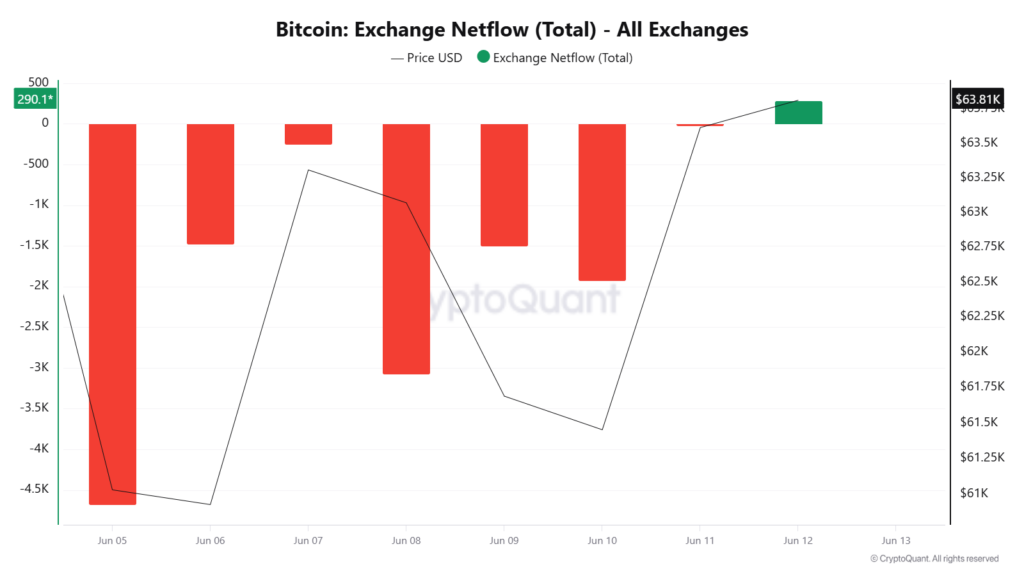
CryptoQuant data revealed substantial Bitcoin withdrawals from exchanges. The largest daily outflow approached 4,700 BTC on June 5. Additional withdrawals followed during several subsequent sessions.
 Source:
Negative exchange netflows often indicate declining immediate selling supply. Investors typically move assets into custody or private wallets. As a result, fewer coins remain available for trading.
Bitcoin declined toward the $61,000 area during early June. Despite weaker prices, exchange withdrawals remained elevated. Market participants continued removing coins from trading platforms.
The consistency of these withdrawals suggested ongoing accumulation activity. Exchange balances gradually declined throughout most of the week. Available Bitcoin supply became increasingly constrained across venues.
Price Recovery Meets Changing Supply Conditions
Bitcoin also had a significant bounce back after June 10. The asset climbed from roughly $61,500 toward $63,600. Exchange flow activity also began stabilizing during this rebound.
Netflows approached neutral levels on June 11. Deposits and withdrawals appeared relatively balanced that day. The shift contrasted with earlier heavy withdrawal activity.
June 12 introduced the first positive netflow reading. Approximately 290 BTC moved onto exchanges during the session. The inflow remained small compared with previous withdrawals.
Even so, cumulative outflows continued exceeding recent inflows by a wide margin. Bitcoin exchange balances remained lower across the observed period. The combined data reflected resilient holding behavior despite continued ETF withdrawals.


