
Crypto market treads thin ice following Warsh FOMC, Trump Iran comments

Key takeaways:
- Bitcoin remains under pressure from $2.1 billion in ETF outflows in June and an ongoing discount relative to global Bitcoin/USDT pairs.
- Strategy’s STRC stock shows weakness, highlighting growing concerns over monthly dividend obligations and share dilution.
The US stock market traded down on Wednesday after President Donald Trump said the memorandum of understanding with Iran was not final. Investors fear that oil flows through the Strait of Hormuz will not clear quickly, which adds further pressure on inflation. Is the stock market and Bitcoin (BTC) at risk?
The US and Iran are expected to formally sign an agreement on Friday, starting a 60-day negotiation period. On Wednesday, Trump said the deal should please the markets and that oil prices might fall. However, the US President threatened further bombings if Iran did not “behave.”
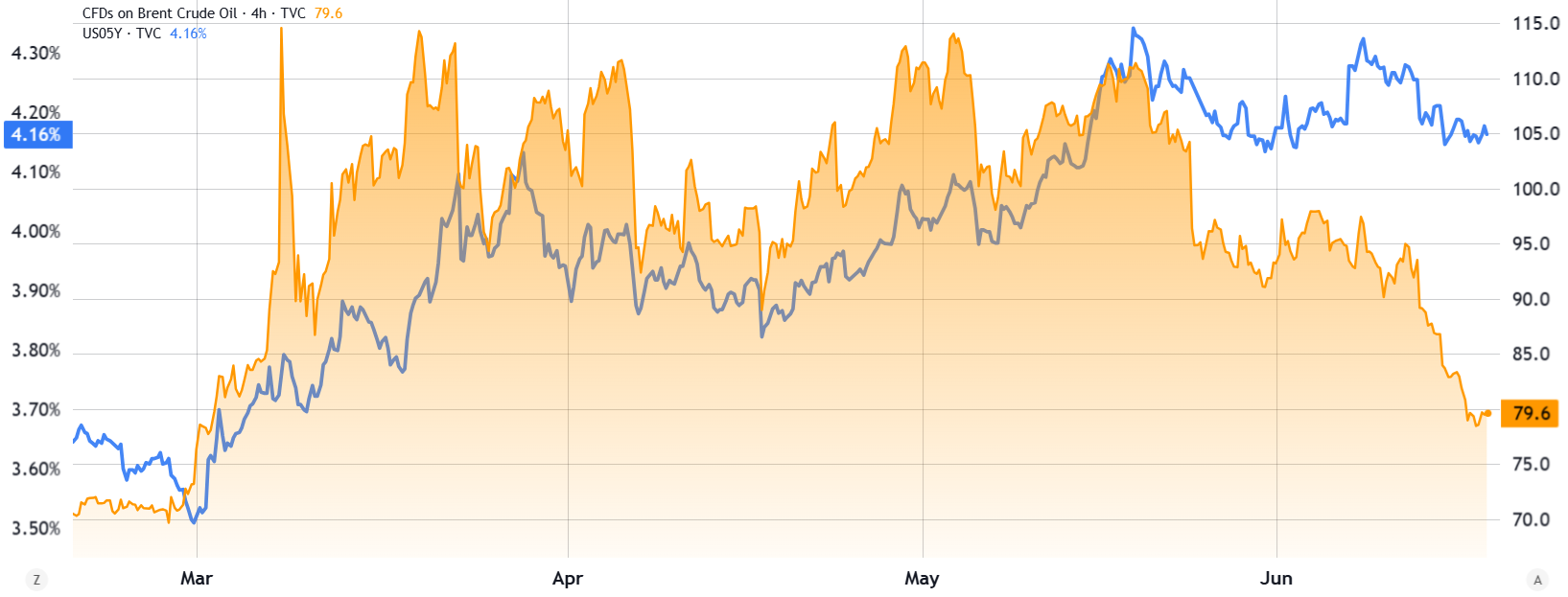
US 5-year Treasury yield vs. crude Brent oil, USD. Source: TradingView
Crude Brent oil fell to its lowest level in 100 days, but traders doubt fuel prices will continue to weigh on markets for long. Yields on US Treasuries remained at 4.16%, flat from two weeks prior. Investors are less confident in the US Federal Reserve’s ability to cut interest rates soon, thereby demanding higher returns on government bonds.
Impact of higher inflation amid weak institutional Bitcoin demand
US retail sales data released on Wednesday showed 6.9% growth from May 2025, but the rise likely reflects higher costs of goods such as fuel. In parallel, Wednesday marked the first Fed Committee meeting by Chair Kevin Warsh. The decision to hold interest rates steady was largely expected, but investors will try to discern Warsh’s views and personal credibility.
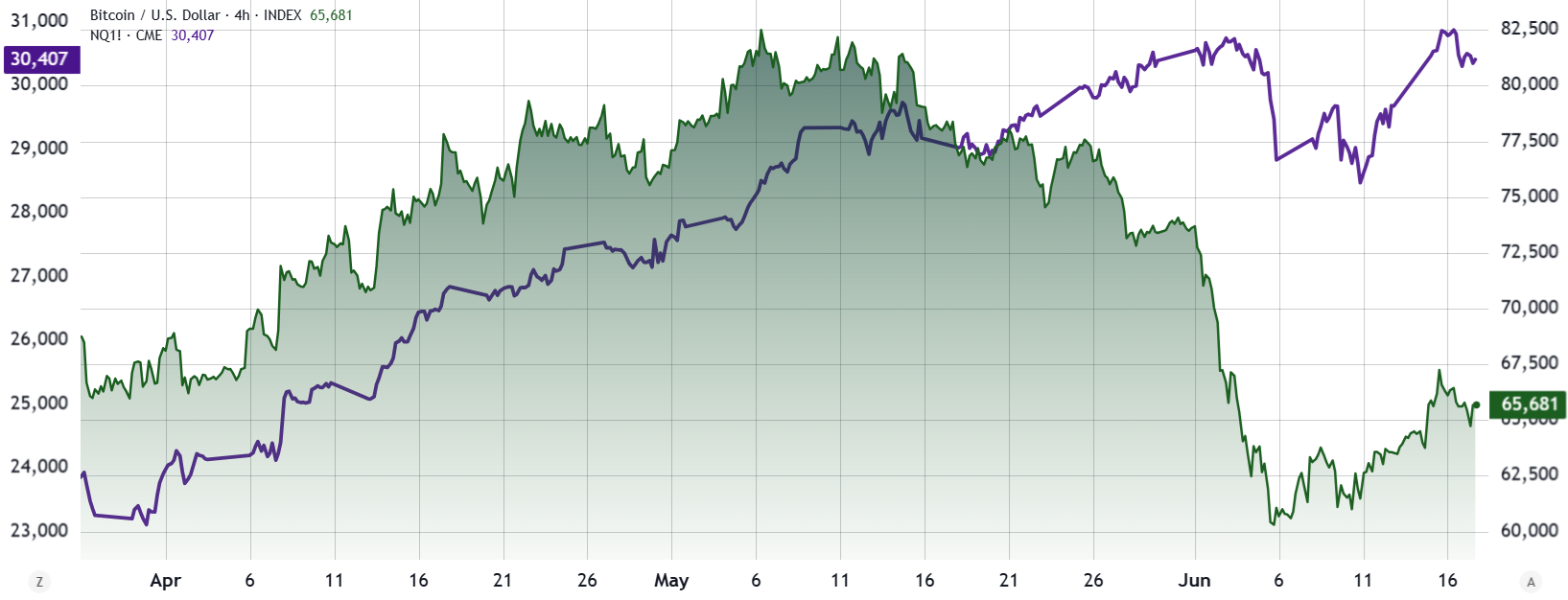
Nasdaq-100 futures (left) vs. Bitcoin/USD (right). Source: TradingView
The tech-heavy Nasdaq-100 Index traded 2% below its all-time high, while Bitcoin has failed to hold above $80,000 since mid-May. Bitcoin traders’ skepticism partly stems from a lack of inflows into spot exchange-traded funds (ETFs) and the absence of a Coinbase premium relative to international exchanges, signaling weak demand from institutional investors.
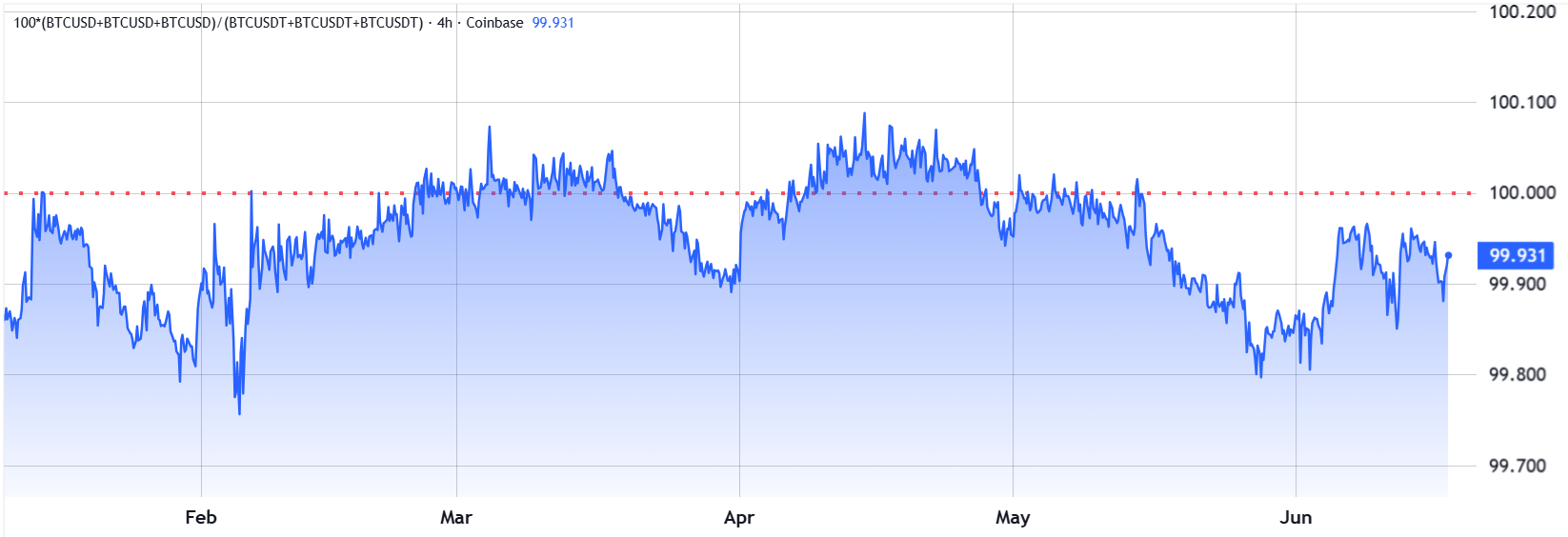
Coinbase Bitcoin USD vs. international USDT prices. Source: TradingView Cointelegraph
Coinbase Bitcoin price in USD has traded at a discount versus international exchanges based in USDT for the past five weeks. Meanwhile, the US-listed spot Bitcoin ETFs have seen $2.1 billion in net outflows so far in June. The recent weakness in the Strategy preferred perpetual equity Stretch (STRC US) has further fueled the negative sentiment.
Related: Bitcoin tops $67K following US-Iran peace deal: Is it a bull trap?
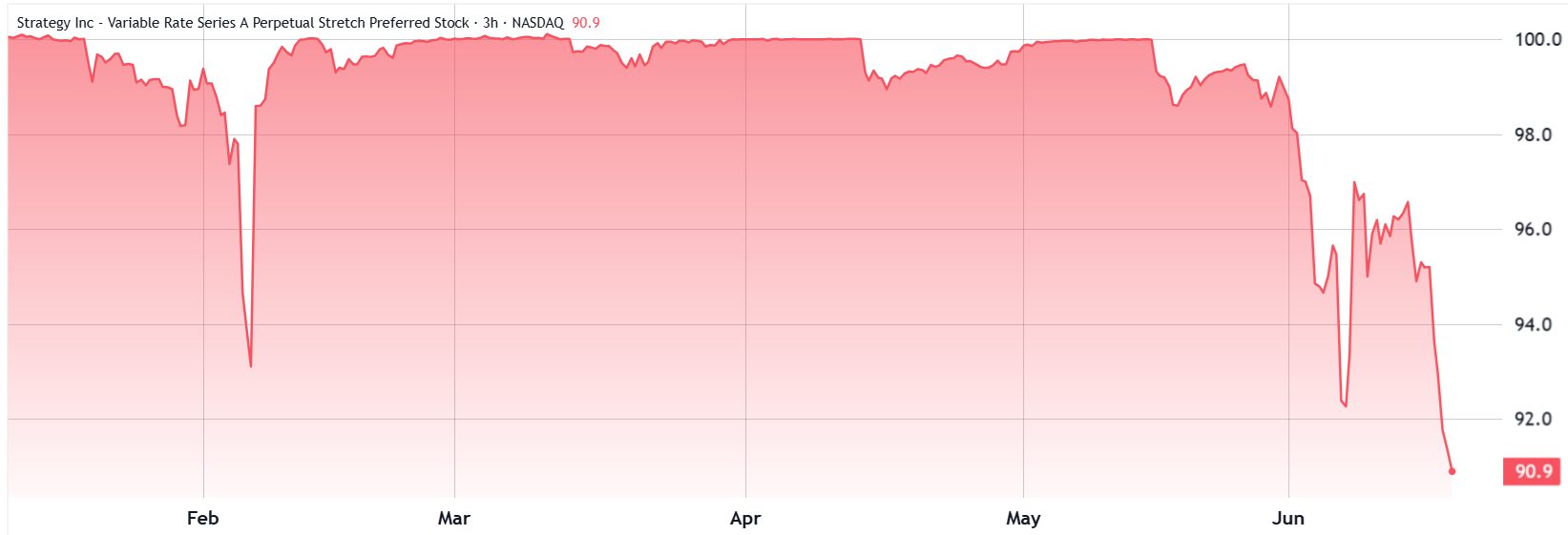
Strategy preferred perpetual equity Stretch (STRC US). Source: TradingView
STRC offers holders an 11.5% yield, but new stock issuance can only happen at the fixed $100 price. Consequently, Strategy has less room to pay $142 million in cash dividends each month, forcing dilution of MSTR holders by issuing more shares or reducing its USD cash reserves, which are currently at $1.1 billion. The total preferred shares issued by Strategy stand at $15.5 billion.
There is no evidence that Strategy will be forced to sell any of its Bitcoin reserves anytime soon, but weakness in the STRC price reflects low confidence in the company’s financial leverage. Even if Bitcoin institutional inflows resume, investors fear that the deal between the US and Iran might not go through, hence a sustainable rally to $80,000 could take longer.
Disclaimer: The content of this article solely reflects the author's opinion and does not represent the platform in any capacity. This article is not intended to serve as a reference for making investment decisions.
You may also like
Matt Hougan Says “Zombie Altcoins Will Disappear,” Citing One Altcoin as a Major Exception
Republicans criticize AI danger claims, Democrats question the influence of "big tech" on the Trump administration's AI policy and demand disclosure of regulatory framework amendment procedures
A Republican senator sent a letter to the CEO of Anthropic, warning against adopting an "alarmist" attitude towards AI and urging him to emphasize AI's potential to improve people's lives, enhance national security, and address AI threats. Meanwhile, two Democratic senators wrote to U.S. government officials, including the Treasury Secretary, requesting clarification on whether tech giants influenced the government's adjustment of the AI regulatory framework through lobbying between May and June of this year, and called for the disclosure of records of communication between companies and the government.

Houthi Forces Strike Saudi Arabia, Hormuz Oil Tanker Attacked Again, but Saudi Arabia Says Key Oil Pipeline Operations Restored Over 80%
The Yemeni Houthi forces claimed to have launched three rounds of attacks against Saudi Arabia on Monday, including strikes on the capital's airport; on Tuesday, they launched dozens of attacks on Saudi-backed armed groups, killing or wounding more than 200 people. Saudi Arabia reported that two airports were hit. The Saudi Energy Minister stated that as of Tuesday, the east-west oil pipeline throughput had recovered to 5.8 million barrels per day. On Tuesday, the UK Maritime Trade Operations reported that a tanker leaving the Strait of Hormuz was hit by an unidentified flying object. The Shell CEO stated that Middle Eastern oil flows have recovered to about 80% of pre-Iran conflict levels.
British Pound catches bid as BoE hawk warns inflation is embedded
Crypto prices
More


