
Hedging Strategies for Import and Export Enterprises: Importers Edition

Morning FX
1. The market environment is very favorable for companies needing to purchase foreign currency
This year may be the most comfortable year in the past decade for companies conducting foreign currency purchases. RMB appreciation, deep swap discounts, RR at historical lows, and the removal of forward FX risk reserve requirements—multiple rare factors are all neatly in favor of currency buying.
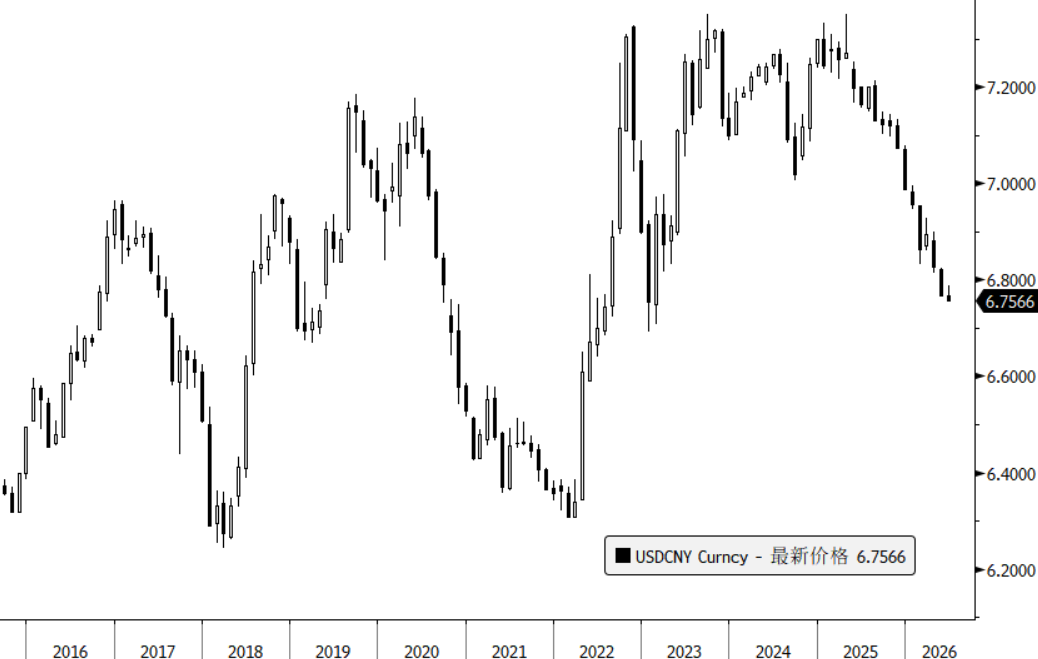
RMB appreciation: Since last year, USDCNY has shown a relatively moderate trending bull market.
Deep swap discounts: The key difference in this appreciation cycle versus 2020. In 2020, the one-year USDCNY swap points were +1700 pips, now it is -1700 pips.
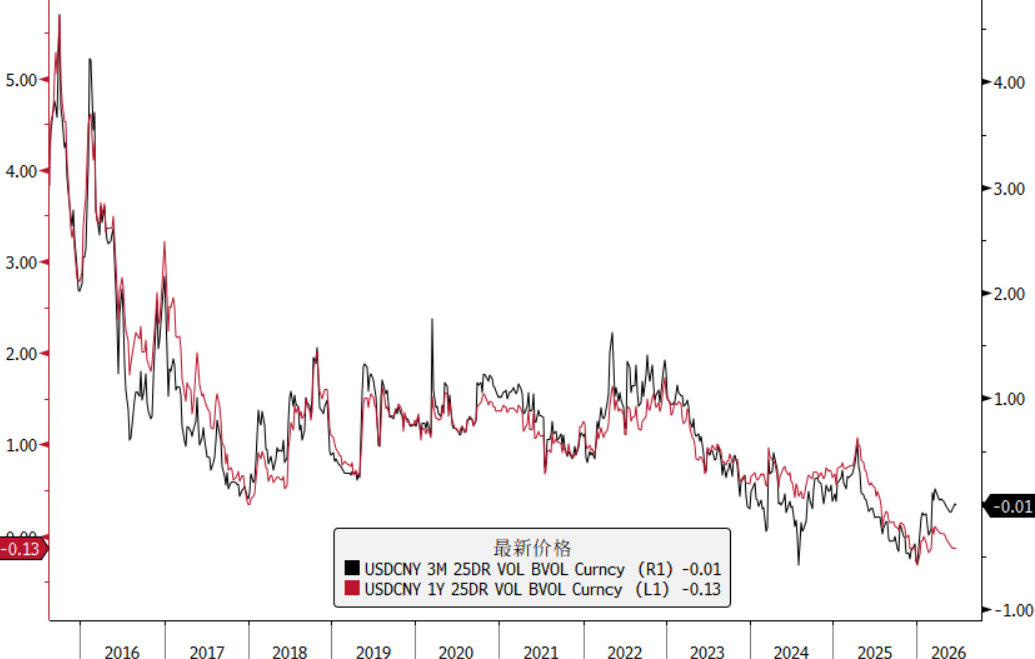
RR at historical lows: Option market sentiment is strongly bullish on the RMB, with USDCNY RR at its lowest since the 2015 exchange rate reform, meaning call options are cheaper and put options are more expensive.
Domestic cancellation of forward FX risk reserve requirement: No more barriers for hedging foreign currency purchases.
Although the market environment is in favor of foreign currency purchase, from the principle of exchange rate neutrality, not hedging any positions at all is not a prudent choice. After all, no one can predict a "black swan" tomorrow, such as the unexpected hawkish tone from Waller last night…
My personal suggestion is that companies consider their own billing cycles and make comprehensive use of multiple tools to lock in their FX exposure:
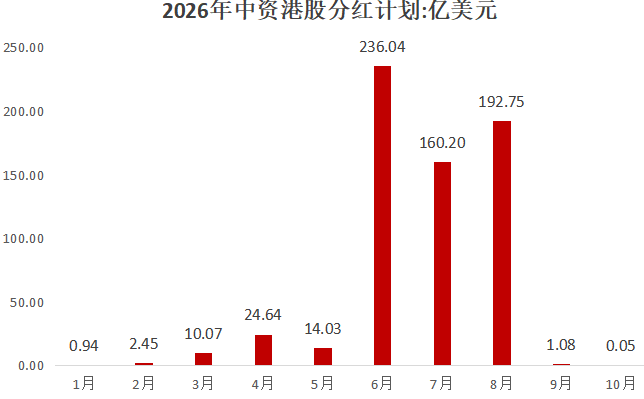
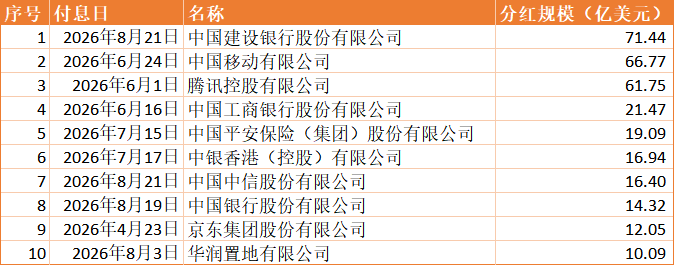
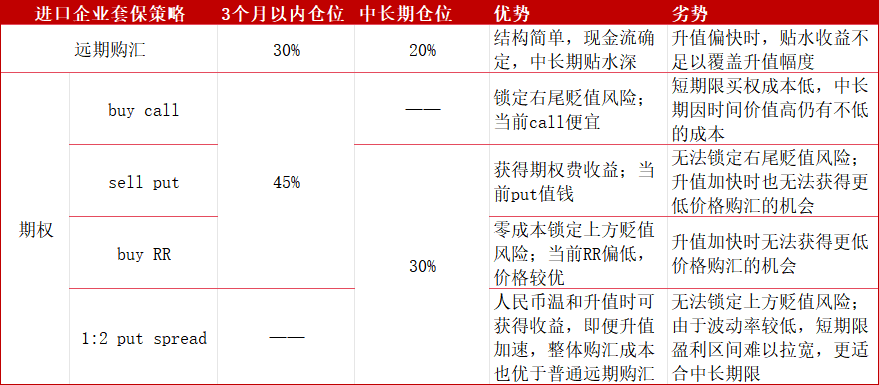
(1) Forward FX purchase: 30% position for within 3 months,20% for medium and long term positions. Seasonal summer dividend-related FX buying provides support for RMB spot, and the pace of appreciation may slow further in June–August. Short-term FX demand can moderately increase the hedging percentage. Although medium and long-term FX swaps are deeply discounted, the appreciation during the FX settlement high season in Q4 may exceed the swap discount gains.
(2) Options: 45% position for within 3 months, 30% for medium and long term.
Buy USDCNY call options: By paying a certain option premium, you can lock in the right-tail risk of RMB depreciation without having to bear the left-tail risk of substantial RMB appreciation. Short-term calls are relatively cheap and more worthwhile to buy.
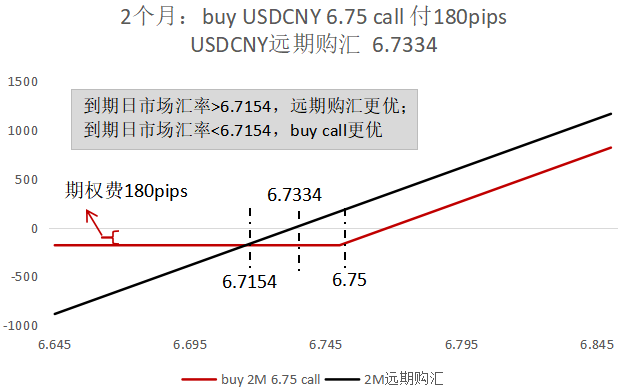
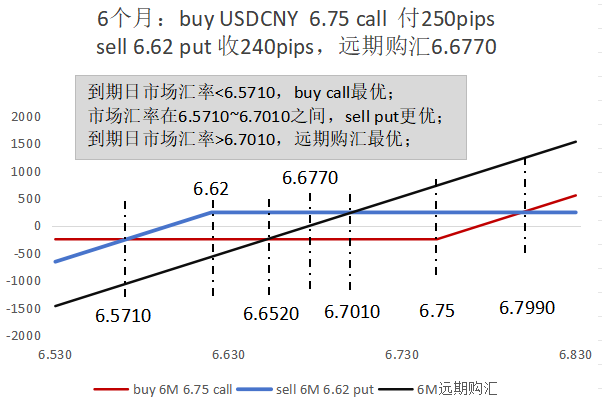
Sell USDCNY put options: Currently, puts are valuable and this product can earn considerable option premiums. However, if the RMB depreciates, the right-tail risk is unlimited. Consider combining with forward FX purchases to use option premiums to optimize the cost of forward FX, but note that locked amounts will be proportionally amplified, so avoid excessive hedging.
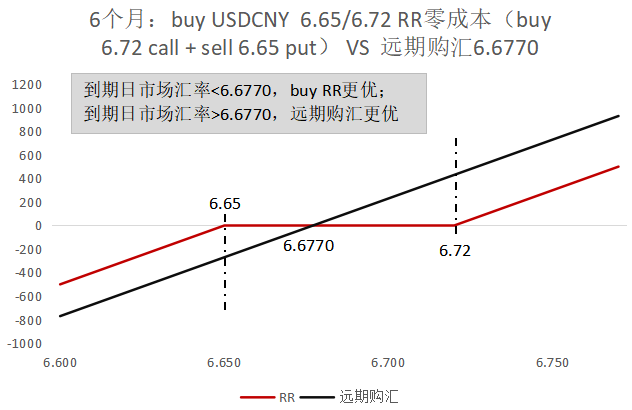
Buy USDCNY risk reversal options (buy RR, i.e., buy call + sell put): Not for the purpose of earning option premiums but to construct a zero-cost combination.
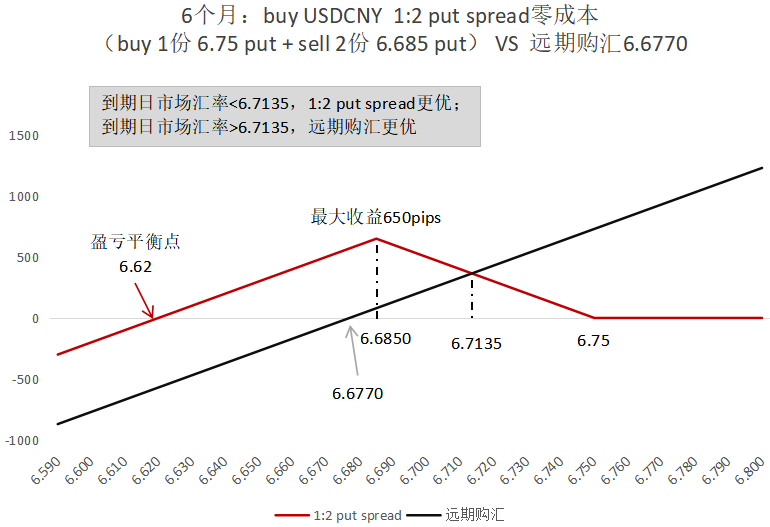
1:2 put spread combination: By buying one higher strike put and selling two lower strike puts, a zero-cost combination is created—suitable for FX buyers who expect moderate RMB appreciation. One limitation is that option volatility is presently low, making it difficult to widen the profit zone for shorter tenors under 3 months; it’s more suitable for 6 months or longer tenors.
3. Summary
Currently, currency-buying companies enjoy multiple hedging benefits: RMB appreciation, deep swap discounts, RR at historical lows, and the removal of forward FX risk reserve requirements. It is reasonable to leave part of the exposure uncovered but not advisable to go completely unhedged.
It is recommended that FX buyers flexibly construct a multi-product portfolio basket based on their billing cycles:
Disclaimer: The content of this article solely reflects the author's opinion and does not represent the platform in any capacity. This article is not intended to serve as a reference for making investment decisions.
You may also like
British Pound catches bid as BoE hawk warns inflation is embedded
AI Agents Ignite CPU Demand! Mizuho Estimates Market Size to Reach $209 Billion by 2030, Raises Target Prices for AMD (AMD.US), Intel (INTC.US), etc.
Mizuho stated that with the rapid increase in application scenarios for AI agents, server CPU demand is expected to grow significantly, which will further drive demand for DRAM, NAND, and server equipment.
Top Midday Stories: Google Strikes 20-Year Nuclear Power Deal With Constellation; Marvell Raises Revenue Guidance for 2026-27
11:45 AM EDT, 10/06/2026 (MT Newswires) -- All three major US stock indexes were up in late-morning trading Tuesday, as oil prices and Treasury yields were down. In company news, Alphabet's (GOOG, GOOGL) Google has entered into a 20-year deal with Constellation Energy (CEG) to add 890 megawatts of nuclear power to the PJM interconnection grid, the companies said Tuesday. The agreement will enable over $4.3 billion in investments in new equipment and technology at 11 Constellation nuclear facilities in Illinois, Pennsylvania and New Jersey, the companies said. Alphabet's Class C and Class A shares were up 0.3% and 0.6%, respectively, around midday. Constellation shares were up 13.7%. Marvell Technology (MRVL) now expects to generate revenue of $12 billion in 2026 and $18 billion in 2027, up from its previous guidance of a combined $20 billion over that period, Chairman and Chief Executive Matthew Murphy said Tuesday at a conference, according to a transcript. Marvell shares were up 7.0%. McKesson (MCK) and CD&R have entered into a definitive agreement to acquire Option Care Health (OPCH) for $32.05 per share, reflecting a total enterprise value of about $5.8 billion, the companies said Tuesday. After the deal closes, which is expected to occur in H1 2027, CD&R will hold a majority interest of 51% in Option Care Health, while McKesson will invest $1.4 billion to hold the remaining 49%, the companies said. McKesson shares were up 0.1%, while Option Care shares were up 32.7%. Uber Technologies (UBER) has agreed to acquire ezCater for $2.3 billion in cash, the ride-hailing company said Tuesday. The deal, expected to close in the coming months, will expand Uber's catering orders and give restaurants access to larger orders and more customers, the company said. Uber shares were down 0.4%. Energy Transfer (ET) said Tuesday it has entered into a definitive agreement to acquire Vaquero Midstream in a bolt-on deal valued at about $2.63 billion. The deal consideration will consist of $1.95 billion in cash and about 33.3 mill
Oil prices and the euro resonate, signaling an inflection point for major assets
Crypto prices
More


