
Philippine SEC signals readiness for RWA tokenization

The Philippine Securities and Exchange Commission (SEC) has signaled that the country is ready to accommodate the tokenization of real-world assets (RWAs), with Commissioner Rogelio Quevedo saying he believes the necessary legal and regulatory foundations are in place.
Speaking onstage at the Philippine Blockchain Week 2026, Quevedo said the SEC was “now fully convinced that we have the proper law [and] the proper regulatory mind and background” to accept asset tokenization. He said the technology could spur innovation in the capital markets and “revolutionize” stock exchanges.
In an interview with Cointelegraph, Quevedo said tokenized investment products could provide overseas Filipino workers (OFWs) with more legitimate investment options. “Our OFWs, they have the capital. They do not know where to place their money. They do not know how to make their money earn,” he said, pointing to investment scams that have targeted Filipinos seeking returns.
Quevedo also told Cointelegraph that the regulator’s enhanced enforcement capabilities have made it better prepared to oversee emerging technologies. “We are also using artificial intelligence to go after these unscrupulous scams,” he told Cointelegraph, adding that the SEC was working with Google, TikTok and other online platforms to remove illegal investment offerings.
The remarks frame regulated tokenization as both a capital-markets innovation and a potential investor-protection tool in the Philippines, where the SEC continued to pursue unregistered investment schemes.
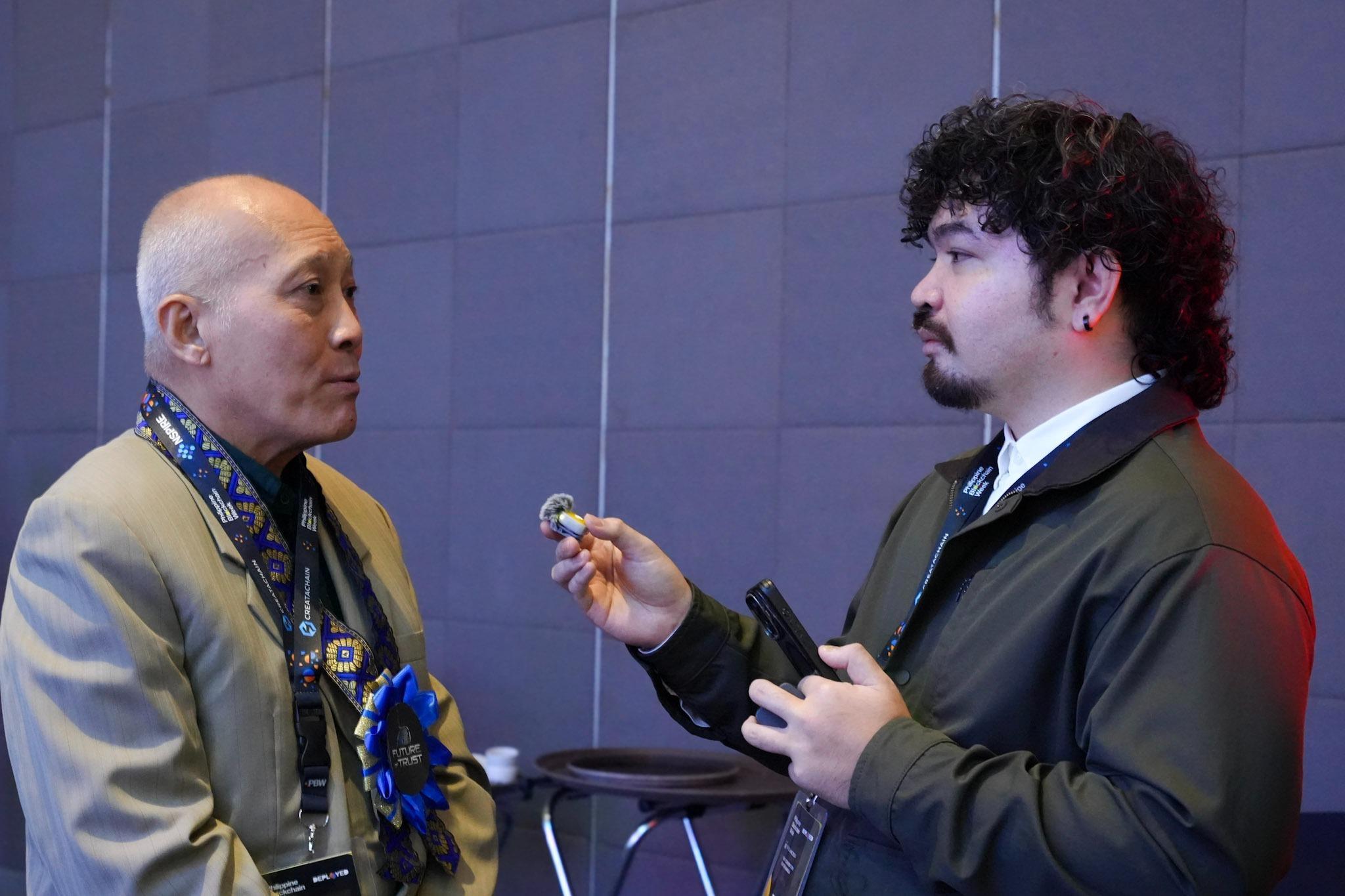
Philippine SEC Commissioner Rogelio Quevedo (left) and Cointelegraph's Ezra Reguerra (right) at the Philippine Blockchain Week 2026. Photo: Cointelegraph
Philippine SEC tests tokenized assets under regulatory sandbox
Quevedo’s remarks build on the SEC’s Strategic Sandbox, or StratBox, which allows fintech companies to test new products and business models in a live but controlled environment under regulatory supervision.
The framework allows the SEC, within the scope of its legal authority, to waive or modify certain legal and regulatory requirements for individual sandbox participants. However, participation does not automatically exempt a company from existing laws, and the sandbox cannot be used to circumvent legal or regulatory requirements.
In November 2025, the SEC said four companies had been admitted to the sandbox, including one testing a tokenized real estate offering. Two participants were testing access to United States equities, while BlockShoals Technologies received in-principle approval to test crypto-related products and services.
Disclaimer: The content of this article solely reflects the author's opinion and does not represent the platform in any capacity. This article is not intended to serve as a reference for making investment decisions.
You may also like
Avalanche Price Prediction October 2026: Can AVAX Reach $13 or Fall to $9 in October?
NEAR Traders Are Pleased to See the Altcoin Break Above $5 and Trade Above, Will This Momentum Hold?

After Toshiba reported news of HDD production expansion, Morgan Stanley turned more bullish rather than bearish.
Morgan Stanley’s research indicates that the market has seriously overestimated Toshiba’s expansion scale — the doubling of capacity at its Philippines plant over two years translates to an annualized growth rate of about 30%, which is similar to the overall industry supply growth rate and far lower than demand growth. More importantly, channel checks show that Seagate and Western Digital have no intention of following suit with capacity expansion, and there are no signs of loosening in industry pricing.
BitMine lifts ETH holdings to 6 million as price holds above $2,700
Crypto prices
More


