
Crypto isn't the problem with the US economy, says senator

Cody Carbone, CEO of the cryptocurrency advocacy group The Digital Chamber, received a largely muted response to his testimony at a Senate Banking Committee hearing on affordability.
In a Tuesday hearing titled The Affordability Agenda, Carbone said that the digital asset industry could help solve affordability problems in the United States, including through faster and cheaper transactions, putting “competitive pressure” on existing payment systems, and reducing barriers to “owning and transferring assets.”
However, the majority of lawmakers present did not question Carbone directly or inquire about digital assets, with the exception of Indiana Senator Tim Banks and Louisiana Senator John Kennedy. Banks asked the Digital Chamber CEO about the costs related to foreign remittances compared to US dollar-pegged stablecoins, while Kennedy largely dismissed Carbone’s testimony.
“Mr. Carbone, you seem to be here to promote cryptocurrency,” said Kennedy. “I love cryptocurrency, but I don't think that's the problem with our economy.”
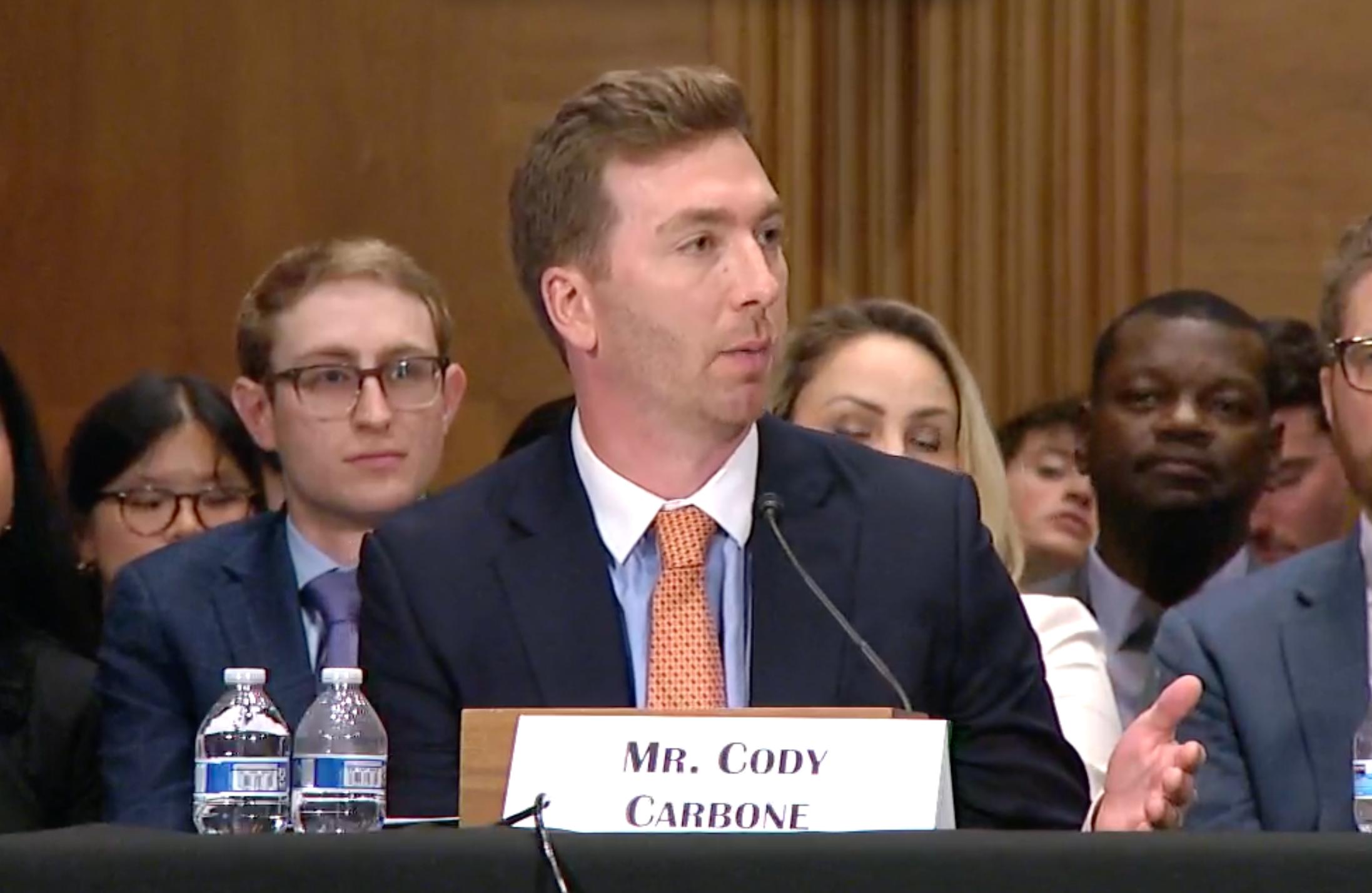
The Digital Chamber CEO Cody Carbone speaking on Tuesday. Source: Senate Banking Committee
Carbone’s remarks centered around the US Senate moving forward on the Digital Asset Market Clarity (CLARITY) Act, which the banking committee advanced in May. The full chamber is expected to vote on the legislation in a matter of weeks, but many lawmakers are calling for additional ethics provisions, potentially complicating passage in the Senate.
Related: Crypto lobby urges Congress to pass staking and mining tax bill as is
CLARITY Act still in limbo amid pushback from interest groups
In addition to lawmakers’ concerns about ethics in the crypto market structure bill, last week gambling industry groups called for the Senate to clarify that the legislation would not allow the US Commodity Futures Trading Commission (CFTC) to oversee sports betting in prediction markets. The financial regulator, under Chair Michael Selig, has claimed “exclusive jurisdiction” over platforms such as Kalshi and Polymarket.
Some lawmakers expect that the CLARITY Act will pass through the Senate before the chamber breaks for an August recess. As of Tuesday, no floor vote was scheduled in the Senate.
Magazine: Japanese pension fund tips 1% in crypto, G7 urges action on NK hackers: Asia Express
Disclaimer: The content of this article solely reflects the author's opinion and does not represent the platform in any capacity. This article is not intended to serve as a reference for making investment decisions.
You may also like
Our Pinterest Stock Pick Hasn't Worked. We're Dropping It. -- Barrons.com
By Jacob Sonenshine Pinterest is down about 42% since Barron's recommended the stock in June 2025. During that time the S&P 500 has gained 29%. Time to move on. The problem isn't that Pinterest doesn't have long-term growth potential. It's that it has repeatedly failed to sustain a super high growth rate, creating uncertainty. Our thesis was that revenue growth would hold strong and the company's artificial intelligence usage would enable it to match the right products and advertisements with users. The hope was that Pinterest, with its hundreds of millions of users and more than $4 billion of annual sales, would grow within a global digital ad market worth hundreds of billions, as it would increasingly monetize its users. It has grown -- but not consistently at a high rate. Pinterest will continue to grow, but the market's concern doesn't appear likely to subside soon; revenue growth often decelerates by several percentage points, which causes large selloffs in the shares. The root of the problem is that whenever growth slows, the market is left to wonder if the platform is beginning to lose its relevance. Users now have a crowded field of options for finding personal and household trinkets to buy. Maybe the growth story isn't as beautiful as investors had hoped years ago, when the stock was at record highs of close to $90. Consider second quarter earnings, which management released Aug. 4, and caused the stock to drop. Yes, sales of $1.18 billion beat analyst's expectations and grew about 18% year over year, and yes, adjusted earnings per share of 43 cents beat estimates and grew 30%, as profit margins expanded. But the guidance signaled slowing growth yet again. Management guided for third quarter revenue of $1.2 billion at the midpoint of the range. That implies 14% year over year growth. Chief Financial Officer Julia Donnelly said on the earnings call that second quarter growth was strong partly due to the combination of brands increasing their ad spend around Amazon Prime Day and "World Cup-related spend th
Gold steady as firm dollar counters softer US rate-hike bets
CFTC Clears Path for US Exchanges to Launch Perpetual Futures

Brazil Stocks Hit Record as Dollar Crashes After Election Shock
Crypto prices
More


