
Heading to 165? Can the new stealth intervention strategy of the yen resist the depreciation trend?

On July 2, the Japanese yen experienced a dramatic reversal. During the session, the yen's exchange rate swiftly fell from a high of 162.54 to 160.62, with a maximum decline of 1.18%, and ultimately closed down 0.9%. Subsequent trading data showed that trading volume on that day was significantly lower than during the official Japanese intervention at the end of April, suggesting that it was more likely concentrated speculative covering rather than large-scale official buying.
There were two main triggers for this event: first, the Ministry of Finance of Japan may abandon its usual practice of sending repeated verbal warnings to the market before intervention, shifting instead to an ambush-style covert intervention strategy. This approach would allow authorities to act suddenly when speculative short positions have accumulated to a certain extent, significantly raising the costs of shorting for speculators and causing a concentrated closure of short positions. Second, the U.S. nonfarm payrolls released on July 2 showed an increase of only 57,000 in June, well below the market expectation of 115,000, which weakened interest rate hike expectations and depreciated the dollar, amplifying the yen's rebound.
However, this rebound did not last. As of today (July 6), the yen has returned to around 162.0. Market movements suggest that the anticipation of covert intervention may create short-term volatility and punish excessive speculation, but it is difficult to eliminate the macro-structural forces driving the yen's weakness.
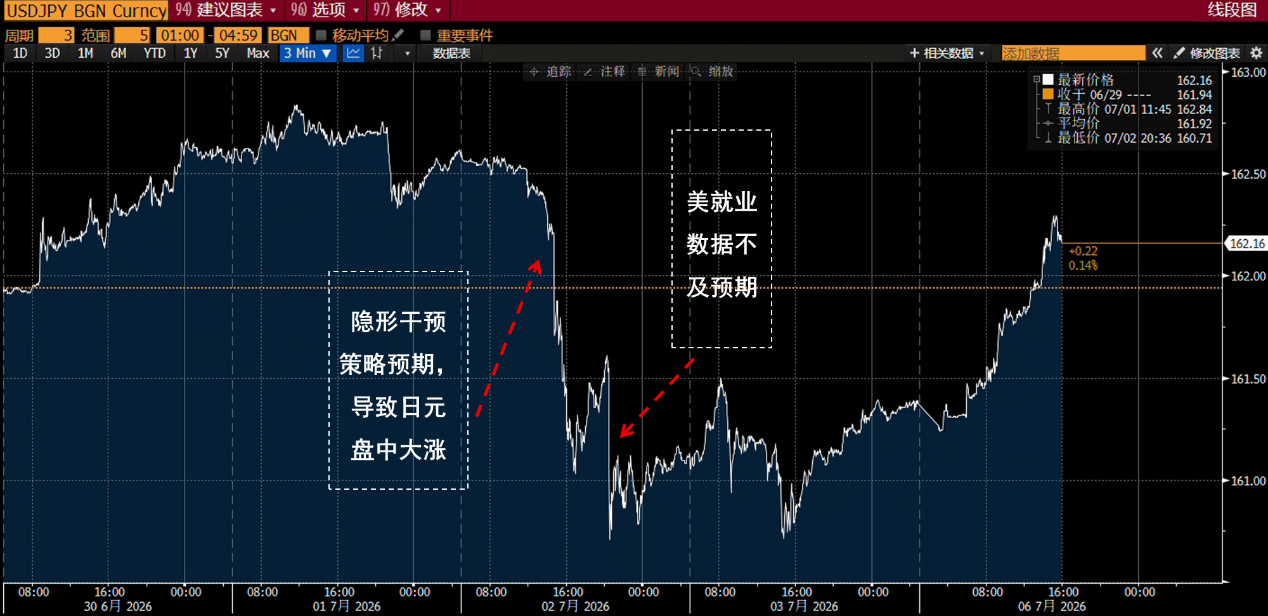
Covert intervention can create volatility, but is difficult to alter the trend
In the past, Japanese authorities would typically send continuous warning signals ahead of any official intervention, guiding the market to reduce short positions in advance and thus lowering the actual cost of intervention. However, as the market gradually adapted to this policy model, traders often prepared in advance and rebuilt short positions quickly after the impact of the intervention faded. As a result, official intervention increasingly became just a short-term trading opportunity rather than an effective tool to reverse the trend, and its actual deterrent effect on speculative capital has continued to wane.
This time, Japanese authorities have shifted towards covert intervention, attempting to deliberately obscure policy intentions and create uncertainty to compress arbitrage opportunities and curb the expansion of speculative short positions. In the short term, this adjustment can indeed increase exchange rate volatility and raise the risk of shorting the yen. The response from the options market is quite clear: the negative skew in the yen's one-week risk reversal indicator has significantly deepened, and butterfly spreads have widened to their highest levels since April 2024, indicating that traders are paying higher premiums for short-term volatility.
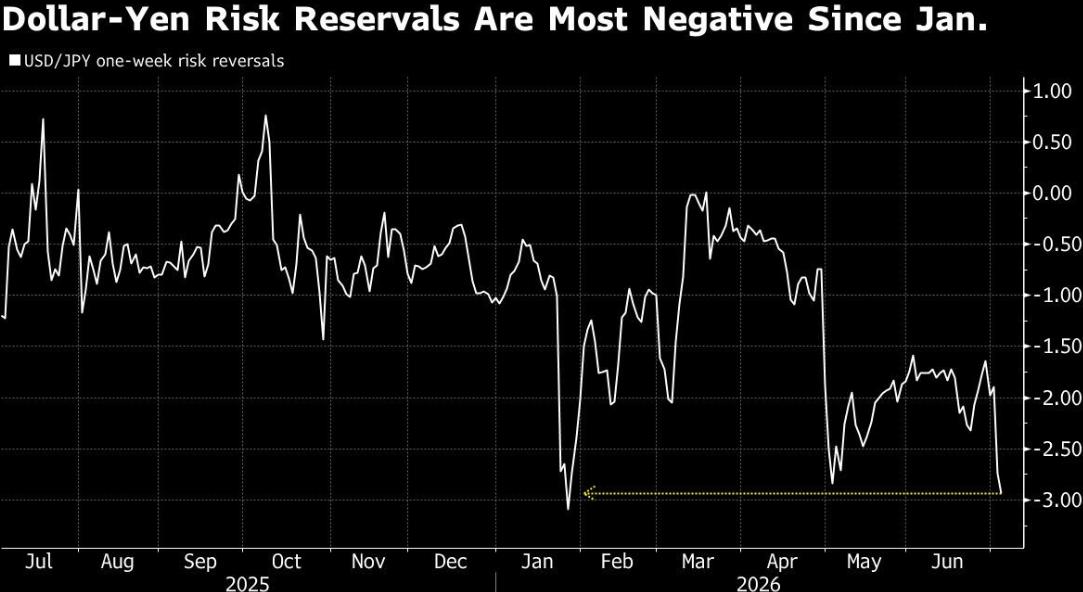
However, the main impact of this policy lies in changing market participants' risk perceptions, focusing on suppressing excessive accumulation of speculative positions through risk premiums, rather than altering the fundamental pricing logic of the yen.
Disclaimer: The content of this article solely reflects the author's opinion and does not represent the platform in any capacity. This article is not intended to serve as a reference for making investment decisions.
You may also like
Despite falling oil prices and dovish comments from Fed officials, US Treasury yields continue to rise
The wave of US Treasury sell-offs continues to spread, with the 30-year yield reaching a 24-year high of 5.621% and the 10-year yield rising to its highest level since 2002—oil price declines and dovish signals have both failed, and long-term rates remain unaffected. High yields are reshaping the structure of US equities; as the AI narrative becomes the market’s final pillar, any cracks could trigger a chain reaction of turbulence.
Crypto prices
More


