
L1s face decentralization 'tug-of-war' as adoption grows: Injective CEO

Layer-1 blockchains will come under increasing pressure to sacrifice decentralization for speed and efficiency as adoption of the technology grows, according to Injective CEO Eric Chen.
This pressure will come from the need to satisfy users’ desire for faster speeds or more block space for higher throughput, Chen told Cointelegraph’s Chain Reaction podcast on Monday.
“In our mind, it’s essentially about finding scaling opportunities without compromising the fundamental pillars that define what a blockchain is,” he said.
With blockchain adoption accelerating due to institutional adoption and agentic AI finance, this tension is about to be tested on a much larger scale. Part of crypto’s original pitch was to create a “trustless” financial system in which individuals could transact without relying on traditional intermediaries.
Centralization comes with risks
Chen said centralizing is the easy way out — “it might be a very, very easy choice to move everyone in the same data warehouse, or literally have a leader validator that calls all the shots for everyone” — but warned this creates a single point of failure: “If that one server has a certain fault, the entire chain goes down.”
Related: DAOs may need to ditch decentralization to court institutions

Chen added that for Injective — an interoperable layer-1 blockchain designed for DeFi applications — it’s about “figuring out ways to optimize the entire chain,” and there are other opportunities to do this without reducing block time.
One option he suggested was “scaling venues,” where there are “dedicated zones” and layer-2 scaling to ensure that all the high-demand transactions can make it through.
“It’s always a constant tug-of-war, and it’s about keeping the fundamental pillars and then kind of seeing where the space moves.”
The blockchain trilemma remains a challenge
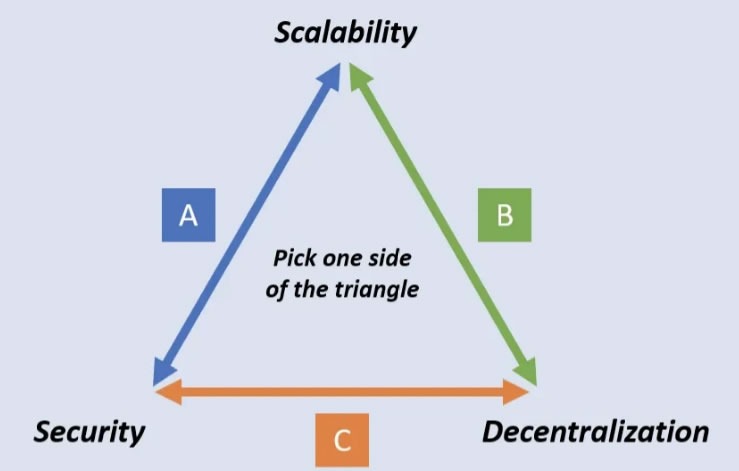
It is said the perfect blockchain boasts three elements: security, decentralization and scalability. The principle of the blockchain trilemma is that it is only possible to fully optimize two of the three properties at once.
Decentralization means no single point of control, with many independent participants validating the network. Security means resistance to attacks, fraud and manipulation. Scalability means the ability to handle high transaction volumes at speed.
Pushing too hard on any one, such as scalability, will result in sacrificing another, such as decentralization, Chen said.
Magazine: AI is banking the unbanked in Africa... faster than crypto
Disclaimer: The content of this article solely reflects the author's opinion and does not represent the platform in any capacity. This article is not intended to serve as a reference for making investment decisions.
You may also like
Despite falling oil prices and dovish comments from Fed officials, US Treasury yields continue to rise
The wave of US Treasury sell-offs continues to spread, with the 30-year yield reaching a 24-year high of 5.621% and the 10-year yield rising to its highest level since 2002—oil price declines and dovish signals have both failed, and long-term rates remain unaffected. High yields are reshaping the structure of US equities; as the AI narrative becomes the market’s final pillar, any cracks could trigger a chain reaction of turbulence.
Morgan Stanley trading desk, dubbed the "most accurate in the past two years," turns bullish
The supporting logic encompasses five major pillars: unexpected macro trends, consumer resilience, low profit expectations, stabilized yields, and technical improvements. Since the previous shift on August 31, the Nasdaq 100 long and Russell 2000 short paired trades have accumulated gains of over 8%. This latest "bullish reversal" is even more convincing. Strategically, technology remains the core long position, but the hedging tool has shifted from shorting RTY to derivatives. Meanwhile, the risk of long-term interest rate hikes still persists.

Four major favorable factors emerge, international oil prices respond by falling
VVV crypto falls 25% – Could Venice Token’s buy zone be near $20?
Crypto prices
More


