
From leveraged ETF to free Korean Won exchange: Why is South Korea making such a big bet?

On July 19, the South Korean Ministry of Finance, Bank of Korea, and financial regulatory authorities jointly announced that foreign financial institutions will be allowed to borrow Korean won through temporary overdrafts and use won-denominated bonds as collateral for financial transactions. Starting from 2027, foreign investors will be able to hold, trade, and transfer Korean won without limitation via pre-registered overseas financial institutions, eliminating the need to open won accounts within South Korea. At the same time, South Korea will also establish an offshore won settlement system and gradually promote the construction of cross-border payment systems for won stablecoins and central bank digital currency (CBDC).
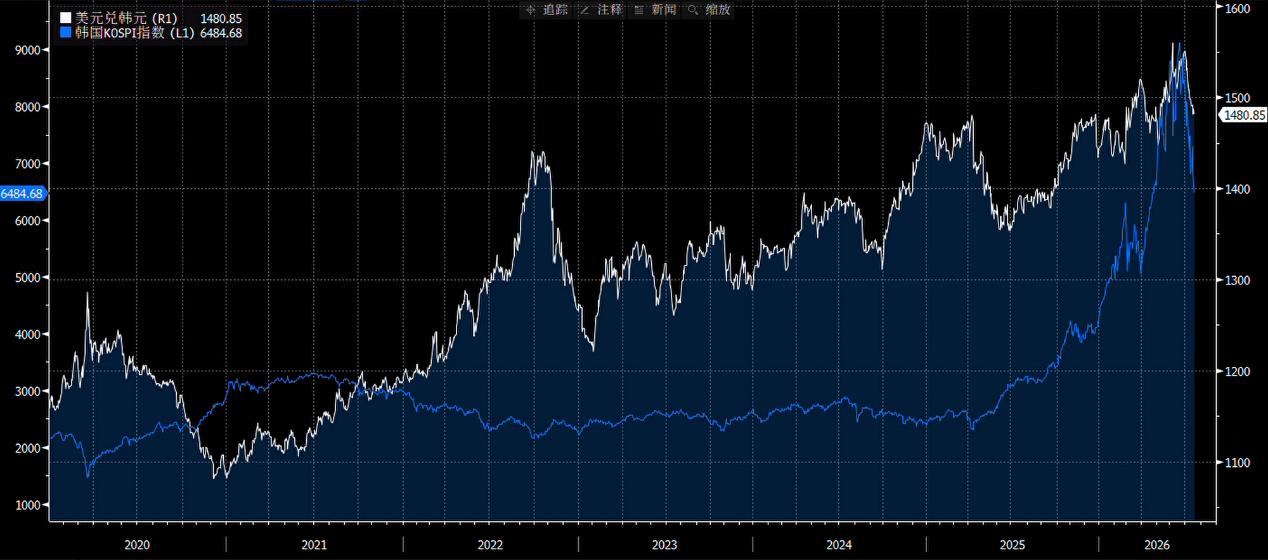
Previously, on July 6, South Korea officially launched 24-hour USD/KRW trading, allowing New York investors to directly trade the won during US market hours for the first time. These measures represent a systematic relaxation of the capital control and exchange rate policy framework established after the 1997 Asian Financial Crisis, which prioritized capital control and financial stability. Now, these controls are being lifted one by one, with South Korea moving from a regulated currency towards a quasi-freely convertible currency, fundamentally adjusting its exchange rate policy framework.
On the surface, as President Lee Jae-myung stated, this reform aims to promote the internationalization of the won, increase its global usage, facilitate overseas investors in allocating Korean assets, and address long-standing concerns of MSCI regarding foreign exchange trading restrictions.
However, in terms of timing, the more direct motivation is the liquidity pressure in the domestic financial market. After the AI rally subsided, the Korean stock market experienced sharp deleveraging, with continued foreign capital outflows putting long-term pressure on the won exchange rate. Authorities urgently need external incremental funds to stabilize the capital market. Lowering international capital entry thresholds and facilitating foreign investors to borrow won for investment in domestic assets is essentially a liquidity relief measure.
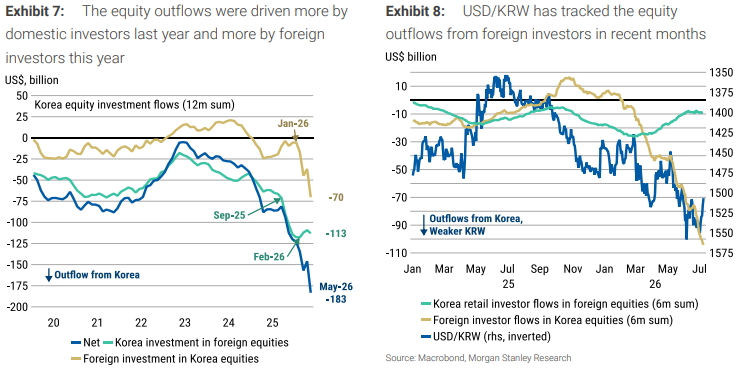
It is noteworthy that this reform plan was introduced after the won fell to its lowest level since 2009. Promoting capital account liberalization at the won's weakest stage shows a shift in policy priorities from traditional defensive financial stability to more aggressive objectives such as boosting the international use of the won, attracting global capital to Korean assets, and benchmarking the capital market against developed markets. This timing choice itself indicates that South Korean authorities deem the urgency of capital inflow to outweigh traditional concerns over exchange rate volatility.
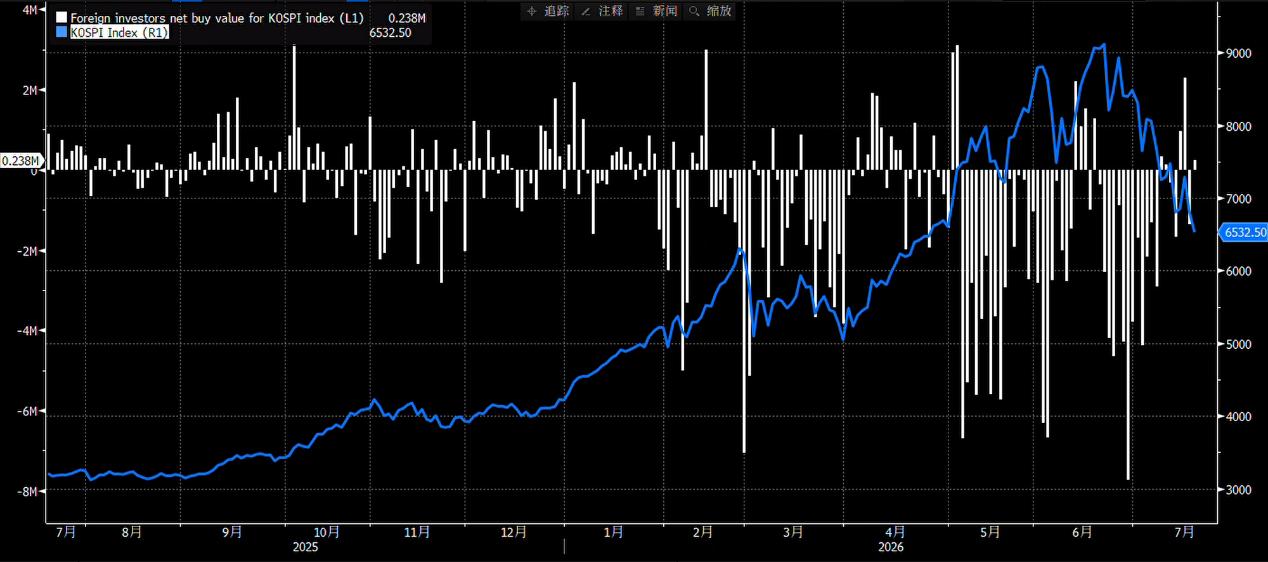
South Korea Resets the Impossible Trinity, Potentially Amplifying Financial Market Volatility
For nearly 30 years, South Korea has largely maintained a framework of moderate capital controls, exchange rate stability, and independent monetary policy. Capital flows were subject to certain restrictions, allowing the Bank of Korea to independently adjust monetary policy according to the domestic economic cycle while maintaining relative exchange rate stability.
Disclaimer: The content of this article solely reflects the author's opinion and does not represent the platform in any capacity. This article is not intended to serve as a reference for making investment decisions.
You may also like
Chainlink (LINK) Price Tests a Crucial Resistance—Is a Rise to $20 on the Horizon
AMD acquires World Labs for $8.2 billion, Fei-Fei Li appointed as Chief Scientist
AMD acquires AI startup World Labs in an all-stock transaction valued at approximately $8.2 billion. World Labs was co-founded by AI pioneer Fei-Fei Li and focuses on spatial intelligence and three-dimensional environment simulation. Upon completion of the transaction, Fei-Fei Li will serve as AMD's Executive Vice President and Chief Scientist. This move indicates that AMD aims to internalize model research capabilities as a driving force for chip design and to compete directly with Nvidia in physical AI domains such as robotics and simulation.
Dow Jones Industrial Average gives back Friday's rally on a Boeing delay
ECB rate hike expectations cool down, Lagarde: Rising long-term rates will suppress growth and inflation
Christine Lagarde, President of the European Central Bank, stated that a significant rise in long-term interest rates will slow economic growth and suppress the transmission of energy prices to overall inflation, exceeding the extent forecasted by the ECB in September. She also emphasized that in the absence of signs of second-round effects, the ECB should adopt "moderate response measures" to control inflation. As a result, the market’s expectation of an ECB rate hike in October has dropped to less than 40%.

Crypto prices
More


