
U.S. Launches New Door Safety Regulation Procedure, Targeting Tesla’s Electric Door Design

The U.S. auto safety regulator has officially initiated the process of developing federal regulations for door emergency escape systems, a move that will have a profound impact on automakers such as Tesla that use electronic hidden door handles.
The National Highway Traffic Safety Administration (NHTSA) stated on Thursday that it has approved a petition and will begin advancing new federal regulations that require all motor vehicles to be equipped with a "reliable and conspicuous door escape system".
Once the regulations are finalized, all new vehicles sold in the U.S. must comply with the relevant requirements.
This decision comes in the wake of a series of fatal accidents related to Tesla's electric door design.
According to previous reports from Bloomberg, in at least twelve collision incidents, at least 15 people died or were seriously injured in subsequent fires because they were unable to open Tesla car doors that had lost power. As a result, regulatory pressure over door safety issues has continued to mount.
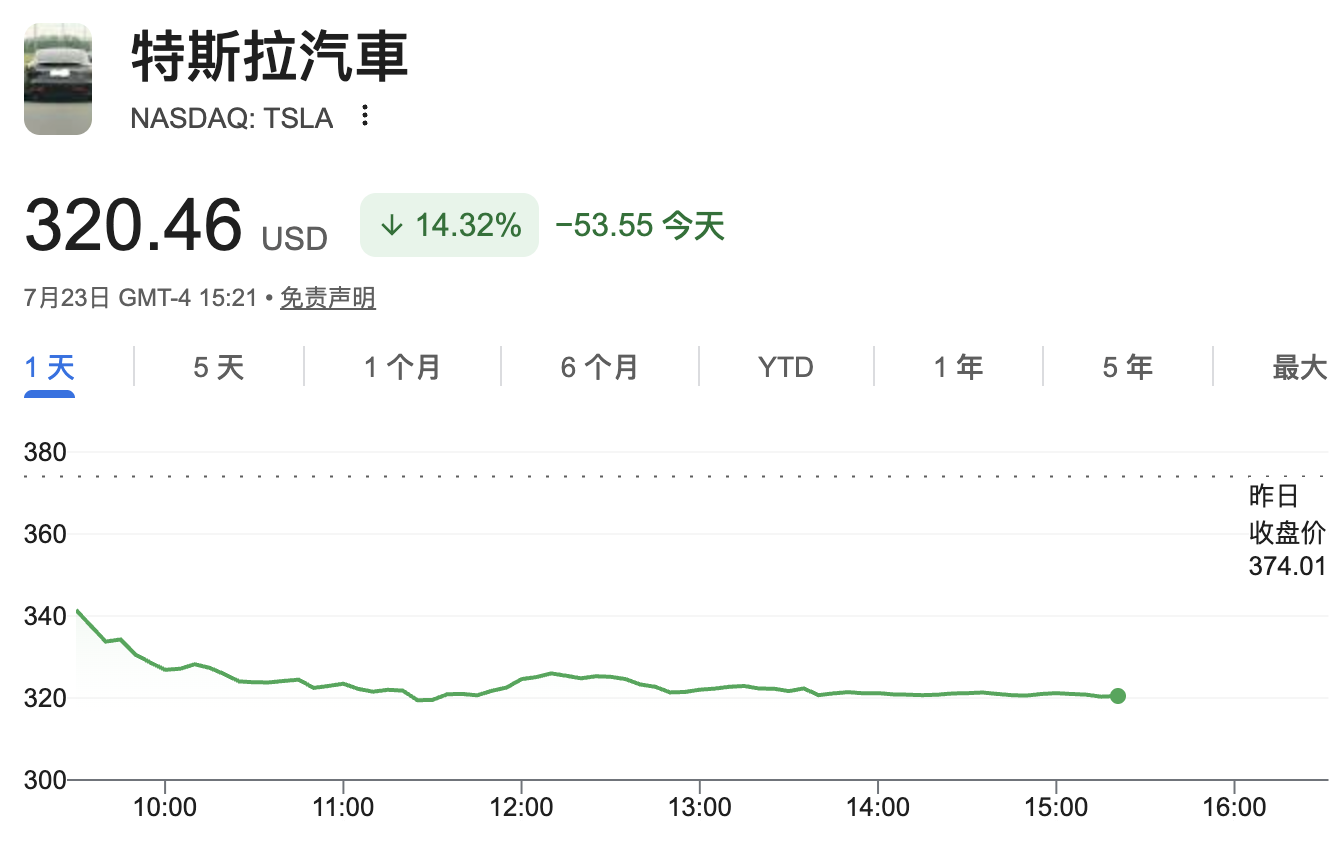
As of press time, Tesla was down 14.32% during Thursday's trading session.
Regulatory Background: Electric Door Designs Create Deadly Hazards
Hidden electronic door handle designs adopted by Tesla and several other automakers can become inoperable after a vehicle loses power.
According to Bloomberg, in multiple high-speed crash incidents, occupants survived the initial impact but subsequently died or were seriously injured in fires because they could not open the car doors to escape.
At the end of last year, Tesla CEO Elon Musk insisted on pushing forward with electric door designs, even after internal concerns over safety risks were raised.
In November this year, a Silicon Valley engineer submitted a petition to NHTSA, urging the agency to implement new federal safety standards in response to the risks posed by electronic or "hidden" door locking and release systems.
The petition pointed out that such systems are common in electric vehicles, and constitute a "critical safety loophole that threatens lives."
Regulator: Rulemaking Process Initiated, But Final Regulations May Take Years
NHTSA stated in Thursday's regulatory filing that it has approved the above petition and will initiate the rulemaking process. At the same time, the agency rejected a separate petition requesting an investigation into safety defects.
Michael Brooks, executive director of the Center for Auto Safety, noted that the NHTSA's initiation of the rulemaking process is "significant, because it is the necessary first step to revising or establishing new federal motor vehicle safety standards and strengthening electric door and escape-related regulations."
However, he also pointed out that given the lengthy process for rulemaking, "even if things move smoothly, the final compliance deadline for manufacturers is unlikely to be before 2030."
The agency stated it will decide whether to formally introduce new regulations based on information gathered during the rulemaking process. The industry typically protests against safety regulations that add costs, which means the entire process could face significant resistance.
Legislative Front: Lawmakers Advance Parallel Legislation
While the regulator has initiated the process, Congress is also taking action.
U.S. Representative Robin Kelly, a Democrat from Illinois, introduced legislation earlier this year requiring new cars to be equipped with manual door release mechanisms and to provide emergency responders a way to access vehicles when power is lost.
In addition, in September, NHTSA launched a defect investigation into certain Tesla Model Y vehicles following complaints of children being trapped inside.
This multi-pronged regulatory and legislative pressure is rapidly propelling electric door safety issues to the forefront of the automotive industry's agenda.
Disclaimer: The content of this article solely reflects the author's opinion and does not represent the platform in any capacity. This article is not intended to serve as a reference for making investment decisions.
You may also like
AI boom reshapes the wafer foundry landscape! UBS: Explosive demand accelerates advanced process expansion, mature process enters upward cycle
UBS stated in a recent research report that within the foundry market, the Total Addressable Market (TAM) for the N2 (2nm) node far exceeds expectations, A14 (1.4nm) production expansion is accelerating, and the upcycle for mature process nodes has already begun.
$1,999 Foldable iPhone Is Ready, but Apple (AAPL.US) Faces Over $5.7 Billion Patent Penalty
As Apple intensifies its efforts in foldable displays and AI business, it faces a haptic technology patent compensation ruling exceeding $5.7 billion. On September 25, a federal jury in California found that Apple's Taptic Engine, used in certain iPhone and Apple Watch models, infringed on two patents held by Taction Technology.
Prospects for the opening of the Hormuz Strait are overshadowed, Asian bonds under pressure: 2Y Japanese bond yield approaches 2%, 3Y Korean bond yield rises to highest level since 2022
With high oil prices, short-term bond yields in South Korea and Japan have risen.
5% US Treasury pressure weighs on global assets, while Australian government bonds open up a window for allocation? Fixed income giant Pimco calls the rate hike expectations too aggressive
Pacific Investment Management Company (Pimco) holds a constructive view on Australian bonds, believing that market expectations for rate hikes are too high. Pimco stated that the rate hike cycle in Australia has been "fully priced in," and cracks are beginning to appear in the economy, making Australian bonds look attractive, especially in the 5- to 10-year segment of the yield curve.
Crypto prices
More


