
The Dow Jones ends five-day winning streak, storage chip and AI software stocks hit by "earnings massacre", expectations for Federal Reserve rate hike suddenly rise

On August 6, Eastern Time, all three major U.S. stock indices closed lower. The Dow Jones fell 0.85% to 53,885.10 points, ending a five-day winning streak; the S&P 500 dropped 0.18% to 7,709.96 points, and the Nasdaq was down slightly by 0.06% to 26,348.35 points.
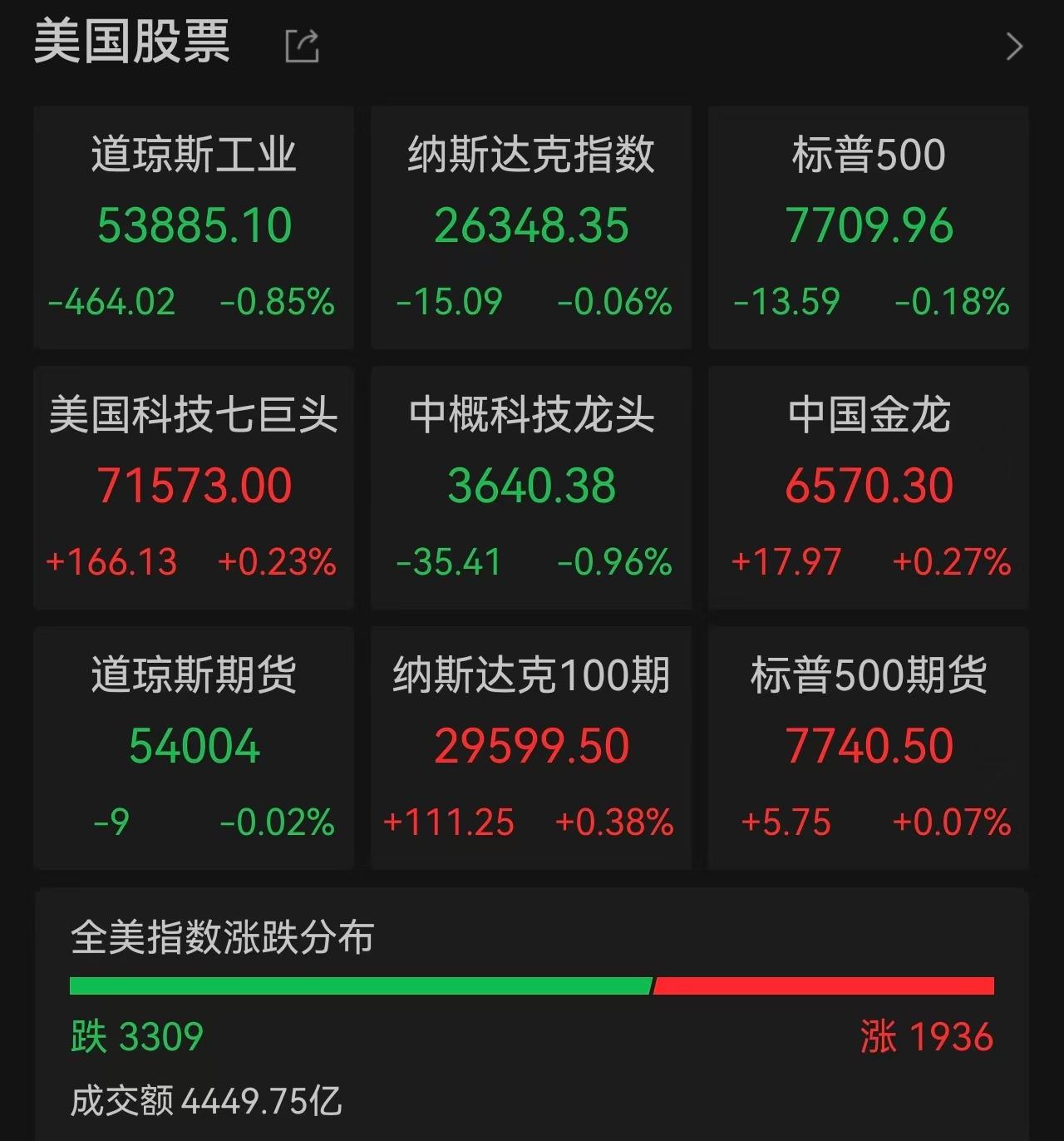
The trading looked calm, but the underlying structure was fractured—on one side, Microsoft surged 2.54% to a new high since last November, and SpaceX rebounded 6.14%, pushing its market value back above $1.5 trillion; on the other side, memory chips and AI application software stocks were "collectively slaughtered": Western Digital plunged 13.03%, SanDisk dropped 6.81%, SK Hynix ADR fell nearly 5%, and Micron Technology declined over 1%. AppLovin and Datadog, both labeled as "AI application leaders," plummeted by 19.66% and about 17%-19% respectively.
Beating Earnings Still Get Sold: When "Good" Is Not "Good Enough"
The plunge in Western Digital and SanDisk was the most eye-catching case of the day. Both companies announced quarterly results after the bell on Wednesday that topped expectations, and their next-quarter revenue guidance was also above analyst consensus. However, this couldn’t stop their stock rout. Citibank and Jefferies subsequently lowered their SanDisk price targets, pointing out that although its fiscal Q4 performance was strong, the guidance was lackluster. A deeper reason lies in the fact that Western Digital had risen over 500% in the past year, and SanDisk surged even more; the market had already priced in extremely high expectations. When results are only "good" and not "astonishing," profit-taking pressure is unleashed. Cboe retail business chief JJ Kinahan remarked: “When guidance is soft, beating on profits and revenue may not lift the stock price.” Haverford Trust investment strategy head Hank Smith believes that chip stocks have gained too much in the first half of the year with very high market expectations, and the current trend reflects a digestion of their valuations.
AI application software stocks suffered an even more direct hit. Marketing tech platform AppLovin’s stock plunged 19.7% due to quarterly revenue missing expectations. Cloud security company Datadog, despite achieving 36% revenue growth and raising its guidance, still sank about 17% as it forecast a slowdown in third-quarter revenue growth. These two companies became the main drags on the S&P 500 index that day. This sends a clear signal: after several quarters of AI hype, the market is shifting from the "storytelling" stage to a strict scrutiny of earnings execution.
The Fed Turns Hawkish: Rate Hike Expectations Rattle Markets
What moves the market even more than earnings reports is the Federal Reserve's unexpected policy shift. In the early morning of August 7, Beijing time, Alberto Musalem, President of the St. Louis Fed, said, “The probability that inflation will remain above target has increased, and I was inclined to hike rates at the recent policy meeting.” He further noted that “gradual rate hikes are less costly than sudden moves,” and there is “an environment with risks of inflation expectations becoming unanchored.” Musalem emphasized that the U.S. economy has shown resilience in recent months, “It is a mistake to pursue expansionary policies for higher GDP,” and future AI-driven productivity growth is highly uncertain, with risks “tilted to the upside for inflation.”
According to the British Financial Times, should inflation data run hot in the coming weeks and expectations for rate hikes intensify, Fed Chair Kevin Walsh is already prepared to raise rates at the September meeting. According to data from CME Group, the futures market currently expects about a 55% chance of a 25 basis point hike at the September meeting. Bank of America CEO Brian Moynihan was even more aggressive when interviewed by CNBCInterview, expecting the Fed to hike rates in September, November, and December. However, San Francisco Fed President Mary Daly observed signs that the tariff impact on U.S. prices is beginning to fade, and if this trend continues, it may help ease upside inflationary pressures.
More Geopolitical Uncertainty: Oil Price Gambit in the Strait of Hormuz
International oil prices surged again on the same day, with the NYMEX WTI crude oil futures front-month contract rising 4% to $78.23 per barrel. Earlier, Iran’s authorities released a restrictive draft on shipping management through the Strait of Hormuz, which would ban the passage of vessels from the U.S., Israel, and other hostile countries. However, according to Xinhua News Agency, Iran and Oman have agreed on the geographical coordinates for proposed shipping routes in the Strait of Hormuz, and a joint statement has entered the final review stage—but Iran emphasized that finalizing the arrangement does not mean the strait will be reopened immediately. Deutsche Bank strategist Jim Reid stated that the market has seen multiple “false dawns” during this round of Middle East tensions. SummitTX Capital trading chief Robert Bernstone pointed out: "Market reactions to macro news may be more subdued than before... Tweets and news headlines do move markets, but the real key is in the details."
Disclaimer: The content of this article solely reflects the author's opinion and does not represent the platform in any capacity. This article is not intended to serve as a reference for making investment decisions.
You may also like
The Capital Trends Behind the AI Computing Power Rebound: JPMorgan Fund Flows Reveal Retail Buy-In "Shrinking," Pouring Into Nvidia, SanDisk and Other Computing Power Core Companies
What has been revealed is not a "complete withdrawal of retail investors from AI," but rather a significant slowdown in overall market entry pace under macroeconomic pressure, with stock selections becoming more concentrated. In response to the Federal Reserve's unanimous decision to raise interest rates by 25 basis points, increasing the policy rate to 3.75%–4.00%, JPMorgan's assessment is: if this is simply a withdrawal of last year's "insurance-style rate cuts" during a shallow rate hike cycle—and if corporate earnings remain strong and the Middle East situation does not further spiral out of control—the stock market is still capable of absorbing rising interest rates.
Vote Result 7-2! Bank of Japan Raises Interest Rates at Fastest Pace Since 1990, Does Not Signal a Clearly More Hawkish Stance
The Bank of Japan has raised interest rates to 1.25%, marking the highest level since 1995 and the sixth increase since exiting the negative interest rate policy in March 2024. Out of the nine committee members, Asada and Sato voted against the hike, citing the current economic situation, reflecting ongoing internal disagreements over further tightening. In its statement, the Bank of Japan indicated it will continue to raise rates and adjust the degree of monetary easing, but the forward guidance language showed limited changes from the July statement, without sending notably more hawkish signals.
Crypto prices
More


