

DBS, a leading financial services group based in Singapore, and US financial giant Citi completed their first weekend tokenized cross-border payment between Singapore and the United States. The transaction, executed on a Saturday, bypassed traditional banking hour restrictions and was finalized within minutes, according to an announcement from DBS released on Monday.
DBS and Citi complete first weekend tokenized cross-border payment via Swift
By:Cointurk
Bitget offers one-stop trading for cryptocurrencies, stocks, and gold. Trade now!
A welcome pack worth 6200 USDT for new users! Sign up now!
Tokenized deposits accelerate settlement
Both DBS and Citi utilized tokenized deposits through the Swift Digital Ledger. This approach allowed them to avoid the constraints of standard banking hours and drastically reduce the settlement time, which typically takes up to two business days when using conventional cross-border transfer methods.
DBS described this rapid settlement as a significant advancement in the banking sector, affirming that tokenized deposits have the potential to fundamentally enhance efficiency for institutional payments.
The settlement was completed within minutes, a significant improvement over the industry norm of up to two business days for cross-border payments.
Banks adopt blockchain rails for efficiency
The transaction marks a continued trend of major banks using blockchain-based solutions to streamline cross-border settlements while retaining customer deposits inside established banking networks. Standard Chartered and HSBC completed a similar tokenized cross-border transaction using Swift’s blockchain ledger in August, making them early adopters of this technology.
ETH
SOL
BSC
ROBINHOOD
PAY
USDT
RECEIVE
AAPL
In July, Swift, recognized as the world’s largest financial messaging network, confirmed its blockchain-based ledger’s readiness for real-world application. The company is preparing to pilot tokenized cross-border payments with 17 major international banks. Besides Citi and DBS, participating banks include HSBC, BNP Paribas, UBS, ANZ, and Standard Chartered.
Mini dictionary: Swift Digital Ledger, a blockchain-based system developed by Swift to provide secure and instant cross-border payment settlement between banks, leveraging tokenized assets.
Bank Network Used Pilot or Live
| DBS, Citi | Swift Digital Ledger | Live (transaction completed) |
| Standard Chartered, HSBC | Swift Digital Ledger | Pilot (transaction in August) |
| BNP Paribas, UBS, ANZ | Swift Digital Ledger | Pilot (planned) |
Wider adoption and industry initiatives
Citi, recognized as one of the largest US financial institutions, is also part of a consortium of US banks planning to launch a separate tokenized deposit network in the first half of 2027. This upcoming network will be operated by The Clearing House, a bank-owned payments operator, as reported by CEO David Watson in June.
In November 2025, DBS and JPMorgan announced a joint effort to build a blockchain-based tokenization framework, aiming to enable onchain transfers between their deposit token ecosystems. Their initiative is intended to help set an industry standard for secure and efficient cross-bank payments using blockchain technologies.
These developments reflect the growing interest among major financial institutions in integrating blockchain rails to advance global payments infrastructure.
0
0
Disclaimer: The content of this article solely reflects the author's opinion and does not represent the platform in any capacity. This article is not intended to serve as a reference for making investment decisions.
Understand the market, then trade.
Bitget offers one-stop trading for cryptocurrencies, stocks, and gold.
Trade now!
You may also like
They boosted the Yen but failed to hold U.S. Treasury bonds! Is Basent a "weak teammate" for U.S. stocks?
This week, Besant made high-profile calls to suppress yen short positions and raised the US Treasury repo limit to $6 billion. As a result, the yen strengthened, but US Treasuries declined—10-year yields hit their highest level since October 2023, and 30-year yields approached a twenty-year peak. Analysts noted that the combination of a stronger yen and rising US Treasury yields is simultaneously impacting carry trades and stock valuations, posing a dual threat to the US stock market bull run. This is described as "the greatest risk facing the bull market."
华尔街见闻•2026/09/10 00:26
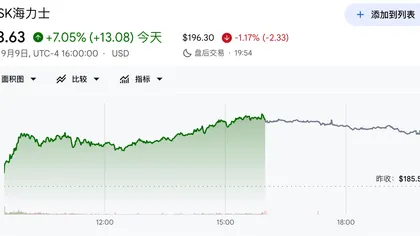
SK hynix US stocks surge to new highs, storage sector strengthens across the board! Goldman Sachs declares: The worst days are over
A Goldman Sachs research report ignited the storage sector, with SK Hynix soaring 7% on the US stock market in a single day to a record high. Micron and SanDisk also rose in tandem, outperforming the broader market. Goldman Sachs pointed out that a technical breakout in the storage sector, combined with low hedge fund positions, has shifted the "pain trade" direction upward. However, on the same day, the CEO of Kioxia poured cold water on the rally, stating bluntly that NAND "prices have risen enough." Amid this tug-of-war between bulls and bears, Micron's September 30 earnings report will be a key deciding factor.
华尔街见闻•2026/09/10 00:21
Report: OpenAI expected to spend $750 billion on computing power by 2030! The company still states that "computing power is extremely insufficient"
OpenAI has raised its 2030 computing power expenditure forecast to $750 billion, an increase of more than 25% compared to the previous estimate of around $600 billion. Bottlenecks exist in multiple supply chain segments such as chips, electricity, and land. Whether massive orders can be converted into usable computing power on schedule has become a key test for the AI infrastructure sector.
华尔街见闻•2026/09/10 00:01
Crypto prices
More
Bitcoin
BTC
$78,216.92
-0.55%

Ethereum
ETH
$2,465.95
-1.03%

Tether USDt
USDT
$0.9997
-0.02%

BNB
BNB
$722.97
-4.17%

XRP
XRP
$1.39
-2.09%

USDC
USDC
$0.9999
-0.01%

Solana
SOL
$101.33
-2.32%

TRON
TRX
$0.3390
-0.04%

Hyperliquid
HYPE
$83.35
-2.55%

Zcash
ZEC
$1,236.77
+4.39%
How to buy BTC
Bitget lists BTC – Buy or sell BTC quickly on Bitget!
Trade now
Become a trader now?A welcome pack worth 6200 USDT for new users!
Sign up now