
With a rate hike looming in September, will the US dollar start a new round of gains?

After last week's inflation data was released, the market's pricing for a rate hike in September became more solid, and major Wall Street institutions also revised their reports to forecast a September rate hike. After the market opened on Monday, the US Dollar Index continued its upward trend. Given that the market has already priced in the hike sufficiently, can the dollar start a new round of rallies after this rate hike is implemented?
Rate hike expectations fully priced in, September rate hike is "ready to launch"
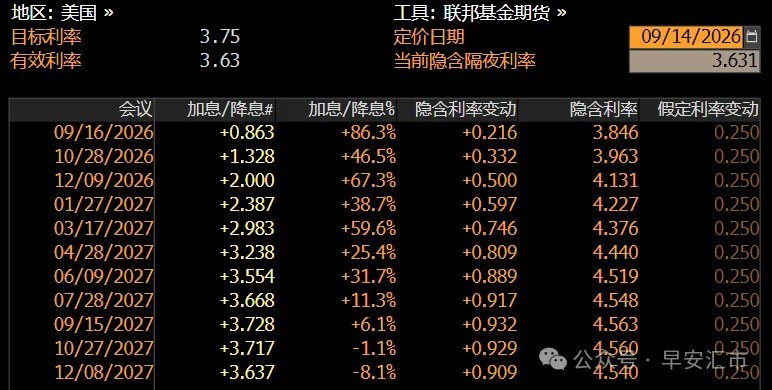
From the current pricing in the interest rate futures market, the probability of the Federal Reserve raising rates by 25bp in September is now close to 90%, making it almost a market consensus. The current market pricing indicates that after the September hike, there will be nearly three more hikes in this tightening cycle, reaching a terminal rate of around 4.56%.
"Buy the rumor, sell the fact": Can the dollar keep rising?
1. The key lies in the forward guidance from the dot plot
The market has already sufficiently priced in the rate hike. The implementation of the hike itself will bring very limited additional bullish information. The dollar’s reaction will depend on the guidance of the dot plot and the tone of Chair Walsh’s press conference. For the US Dollar Index to effectively break through and hold above 100, the Federal Reserve must signal a continued rate hike cycle through the dot plot, not just a one-and-done hike.
2. Concerns over fiscal deficit intensify, a structural weakness for the dollar
The continued deterioration of the US fiscal situation is becoming the core reason for the diverging trends of US Treasury yields and the dollar. The current US federal fiscal deficit is close to $2 trillion, and interest payments on national debt have surpassed $1 trillion for the first time. Yields on long-term US Treasuries have started to price in the risks of a debt spiral.
Bessonette is working hard to put out fires, stabilizing the Treasury market through various means; nevertheless, Trump continues to add fuel: last week, he proposed an expansionary fiscal bill, and if the Republicans continue to control both chambers of Congress, the plan is to grant a $5,000 subsidy for every adult American. The estimated cost exceeds $1.2 trillion, about 4% of GDP, further increasing fiscal deficit risks and pressures on Treasury issuance.
3. Treasury stepping in on long bonds: Bessonette’s "put option"
Facing upward pressure on long-term Treasuries, the US Treasury has taken steps to signal stability, essentially providing the market with a "put option" backstop. On September 9, the US Treasury announced the repurchase of $600 million in 10-year and 20-year Treasuries, below the market's expectations of $800 million to $1 billion. However, if the Federal Reserve continues to hike rates and the 10-year Treasury yield continues to rise, breaking above 5%, the Treasury will likely ramp up repurchase operations to curb excessive increases in long-term yields.
September FOMC poses asymmetric risks for the dollar
Dovish scenario: If there is no rate hike in September (a low probability) or a dovish hike in September (dot plot median at or below 4.125%, i.e., fewer than two hikes left), this could once again trigger market doubts on the Federal Reserve’s independence and credibility, causing the US Dollar Index to drop significantly.
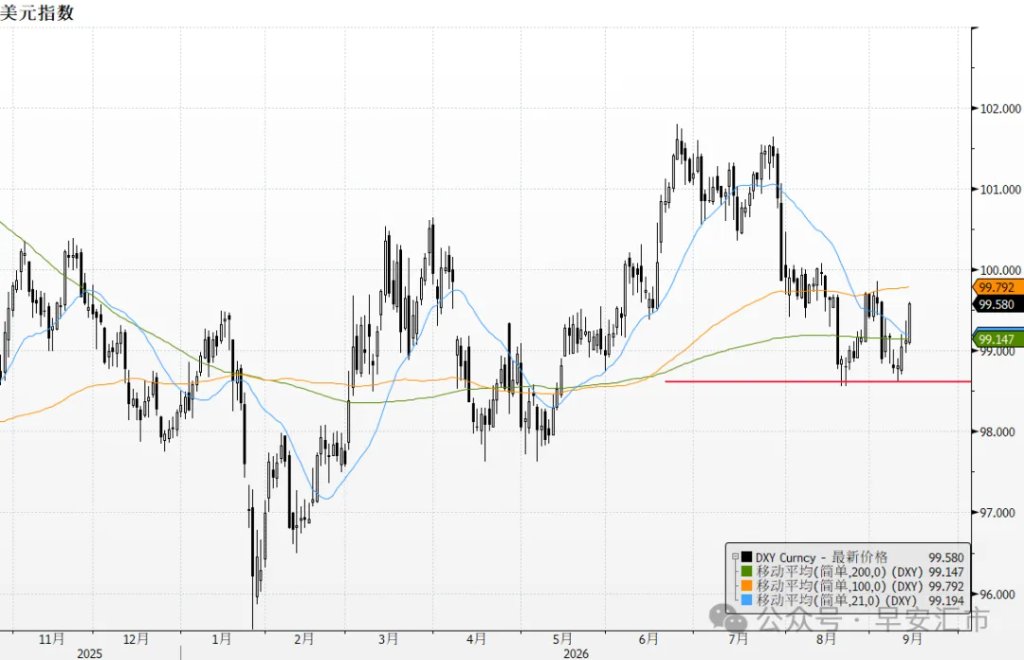
Hawkish scenario: If there is a rate hike in September and the dot plot signals ongoing rate hikes ahead (median above 4.375%, or three or more hikes), the US Dollar Index may test the resistance at 100. On the technical side, the US Dollar Index has formed a W-bottom at 98.5, with overhead resistance at 99.8.
For the renminbi, the 10-year US-China yield spread has reached a historical extreme, and this is not favorable for continued appreciation of the renminbi. However, the large trade surplus continues to support corporate FX settlement. Under these two-way factors, USDCNY will likely consolidate and fluctuate around the 6.70 level for a while.
Disclaimer: The content of this article solely reflects the author's opinion and does not represent the platform in any capacity. This article is not intended to serve as a reference for making investment decisions.
You may also like
Update: Equities Fall Intraday as Yields, Oil Surge Ahead of Fed Decision
Sector Update: Healthcare Stocks Lower Tuesday Afternoon
Ripple Lands Multi-Year Louisville Deal to Put XRP Branding on Court
Crypto prices
More


