
CITIC Securities: The Fed's September rate hike meets expectations, oil prices become key to follow-up, another rate hike of 25bps possible within the year

The pace and extent of future interest rate hikes by the Federal Reserve largely depend on oil prices. According to CITIC Securities, the Federal Reserve is expected to raise interest rates by another 25bps within this year and may remain on hold next year.
According to Zhitong Finance APP, CITIC Securities released a research report stating that the Federal Reserve raised interest rates by 25bps in September as expected, raised its growth and inflation forecasts for this year, and both the dot plot and Waller's speech conveyed hawkish signals. The strong market expectation pressure made the rate hike an easy choice for the Fed. The pace and magnitude of subsequent Fed rate hikes will largely depend on oil prices, which are difficult to predict. However, considering that the overall year-on-year inflation rate may decline significantly at the beginning of next year, the justification for further rate hikes should weaken by then. The bank expects the Fed to raise rates by another 25bps this year and possibly remain on hold next year. Current U.S. financial conditions are unlikely to meaningfully ease; in a growth-oriented narrative, it is advisable to seek assets backed by fundamentals rather than those simply benefiting from liquidity.
The main views of CITIC Securities are as follows:
The Federal Reserve raised interest rates by 25bps in September as expected, raised its growth and inflation forecasts for this year, and both the dot plot and Waller's speech conveyed hawkish signals.
The Fed raised its FOMC rate by 25bps as expected in September to the 3.75%–4% range, with the decision passed unanimously. The statement indicated that this rate hike would support a timelier return of inflation to the 2% target. The latest dot plot shows the median federal funds rate expectations for this year and next both at 4.1%, up from 3.8% and 3.6% in June. Among the 18 officials, 12 expect another 25bps hike this year, and 4 expect another 50bps hike; this is a clear upward revision from the previous dot plot when only 6 expected the rate range to exceed 4% this year. The Fed's summary of economic projections raised the real GDP growth expectations for this year and next by 0.1 percentage points each to 2.3% and 2.4%, and lowered the unemployment rate forecasts for the next three years to 4.1%. It also raised this year's headline and core PCE inflation forecasts by 0.1 percentage points each to 3.7% and 3.4%. The bank believes these changes reflect the Fed's optimistic view of the resilience of the US economy and concerns about persistent high inflation. Waller stated that this decision removes some accommodation; he said the FOMC is not confident about inflation falling back and sees almost no signs that the inflation trend has passed its test. When asked by the press why rate hikes are effective for energy supply shocks, he noted that while the Fed cannot impact specific prices, it will ensure that any price changes do not spill over into other areas and cause secondary or tertiary effects on the economy.
The market had largely anticipated this rate hike prior to the meeting; expectations for liquidity tightening strengthened slightly after the event.
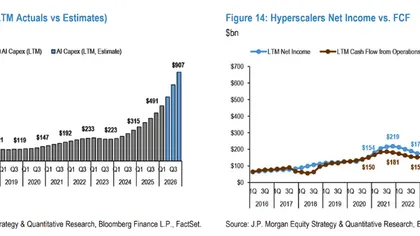
Before the decision was announced, CME FedWatch showed that the market placed a near 90% probability on a Fed rate hike this month and expected four cumulative hikes by the first half of next year. Such strong expectation pressure clearly made a rate hike the safest option for the Fed. As Brent oil prices rose above $100 again, the market gradually accepted the possibility that September could mark the start of a new Fed rate hiking cycle. Following the hawkish guidance at this meeting, the two-year US Treasury yield surpassed 4.7%, the ten-year yield returned above 5%, and gold prices fell below the $4,300 per ounce threshold. Waller attributed the recent rise in long-term bond yields to three main factors: strong US economic growth, capital competition from cloud company financing, and geopolitical disturbances to energy and food prices.
Seeking growth, not easing.
The pace and magnitude of subsequent Fed rate hikes will largely depend on oil prices, which are difficult to predict. However, a steady—not overheating—labor market does not support a strengthening wage-price spiral; four consecutive years of rising rental vacancy rates also indicate moderate rental inflation momentum. Thus, the risk of secondary inflation from energy shocks is limited, with overall year-on-year inflation likely to decline significantly at the start of next year, weakening the rationale for further rate hikes. The bank expects the Fed to raise rates by another 25bps this year and potentially remain on hold next year. With current oil prices just above $100 per barrel—insufficient to generate recession concerns but enough to deepen inflation worries—dollar liquidity cannot meaningfully ease, so there’s not yet clear room for long-term bond yields to fall. Once the path for Middle East conflict de-escalation becomes clearer, deploying on the right side may be a better choice. Short-term gold rebound conditions are relatively fragile; trading rhythm should be noted. The US dollar index has support and may fluctuate around 100 within the year. Middle East instability, rate hike expectations, and uncertainty around midterm elections persist, so US stocks may remain sideways in the near term. However, within a growth narrative, US equities may more easily gather consensus and can be considered for low-point allocations.
Risk factors:
Potential over-expected impacts from Middle East developments or energy shocks; the Fed's tolerance for inflation less than expected; the Fed's policy approach exceeding expectations; greater-than-expected changes in market liquidity or sentiment.
Disclaimer: The content of this article solely reflects the author's opinion and does not represent the platform in any capacity. This article is not intended to serve as a reference for making investment decisions.
You may also like
From the Token Frenzy to the $1.3 Trillion AI Server Blue Ocean: AI Inference Computing Power Fully Explodes, Industry Leaders like Dell Usher in the Golden Era of "Volume, Price, and Market Share"
Leading global AI server cluster manufacturers such as Dell are simultaneously benefiting from two major growth dividends: the accelerated expansion of the AI server market and a significant increase in the order shares from core AI cloud computing customers, including large enterprises and new cloud providers. They are not merely passively profiting from hardware price increases.

GPU Cloud Services Surge in Price: Nebius Raises Prices Again by 20%, Computing Power Supply Side Gains Bargaining Power
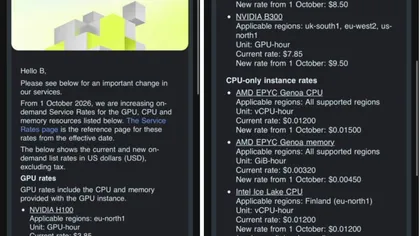
From October 1st, Nebius will raise prices for its entire GPU cloud service line by approximately 20%, with multiple chips from H100 to B300 seeing increases. This marks the second round of price hikes in recent months, and the cumulative increase for B300 has reached 56%. Demand visibility extends beyond 24 months, with customers eager to purchase Blackwell computing power, even willing to pay a premium in auctions. The supply-demand imbalance for AI computing power is reshaping the entire industry’s negotiation landscape, as bargaining power is quietly shifting to the supply side.
Crypto prices
More


