- UNI: Token burns and exchange dominance support long-term growth potential.
- AAVE: Strong recovery and lending leadership reinforce confidence in future expansion.
- ARB: Robinhood Chain revenue sharing could accelerate adoption and valuation growth.
Crypto investors often focus on projects with lasting value rather than quick gains. While hundreds of tokens compete for attention, a small group continues to strengthen market position and expand real-world use cases. Uniswap, Aave, and Arbitrum stand out for different reasons. Each network benefits from growing adoption, strong fundamentals, and leadership within a key blockchain sector. Those qualities make UNI, AAVE, and ARB interesting long-term holdings.
Uniswap (UNI)
 Source: Trading View
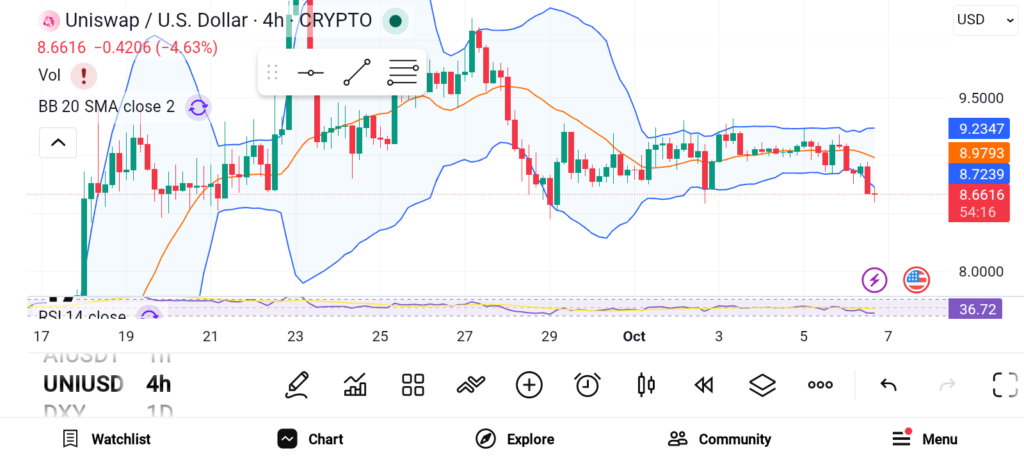
Uniswap remains the dominant decentralized exchange despite rising competition. According to Standard Chartered digital assets researcher Geoffrey Kendrick, UNI could have far more upside than many investors expect. His earlier year-end target of $6.50 arrived when UNI traded below $3. Since then, price performance has exceeded expectations. A major reason for his optimism comes from the fee switch introduced last December. Trading fees now help buy back and burn UNI tokens, reducing supply over time. Higher network activity from Robinhood Chain also pushed burn rates significantly higher during recent months. Kendrick believes Uniswap benefits from a powerful competitive advantage.
Aave Protocol (AAVE)
 Source: Trading View
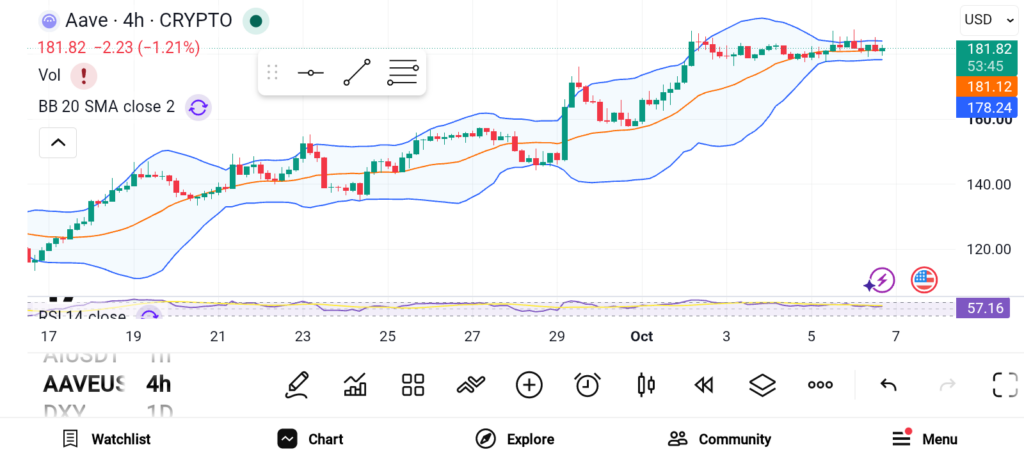
Aave has built a reputation as one of the strongest lending protocols in decentralized finance. Earlier this year, a roughly $300 million exploit connected to Kelp created pressure across the ecosystem. Rather than weakening confidence, the response strengthened Kendrick’s view of the project. The community helped raise about $300 million, largely in ETH, while leadership tightened risk controls. Liquidity recovered within weeks, showing resilience during a difficult period. Kendrick describes Aave as the leader in on-chain banking because users continue to trust the platform for lending and borrowing activities. Last year, the network scale became so large that he compared Aave to a major US bank.
Arbitrum (ARB)
 Source: Trading View
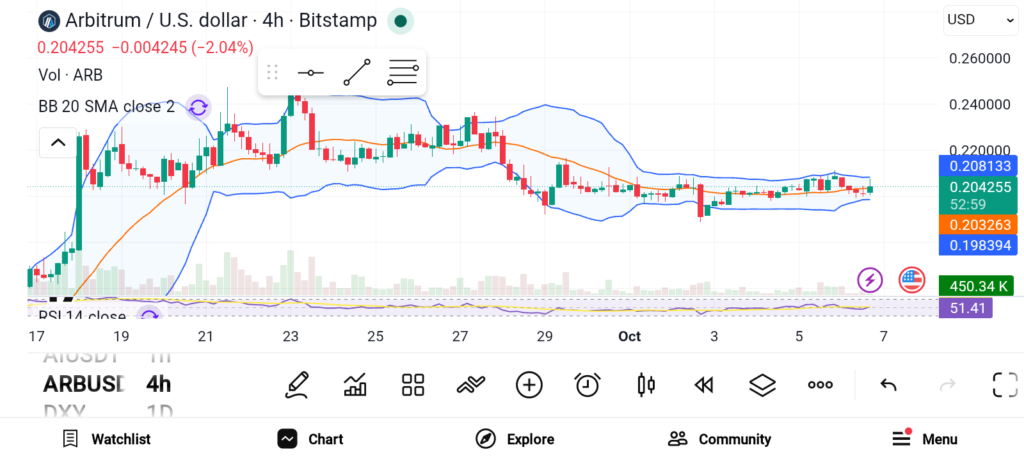
Arbitrum offers a different investment case. The layer-2 network gains revenue through a partnership with Robinhood Chain, which uses Arbitrum technology. As part of that arrangement, Arbitrum receives 10% of net revenue. That relationship helped increase monthly revenue from roughly $1 million to an estimated $4 million to $5 million in September. Kendrick argues that growth could accelerate if other companies follow Robinhood’s example. Should several firms adopt a similar model, monthly revenue could potentially climb to $40 million to $50 million within two years. He also points out that Arbitrum trades at a much lower valuation multiple than major layer-1 networks such as Ethereum, Solana, and Avalanche. That gap creates room for significant appreciation if business adoption continues.
UNI, AAVE, and ARB each offer a unique long-term investment thesis. Uniswap benefits from token burns and market leadership. Aave stands out through resilience and dominance in decentralized lending. Arbitrum combines growing revenue with an attractive valuation, giving investors three compelling altcoins to buy and hold.