
CPI heats up again! Fed tightening bets surge, dollar rallies, gold plunges

Huitong Network, October 14—— On Wednesday (October 14) at 20:30 Beijing time, the U.S. Department of Labor released the September Consumer Price Index. Data showed a year-on-year increase of 3.7%, higher than August’s 3.4% and slightly above the market consensus of 3.6%. This result was quickly transmitted throughout the global asset pricing system.
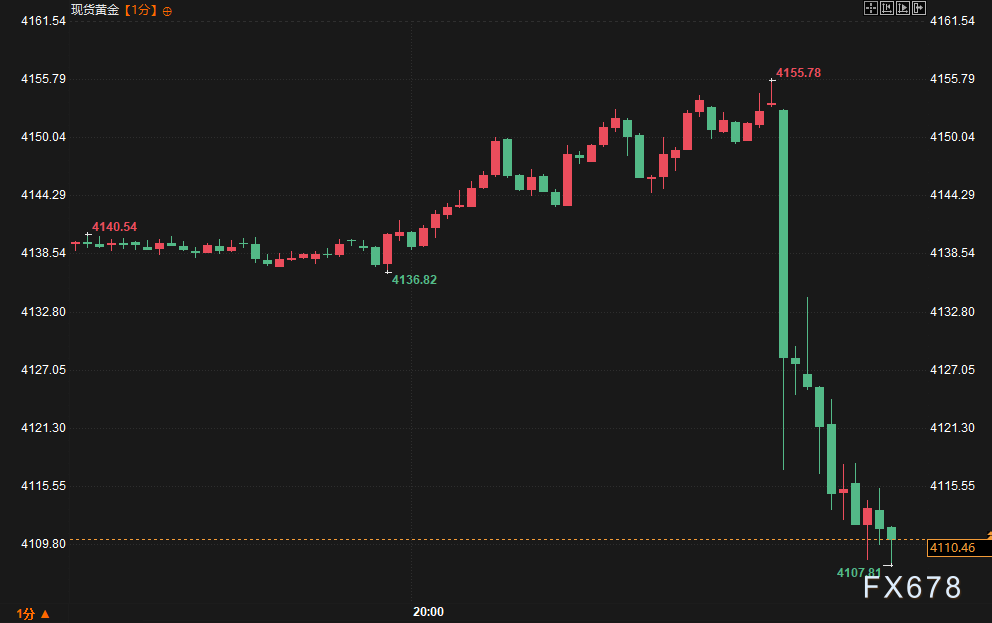
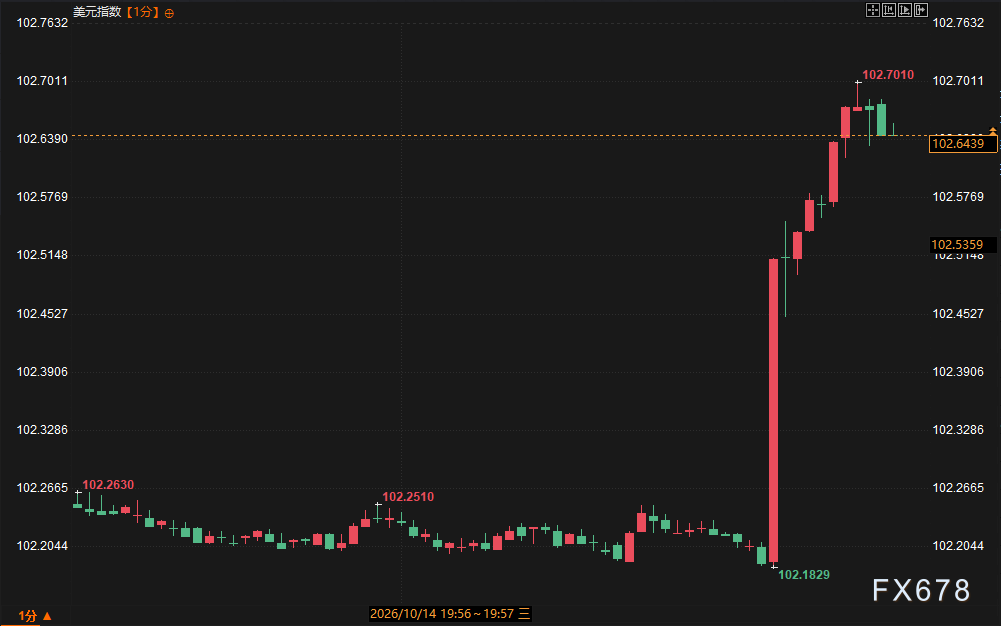
On Wednesday (October 14) at 20:30 Beijing time, the U.S. Department of Labor released the September Consumer Price Index. Data showed a year-on-year increase of 3.7%, higher than August’s 3.4% and slightly above the market consensus of 3.6%. This result was quickly transmitted throughout the global asset pricing system. Prior to the data release, spot gold had climbed about $15 in advance, indicating that some funds held optimistic expectations for a slowdown in inflation; after the release, a reversal ensued. The U.S. Dollar Index rose by about 35 points in the short term, reaching a high of 102.54. U.S. Treasury yields rose across the board, with the 2-year yield increasing the most by 3.83 basis points to 4.831%, the 10-year rising 1.47 basis points to 5.238%, and the 30-year gaining 0.87 basis points to 5.572%. Short-term interest rate futures fell simultaneously, and traders significantly increased bets on further tightening by the Federal Reserve. The rise in short-end yields was significantly greater than at the long end, suggesting a repricing pattern emerging in the yield curve.
In-Depth Interconnection Analysis
The core impact of this data lies in confirming the persistence of inflation stickiness. The year-on-year reading climbing from 3.4% to 3.7% not only surpassed the previous value but also exceeded the economist consensus surveyed by The Wall Street Journal. The immediate market reaction showed a typical “repricing” feature: a stronger dollar, higher U.S. Treasury yields, and gold plunging sharply from near 4151 by $34 to the 4117 area, a drop of approximately 1%. The gold price’s advance rise before the data, contrasted with the sharp drop afterwards, demonstrates that deviations between expectations and reality were quickly absorbed.
From the yield curve, the 2-year and 10-year yield spread remains positive at about 39.7 basis points, but the short end has clearly seen greater increases, indicating market sensitivity to near-term policy paths is higher than concerns about long-term growth prospects. The decline in short-term interest rate futures further confirms traders’ upward revision of the probability of a rate hike. Prominent institutions’ stances clearly diverged before and after the data. Prior to the release, some major investment banks and macro research teams maintained the tone of “moderately falling inflation, with one more rate hike possible this year but controllable in pace”; after the release, they quickly adjusted their statements to emphasize that “an above-expectation single month strengthens the necessity of maintaining a restrictive policy stance,” also noting that cost pressures on inputs such as semiconductors driven by data center construction could reduce the effectiveness of rate tools on some sources of inflation. Among retail investors, emotional volatility was more direct. Before the data, many trading discussions focused on technical rebounds in gold and room for dollar pullbacks; after the data, conversations quickly shifted to “stronger-than-expected inflation resilience and pressure on risk assets,” and there was a notable increase in calls for gold long position liquidations and U.S. dollar long follow-ups. Institutions focus on reevaluating policy paths and structural factors, while retail investors concentrate more on immediate price swings and position adjustments. The gap in their expectation biases formed an important micro foundation for market volatility that day.
Historical comparisons show that similar upside inflation surprises often accompany simultaneous rises in the dollar and bond yields, while gold comes under stage pressure. In the latest quotes, gold fell from pre-data highs to 4117, and the U.S. Dollar Index surpassed the 102.50 level—a stark contrast to price levels under prior moderate expectations. The logic is consistent across timeframes: short-term pricing quickly reacts to policy repricing, while the medium term requires observation of whether follow-up inflation and employment data will confirm if this rebound is sustainable.
Trend Outlook
Market performance shows that the upside surprise in September’s CPI has been incorporated into recent pricing. The U.S. Dollar Index’s performance above 102.50, the relative strength in short-end U.S. Treasury yields, and gold’s retreat from 4151 to 4117 together form the current immediate response framework. If inflation stickiness is further confirmed going forward, pressure on the short end of the yield curve may continue, and the inverse correlation between the dollar and gold will likely continue to dominate short-term volatility. Should subsequent data show signs of easing, some of the previously built-up policy repricing may be reversed. Overall, market logic has shifted from “expected decline” to “resilience confirmation,” and the relative strength relationships among assets will continue to evolve around this shift.
Further Reading
Q: What is the main market implication of September CPI rising year-on-year to 3.7%?
A: This reading surpasses both its prior value and expectations, reinforcing the perception that inflation remains sticky. The market therefore increased the probability that the Fed will maintain restrictive policy, which is directly reflected in a stronger dollar, higher short-end U.S. Treasury yields, and a retreat in gold.
Q: Why did short-end U.S. Treasury yields rise much more than the long end?
A: The short end is more sensitive to expectations for near-term policy paths. After a data upside surprise, traders bet more on rate hikes, short-term interest rate futures fell, and the 2-year yield rose substantially, while the long end primarily reflects growth and long-term inflation expectations, so its adjustment was milder.
Q: Why did gold prices reverse sharply before and after the data release?
A: Before the release, gold had climbed about $15 in advance, showing some funds were betting on falling inflation; after the upside surprise, gold quickly fell $34, reflecting that the deviation from expectations was immediately absorbed.
Q: Where are the main differences in views between prominent institutions and retail investors?
A: Institutions focus more on re-evaluating policy paths and structural price pressures, while retail investors pay more direct attention to immediate price swings and position responses. Prior to the data, there was some consensus on a moderate pullback; after the release, institutions shifted to emphasize the need for a restrictive stance, while retail investors focused on position adjustments for long and short.
Q: What does the linkage between this data and the U.S. Dollar Index and U.S. Treasuries mean?
A: The simultaneous rise of the U.S. Dollar Index by about 35 points and all U.S. Treasury yields shows the market reached consensus in risk appetite and policy pricing, with higher short-end rates further supporting the dollar’s short-term performance.
Disclaimer: The content of this article solely reflects the author's opinion and does not represent the platform in any capacity. This article is not intended to serve as a reference for making investment decisions.
You may also like
XRP Ledger RWA Growth Reaches $6.14 Billion
Strategy CEO forecasts record surge in Bitcoin banking adoption, Fidelity leads US banks at 77%

Bitcoin Falls as Hot Inflation Puts a Fed Hike Back on the Table

Crypto prices
More


