
AMD Q3 Earnings Preview: Can AI Data Center Growth Offset PC Concerns? Helios Ramp and Gross Margin Under Scrutiny
 Bitget2026/11/03 03:09
🔥 US Stock Hotspot Radar is Live! Content: 3 major themes + 6 selected stocks + 7 key events. Where are this week’s opportunities? Click the link to see all 22 trading directions in one chart →
1. Investment Highlights
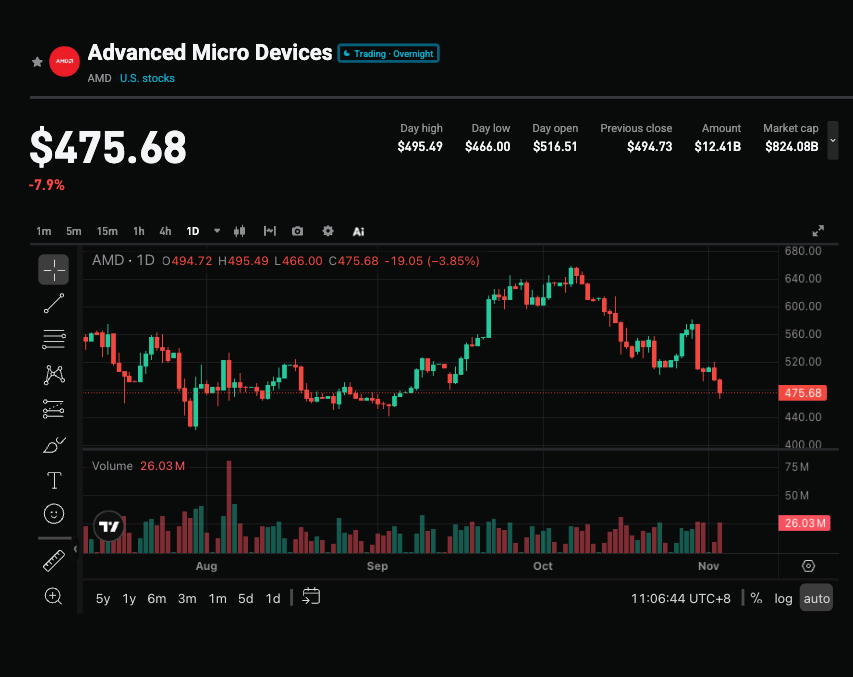
AMD is scheduled to report fiscal 2026 third-quarter results after the U.S. market close on November 3, 2026 (conference call at 5:00 p.m. ET). The company previously guided revenue to approximately $13.0 billion (±$0.3 billion; midpoint ~+41% YoY and ~+13% QoQ) with non-GAAP gross margin of around 56%. Wall Street consensus expects revenue of roughly $13.08–13.12 billion (+42% YoY) and adjusted EPS of about $1.94–1.95 (~+62% YoY versus $1.20 a year earlier). This report is a key test following a record Q2. Against the backdrop of Intel’s weak guidance triggering a PC sector sell-off and AMD’s recent share price pullback, investors are focused on whether AI data center momentum (including the Helios platform) can continue to accelerate and effectively offset PC concerns, as well as the quality of gross margins and the strength of Q4 guidance.
Focus 1: Can Data Center and AI Business Sustain High Growth
Data center remains the core growth engine. In Q2 this segment reached approximately $6.7 billion (58% of total revenue, +107% YoY), with Instinct accelerator sales doubling and strong demand for EPYC processors. The market expects Q3 data center revenue of roughly $8.2–8.3 billion. Partnerships with OpenAI, Meta, Anthropic, Microsoft and others provide visibility, and the Helios rack-scale platform is particularly important—management previously indicated shipments would begin at the end of Q3 and accelerate in Q4 and the first half of 2027. Stronger-than-expected performance would reinforce the AI leadership narrative; any slowdown could raise questions about growth sustainability.
Focus 2: Can AI Growth Offset PC and Client Concerns
Intel’s weak guidance last week triggered a sharp decline and broader panic across the PC semiconductor sector, dragging down the wider chip complex. AMD’s client and gaming businesses face risks from softer PC demand; the gaming segment already declined in the prior quarter. Investors will closely watch whether client revenue remains resilient (expectations around $3 billion) and whether data center strength can fully offset PC-related headwinds. Better-than-expected client results or contained drag would help ease sector sentiment; further weakness could intensify concerns over traditional businesses.
Focus 3: Gross Margin and Quality of Growth
Rapid AI growth does not automatically translate into commensurate profitability improvement. The company guided non-GAAP gross margin to approximately 56%. The market will scrutinize product mix effects: whether high-margin EPYC CPUs can offset potential pressure from Instinct GPUs and rack-scale systems, and the impact of rising costs for HBM and advanced packaging. Supply constraints (wafers, packaging, etc.) are also key variables. Stable or better-than-guided margins would validate growth quality; significant pressure could limit earnings leverage.
Focus 4: Q4 Guidance and Helios Ramp Pace
The market is more focused on Q4 and the forward outlook. Consensus expects Q4 revenue of roughly $16.0–16.3 billion (significant sequential growth), with some firms such as Jefferies more optimistic. Helios shipment progress and the pace of data center acceleration will be central topics on the earnings call. AMD rose sharply earlier in the year and briefly reached a $1 trillion market cap, but has since corrected meaningfully. Any upward revision to guidance and management’s commentary on second-half visibility and 2027 will be critical for sentiment.
3. Risks and Opportunities
Upside Catalysts:
- Data center revenue significantly above expectations (especially Instinct/Helios related), confirming robust AI demand.
- Total revenue near or above the high end of guidance, accompanied by raised Q4 or full-year outlook.
- Gross margin at or above the 56% guide, with client drag contained and positive AI partnership updates.
Downside Risks:
- Further softness in PC/client businesses that data center growth fails to fully offset.
- Gross margin below expectations due to mix or cost pressures, or supply constraints limiting volume ramp.
- Results merely in line with the midpoint of guidance and no upward revision, combined with high valuation and weak sector sentiment.
4. Trading Strategy
Bull Case: If data center and total revenue clearly beat consensus, and management confirms a smooth Helios ramp, raises guidance, and delivers a constructive outlook, it could reinforce confidence in AMD as a key AI infrastructure player and support a valuation recovery.
Bear Case: If core metrics merely meet or slightly miss expectations, PC concerns materialize, or guidance is cautious, profit-taking could emerge, particularly in a volatile chip sector environment. Historical post-earnings moves have averaged roughly ±11.4%, and options are currently implying a move of around 9%.
Key Metrics to Watch:
- Total revenue and YoY/QoQ growth rates
- Data center revenue (especially Instinct and Helios related)
- Non-GAAP gross margin and product-mix impact
- Q4 revenue guidance and whether the full-year outlook is raised
Operational Suggestion: If results beat expectations with constructive guidance, investors may look for pullback opportunities. If numbers are lackluster or guidance is weak, be mindful of short-term volatility and avoid chasing strength. Position sizing and stop-losses should be adjusted according to individual risk tolerance.
Disclaimer: The above content is for reference only and does not constitute investment advice.
Disclaimer: The content of this article solely reflects the author's opinion and does not represent the platform in any capacity. This article is not intended to serve as a reference for making investment decisions.
You may also like
Potential Governance Risks Behind Productivity! Goldman Sachs (GS.US) Restricts Non-Technical Employees from Using Advanced AI Programming Tools
According to reports, Goldman Sachs has banned some employees from using advanced artificial intelligence (AI) tools designed for programming after assessing concerns regarding productivity and risk.
Two Completely Opposite Bear Market Narratives Coexist in the Market: "Insufficient Hashrate vs. Excessive Hashrate"
Goldman Sachs highlights a dilemma in the AI market: while logic about power shortages and logic about excess computing power seem mutually exclusive, both have become reasons for AI trade sell-offs. Although demand from cloud providers remains strong, capital expenditures are projected to reach $1.2 trillion, with negative cash flow compounded by high leverage. A short squeeze rebound may occur at year-end, but the rebound could also present a selling opportunity.

Q3 results exceed expectations + full-year guidance raised! Grab (GRAB.US) receives bullish rating from Citigroup after earnings: Stock price can still rise over 92%
Citi has given Grab a "Buy" rating with a target price of $5.50. This target represents a potential upside of over 92% compared to Monday's closing price of $2.86.
Crypto prices
More


