
Is There a Shift in the U.S. Stock Market Trend?

Morning FX
The midterm elections are over, but the aftereffects are rippling through the market layer by layer. These past couple of days have seen fast shifts in market expectations. Especially for US stocks, there's a sense of going from elation to disappointment.
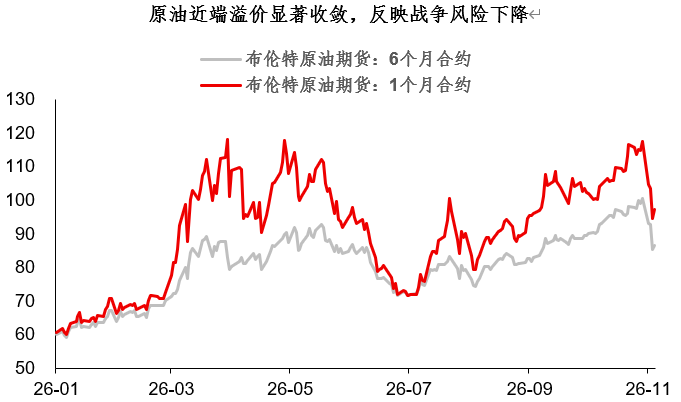
The "elation" in US stocks was reflected in the decline of the war risk premium. At the beginning of November, the near-term Brent crude oil futures premium once rose as high as $15, highlighting strong concerns about war risk. However, after the Democrats swept both houses, we saw a clear change in US political direction (see a long post by Vance), Hegseth was possibly facing impeachment... The near-term war risk implied by the oil market decreased significantly. This was the most direct reason for the risk-on move in the equity market.
However, this optimism didn’t last long, and last night US stocks turned sharply lower. The drop in US stocks may be related to the Ban Artificial Superintelligence Act, a Democratic proposal from two months ago. After the midterm elections, the Democrats took back both the House and Senate. Congresswoman Yassamin Ansari publicly called to put "pausing frontier AI and banning superintelligence" as the Democrats' day-one agenda, and the market immediately entered a panic mood…
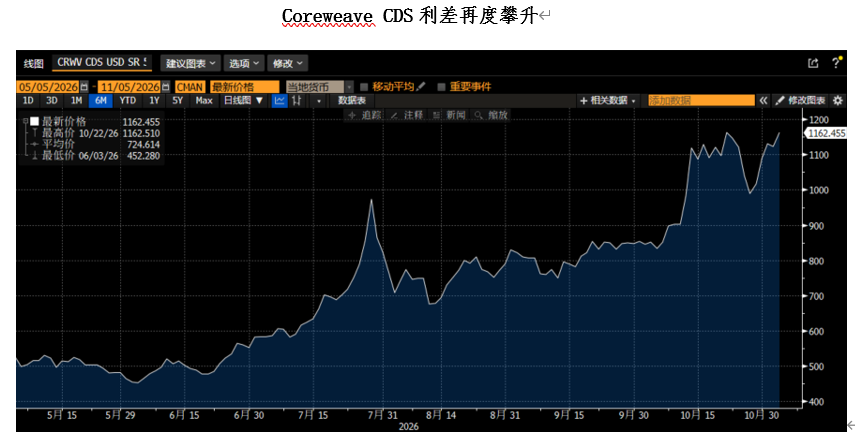
From a market performance perspective, the Coreweave CDS spread, which had already shown signs of peaking, has climbed again, with the 5Y spread rising above 1,160 points. US stocks fell simultaneously, with the Nasdaq down over 4%, approaching the 300-day moving average.
For today’s capital markets, AI regulation is a very sensitive topic. But compared with widespread rumors, real policy implementation is likely to move slowly for a few reasons:
1. AI is a national strategy, and that’s indisputable. Even strong regulation hasn't achieved consensus within the Democrats; it’s just the stance of some factions.
2. Even if both houses push for legislation, the President has veto power. Overriding a presidential veto requires a two-thirds vote in each house — a very high bar.
3. Compared with Congressional legislation, the most realistic current strategy is still to tighten permits for data centers at the state level. This will increase industry concentration in the AI sector and raise client-facing operational costs, but it probably won’t reverse the overall upward trend of AI capital expenditure.
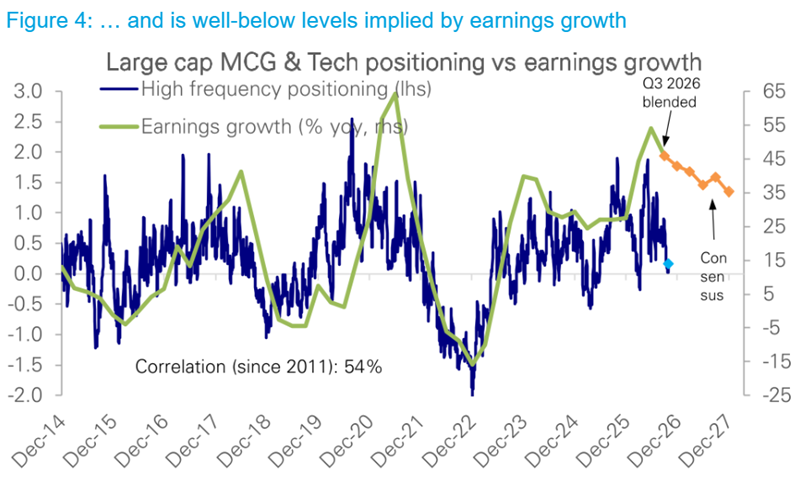
A recent research report from Deutsche Bank points out that holdings in US tech stocks have dropped significantly and are now below the level implied by growth expectations. Currently, US tech holdings are around a historical neutral range, with corresponding tech sector earnings growth of about 10%, much lower than the 47% Q3 average or the projected 36% for 2027E. In other words, the current level of holdings already reflects a fair amount of risk expectation; after large declines, there is opportunity.
For the FX market, the swings in US stocks make the G7 markets even more unpredictable. Here are a few points from my perspective:
1. No major trend has formed between the dollar and euro. The dollar is moving sideways, and the euro’s rebound momentum might be limited — after all, "no war" between the US and Iran does not mean "making a deal", and high energy prices are still a Sword of Damocles hanging over Europe (especially with winter coming soon);
2. Dips in the Australian dollar should be buying opportunities. After all, I don’t think US stocks or AI will see major problems. Several cases in the second half of this year have shown that large declines in the Australian dollar are often buying opportunities;
3. US bonds are roughly at a neutral level. The current 1Y SOFR rate (around 4.25%) corresponds to roughly a 60% expectation of a year-end rate hike, which is basically neutral. Further moves will depend on tonight’s big Non-Farm Payrolls data. In terms of strategy, allocating on rallies is still the right direction.
Disclaimer: The content of this article solely reflects the author's opinion and does not represent the platform in any capacity. This article is not intended to serve as a reference for making investment decisions.
You may also like
Trump’s Plan to Let 401(k)s Hold Crypto Is Almost Final: When Can Savers Buy In?

BUZZ-Texas Roadhouse shares fall as third-quarter profit misses expectations
Nasdaq and Semiconductors: Reasons for the Plunge and Where It Might Stall 261106

Crypto prices
More


