
Ternos pressures Siri chief, Apple AI can't wait any longer

 Just two months after taking the helm at Apple, the new CEO John Ternus couldn't sit still. Last week, in a closed-door conference room at Apple Park, he summoned Senior Vice President Craig Federighi, who has led software engineering for over a decade, to sit across from him.
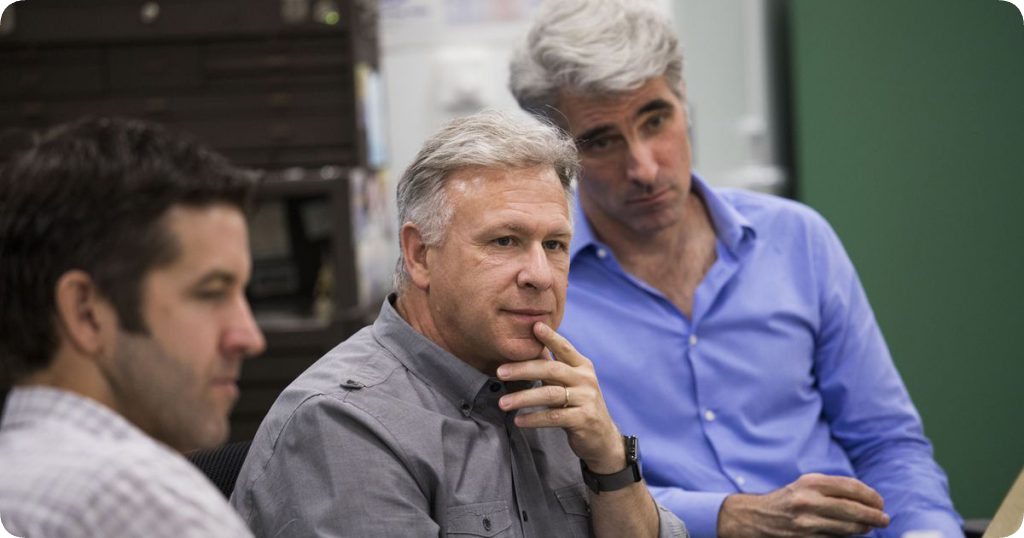 Photo | Ternus (left) and Federighi (right), source: vulcanpost According to Bloomberg reporter Mark Gurman, Ternus delivered an unprecedented strict warning to the software team behind closed doors: Apple has already fallen far behind its competitors in AI. The company must embrace AI with as much urgency as its rivals, accelerate its roadmap, and quickly surpass the mere phase of “patching Siri where necessary.” On one hand, the new leader is deeply anxious about losing Apple's ecosystem moat; on the other, the latest iOS 27.3 beta edition for mainland China was just released—where the Chinese Siri finally evolved from the long-unmodified static orb to a moving marquee.
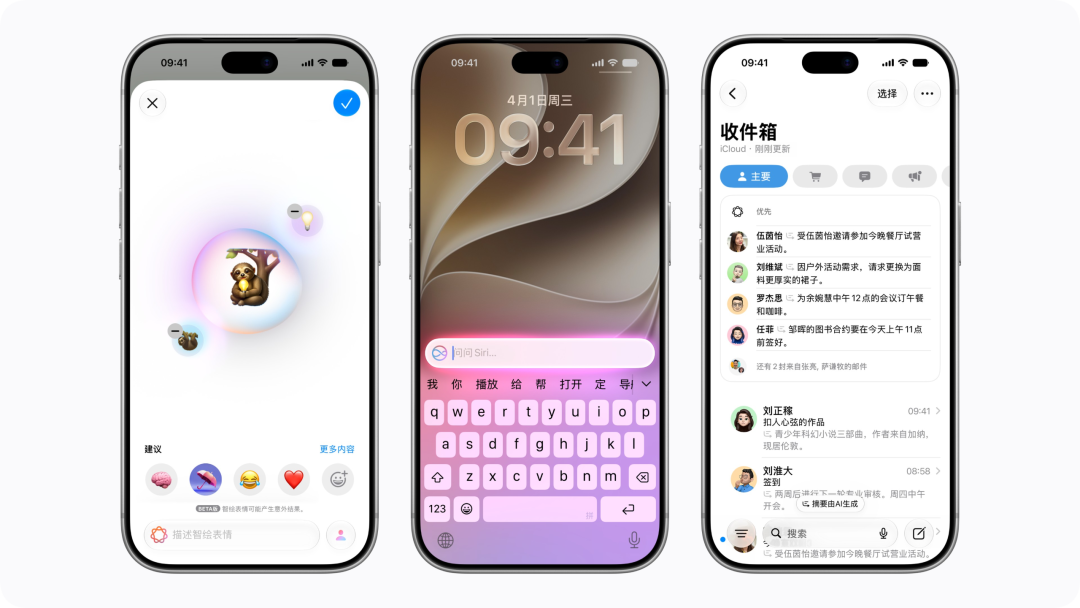 Photo | Apple However, in the notes of Apple's official press release, the next-generation Siri AI, just as in the EU and other regions, is still missing for now. And even in regions where Siri AI is already available, the actual experience is fairly bland—mostly limited to on-screen summaries and single-step commands, still far from being a truly autonomous agent that handles tasks on behalf of users. This is precisely the passive situation Ternus is eager to reverse.
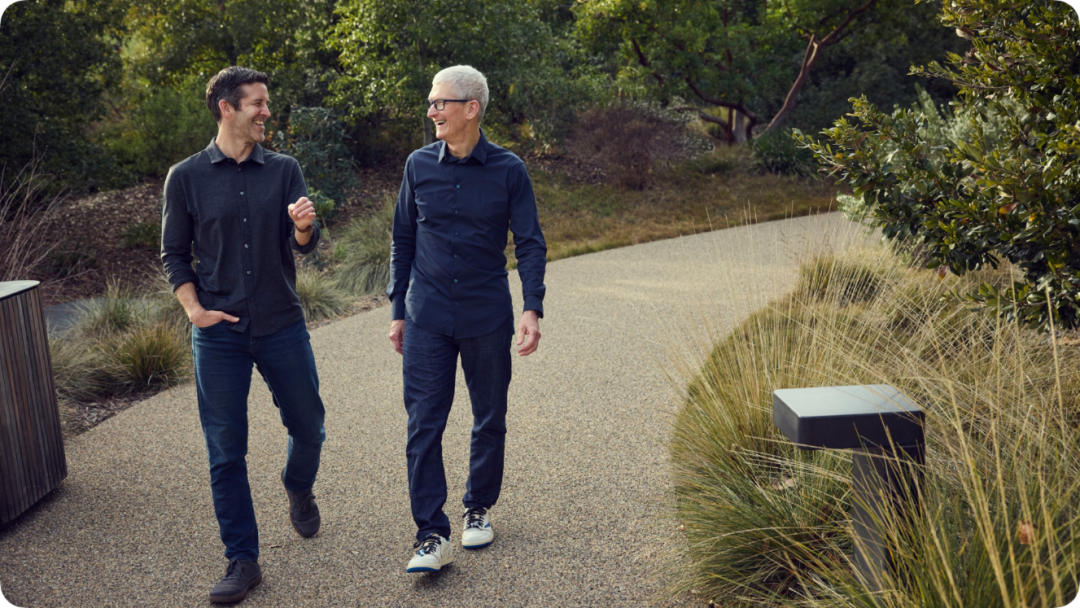 Photo | Apple
An Answer Two Years Late
In order to promote Apple Intelligence’s entry into China, newly appointed Executive Chairman Tim Cook has been working tirelessly over the past two years: In autumn 2024, facing press inquiries in Beijing, he cautiously stated efforts were being made to advance concrete regulatory procedures; by 2025 in Shanghai’s Suhewan, his focus had shifted to “how to truly integrate AI into the daily system.” Last month, during his visit to Shanghai Qiantan Taikoo Li’s “Blue Box,” Cook finally confirmed in an interview with ifanr that the first batch of features had been approved for rollout.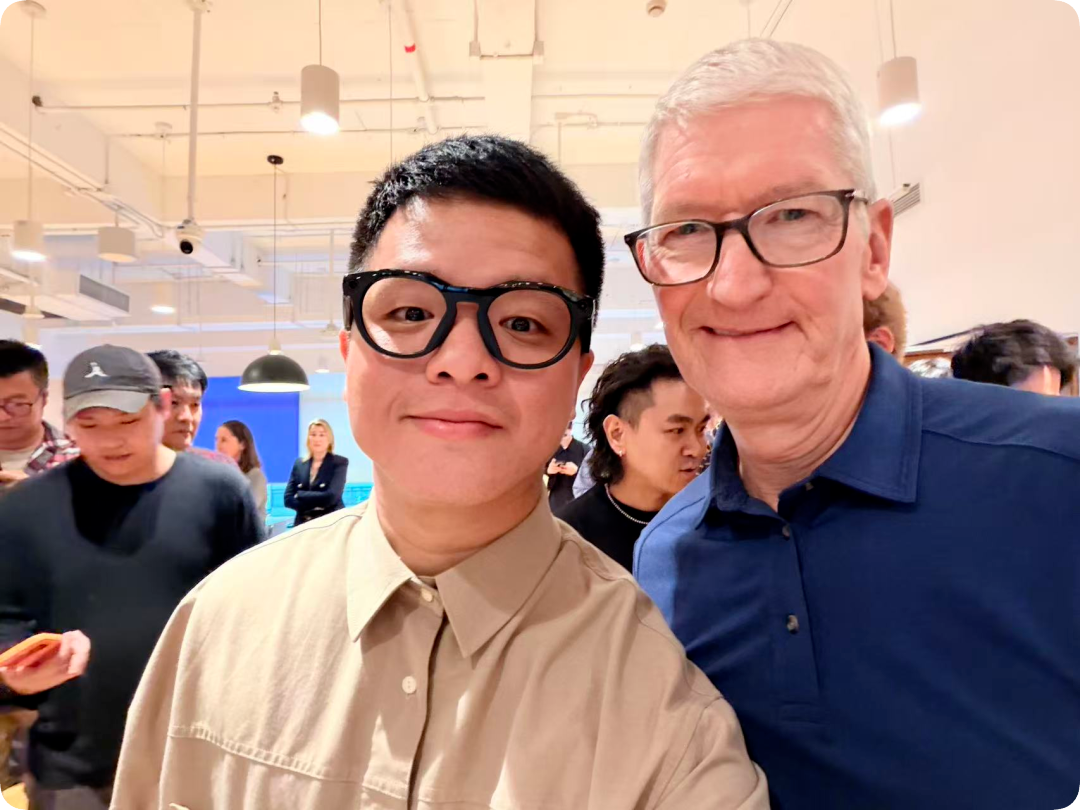 Photo | ifanr After repeated compliance communications and choosing Alibaba Qwen as the cloud model partner, Apple’s “two-year timeline” finally arrived. Yet in ifanr’s first-hand experience, Apple’s mainland China AI rollout was lackluster—due to the lack of a proactive system-level interaction framework, Siri’s integration with Qwen felt more like a clumsy system plug-in, barely differing from any third-party AI app. While domestic Android manufacturers and their AI assistants are already trialing multi-step tasks such as food delivery and ticket booking across apps, Apple, in the world’s largest iPhone market, is still deploying the plan from two years ago , stuck in the old “single-request single-response” logic.
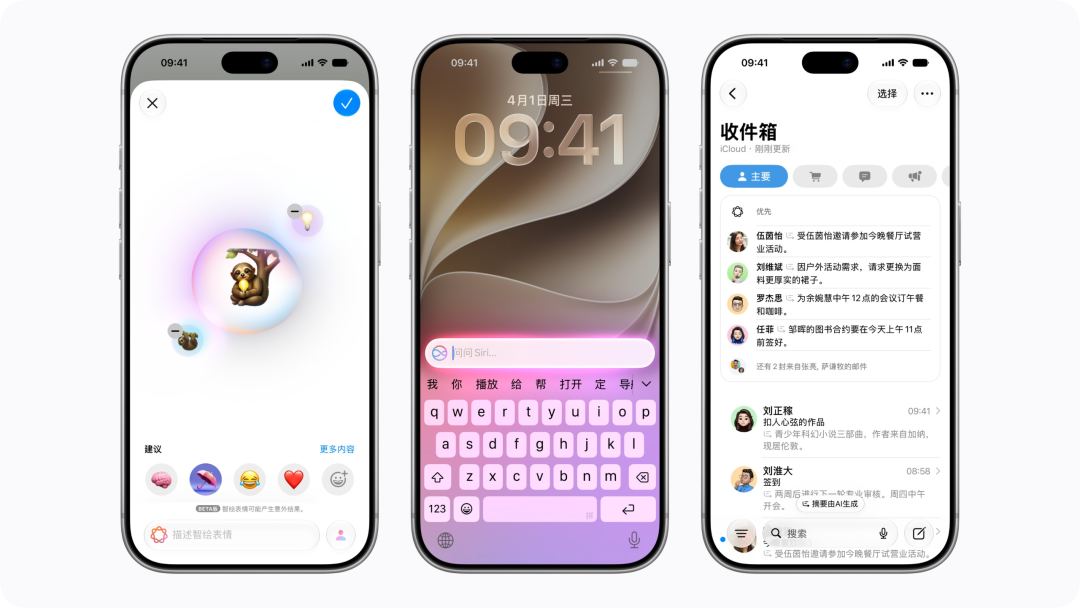 Photo | Apple
The Duality of Ternus
Last week, Apple released its Q4 fiscal 2026 earnings. In a call with analysts, Ternus delivered his first earnings report card as CEO, composed and graceful. When discussing Siri AI, he did not hesitate to praise it, telling analysts that Apple “finally has the Siri we’ve always wanted.” .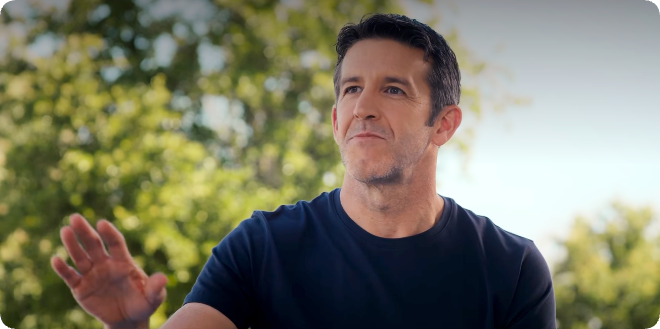 Photo | Clique When pressed on the more autonomous Agent path, he responded without missing a beat, emphasizing Apple’s prudent philosophy: users must be clear about what permissions they grant to AI, and Apple will never sacrifice privacy at the altar of blind autonomy. However, behind closed doors, in the conference room mentioned at the beginning, the new CEO—who led hardware engineering for over a decade—is running out of patience. Hardware R&D is accustomed to highly defined cycles of 3 to 5 years, from chip manufacturing to industrial design; Federighi, after more than a decade heading software engineering, is more used to 12- to 18-month rolling development cycles and has long taken a cautious stance on the safety and hallucinations of generative AI. Bloomberg revealed that Federighi has a strong leadership style within the software team, often using deep technical details to push his stance in meetings, making more radical explorations hard to advance internally. While the entire mobile and LLM ecosystem outside is pivoting towards the Agent path of “screen takeover and autonomous delegation,” the software team’s steady and methodical patching pace stands in stark contrast to the external competition as seen by Ternus.
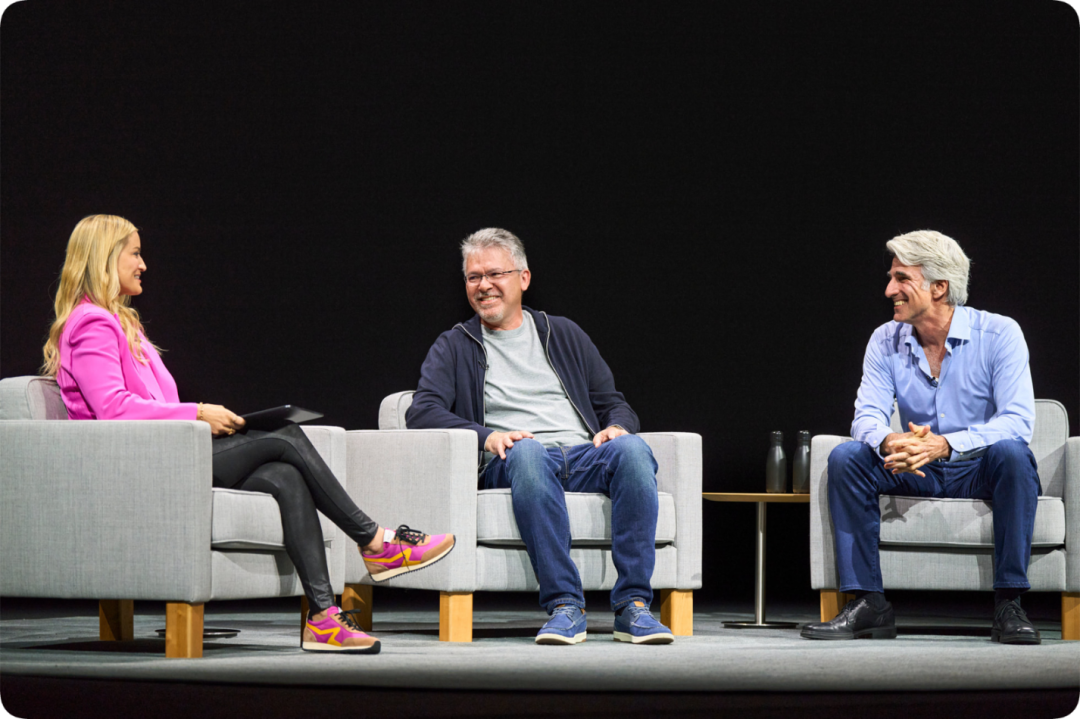 Photo | Apple
Faster Gears and the Boundary of Privacy
In fact, it’s not that Apple hasn’t considered taking this step. At WWDC26, Apple demonstrated a prototype closest to the future Agent form: once the system notices a weak password in the password manager, it can autonomously launch Safari, visit the target site, complete the password update, and write the new password back to the keychain.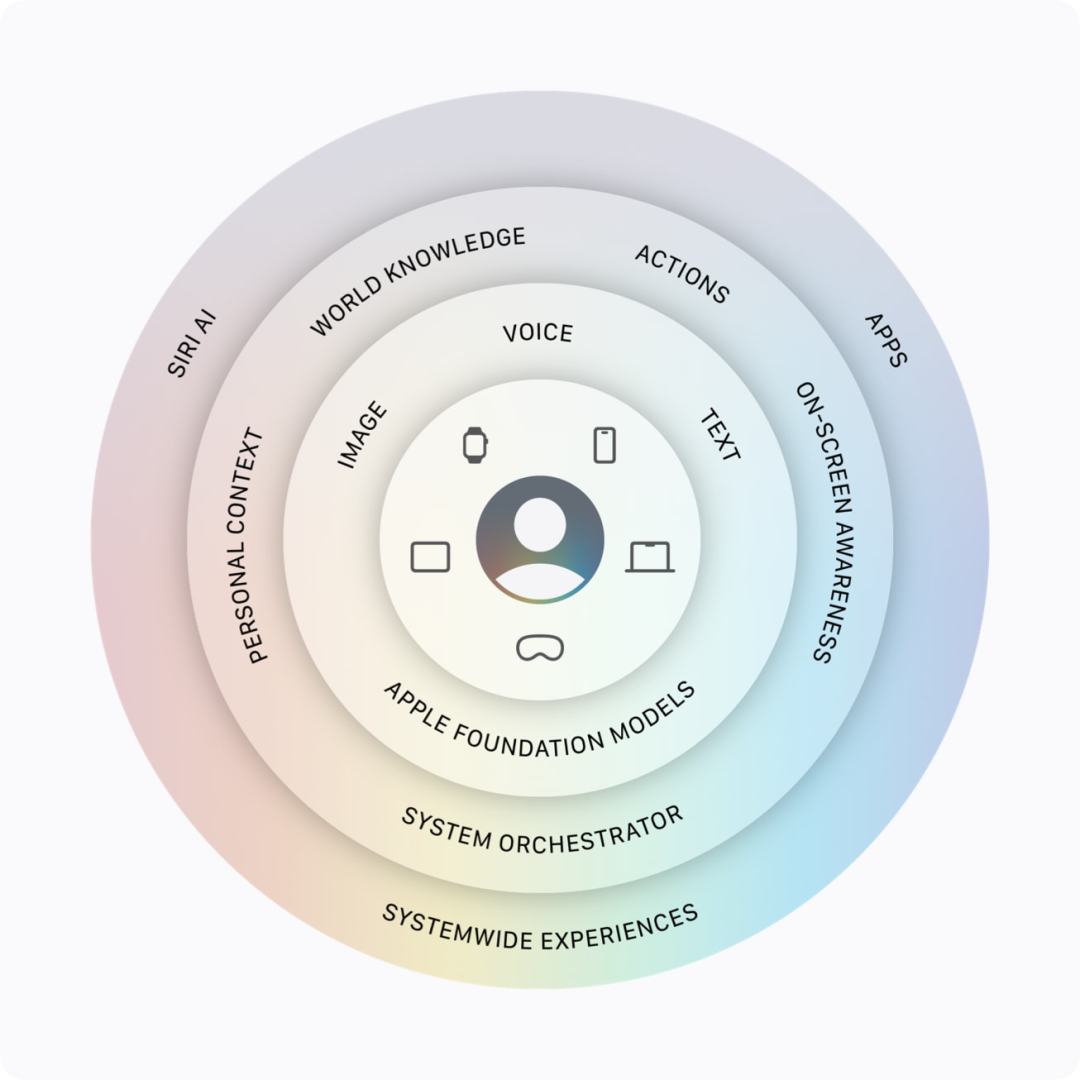 Photo | Apple But this feature briefly appeared in the beta, then quietly disappeared. Its suspension neatly exposes Apple’s hesitancy about intelligent agents. For over a decade, iOS has depended on a conservative order: each app stays strictly in its own sandbox, and every action requires user clicks and confirmation.
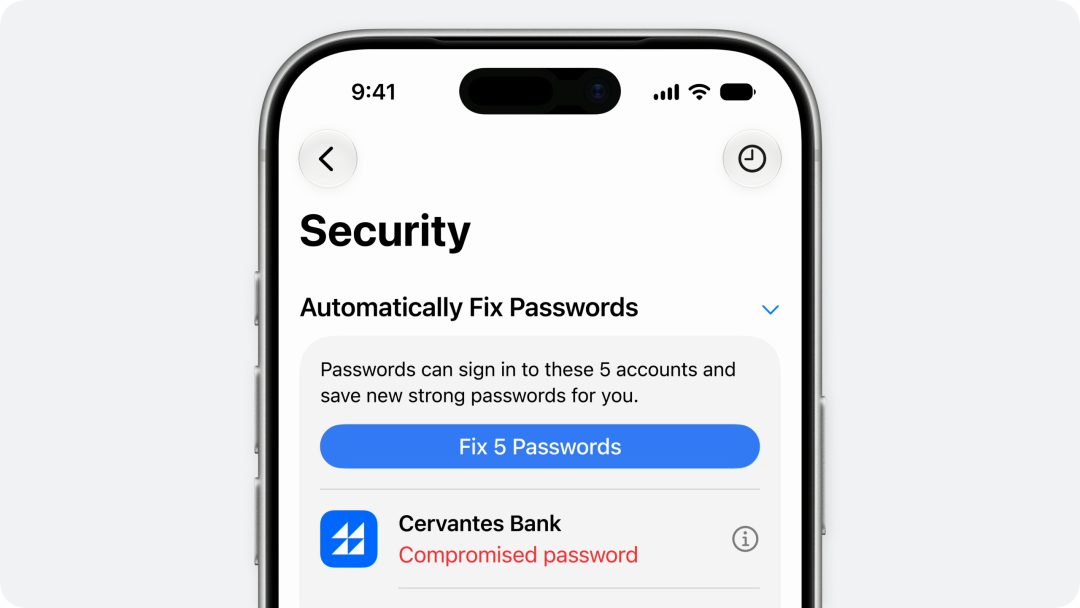 Photo | Apple Yet tasks like “auto-change password” require the system to directly take over the browser on your behalf, traverse unknown web pages, identify forms, click submit, and handle unexpected pop-ups. If the target site updates or loads slowly, the process is not easily closed autonomously. For Apple’s software architecture, used to “one command per user, one action per system,” letting AI consecutively act for users is far more complicated than expected. To break the deadlock, Apple’s internal engineering pace is undergoing slight adjustments. Bloomberg reports that, for the next-gen system codenamed iOS 28, Apple is officially shifting its long-standing “4 weeks coding + 4 weeks system integration” model for the first development phase (M1) to “6 weeks exploratory coding + 2 weeks system integration.” . This forward-weighted adjustment is designed to give low-level engineers more time for free experimentation, forcing the team to explore more radical Agent architectures.
 Photo | Apple Moves to open up the ecosystem to outsiders are also in progress. The day after the earnings report, Apple’s developer site officially launched new tools for iOS 27.3, deepening App Intents and introducing a brand-new “Skills” framework, aiming to package complex workflows as modular building blocks and plug gaps in system-level operational abilities through developers. In its own iWork suite and Creator Studio, Apple is also preparing for Agents by preemptively introducing MCP interface support.
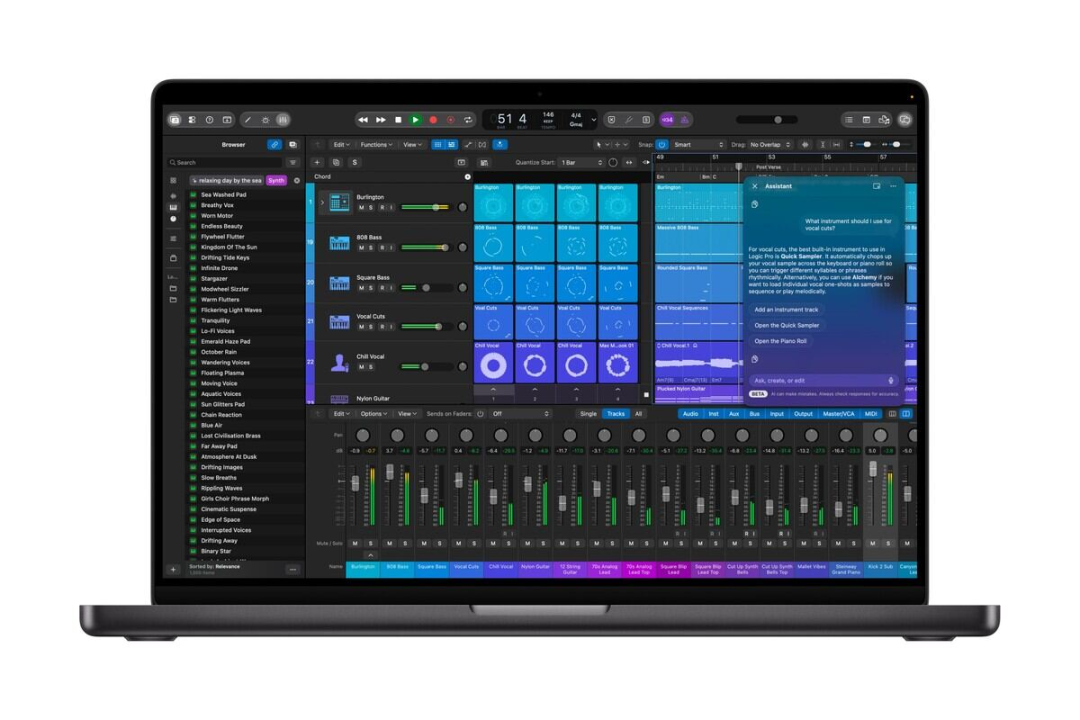 Photo | Apple Yet, harder to overcome than reconstructing development processes, is Apple’s bedrock— privacy . For a long time, Apple has exercised a restraint in AI that is hard for competitors to emulate: for example, in the international version of Siri’s audio summary (Siri Recap), the system promises never to retain any raw audio files, all transcribed text is stripped of speaker names, and only anonymized structured summaries are produced. This “no identity, no original file” on-device handling forms the trust cornerstone that allows users to let their phones remain aware.
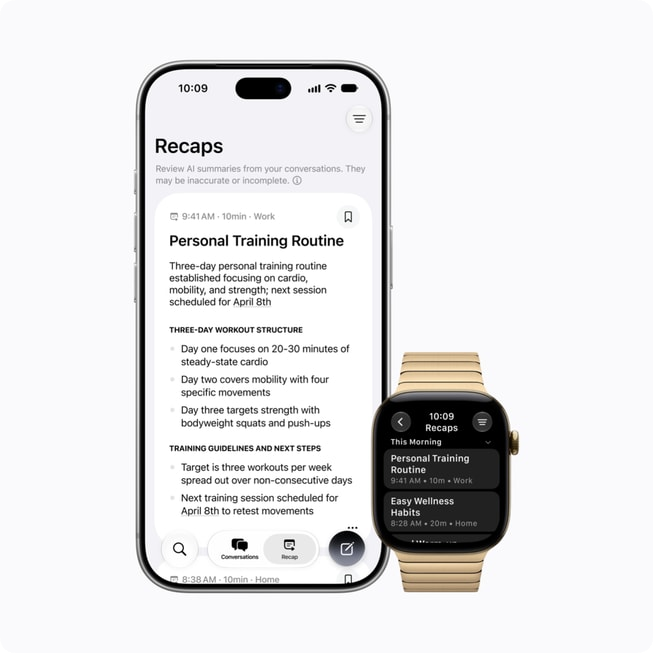 Photo | Siri Recap, source: Apple But the underlying logic of autonomous Agents requires building on extensive and coherent personal “long-term memory.” If even details of when, with whom, and where you like to eat must be physically erased, a truly autonomous butler that can proactively make reservations and plan vacations simply cannot logically exist. How far should the system be allowed to act on your behalf before you're willing to relinquish control? This is not just an engineering trade-off but a trust test Apple must answer for its users. Two years ago, when Cook first uttered the term “Apple Intelligence” at WWDC24, Apple painted a vision of dignified balance: combining the wisdom of large models with uncompromised personal privacy. Now, the company is stuck at the threshold between being a "one-shot interaction assistant" and a true Agent, navigating back and forth between privacy and convenience.
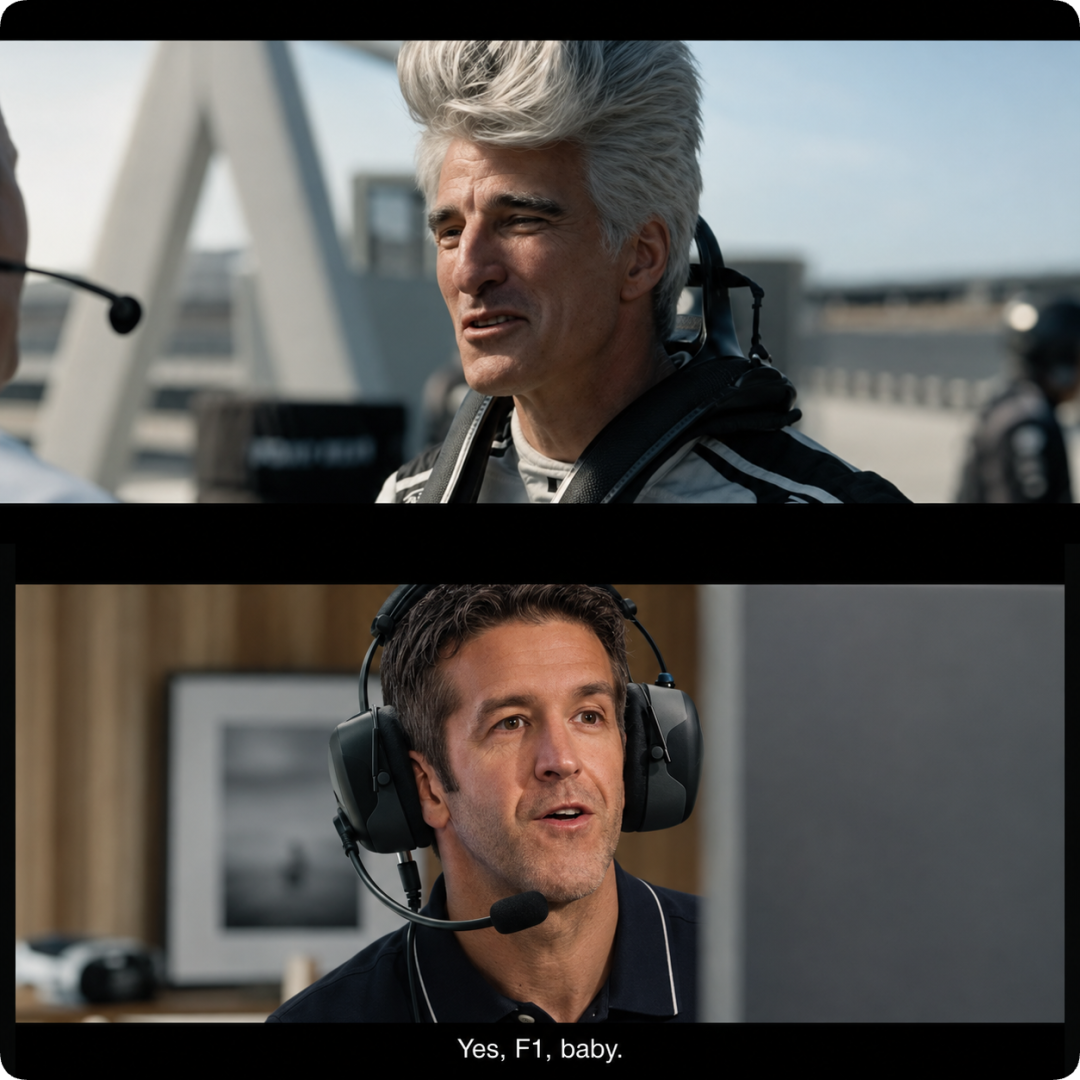 Photo | AI-generated Ternus is standing at this threshold. When he closes the conference room door, asking Federighi to step on the gas and steer the wheel towards a more radical Agent, Apple is in fact making its choice: the era of winning applause with cautious defense and incremental moves is over. To build the next generation of smart devices that truly understand you, Apple has no choice but to step boldly out of the safety zone it guarded for over a decade.
Author | Zheng Tingxu
Editor | Xiao Qinpeng



Disclaimer: The content of this article solely reflects the author's opinion and does not represent the platform in any capacity. This article is not intended to serve as a reference for making investment decisions.
You may also like
BlackRock Bitcoin ETF outflows hit $1.66 billion after seven-day streak

If Jensen Huang resigns, who could take over Nvidia? AMD's Lisa Su included in media candidates
AMD CEO Lisa Su, who holds a Ph.D. from MIT and led AMD back to growth while rebuilding customer trust during a crisis, is seen as a potential candidate. However, the competitive relationship between AMD and NVIDIA adds complexity to the succession process. Arm CEO Rene Haas, who worked at NVIDIA for seven years, is considered a smoother option for succession.
SoftBank reports first quarterly loss in two years! $3.7 billion impairment in US data center project, AI investments face pressure
SoftBank Group reported a net loss of 1.12 trillion yen in its second fiscal quarter, marking its first quarterly loss in nearly two years. The main reasons are the write-off of nearly $3.7 billion in advance payments due to adjustments in the procurement of power supply equipment for its AI data center in Ohio, USA, a shift of the Vision Fund from profit to loss, and a surge in the cost of high-debt financing. Since the June peak, SoftBank's share price has fallen more than 50%.
Expanding computing power on one hand, grabbing spectrum on the other! Barclays optimistic about SpaceX (SPCX.US) acquiring T-Mobile: Complementary advantages of ground networks and Starlink
After Space's stock price rose for two consecutive days, Barclays stated that T-Mobile is the "cleanest" choice among SpaceX’s potential acquisition targets. Barclays considers Verizon a major unknown, while AT&T has the lowest strategic fit.
Crypto prices
More


