
ZK Atlas Enhancement: Transforming DeFi with Zero-Knowledge Powered Scalability
- ZKsync's October 2025 Atlas Upgrade introduces modular Layer 2/3 infrastructure, achieving 15,000 TPS and slashing proving costs via RISC-V-based Airbender prover. - The upgrade enables zero-fee DeFi transactions and real-time asset tokenization, with ZK token surging 50% and $19M in institutional funding for integration. - By unlocking RWA tokenization and addressing trust gaps through ZKP protocols, ZK infrastructure is redefining DeFi scalability while navigating regulatory and integration challenges.
The
ZK
Atlas Upgrade: Transforming DeFi Scalability
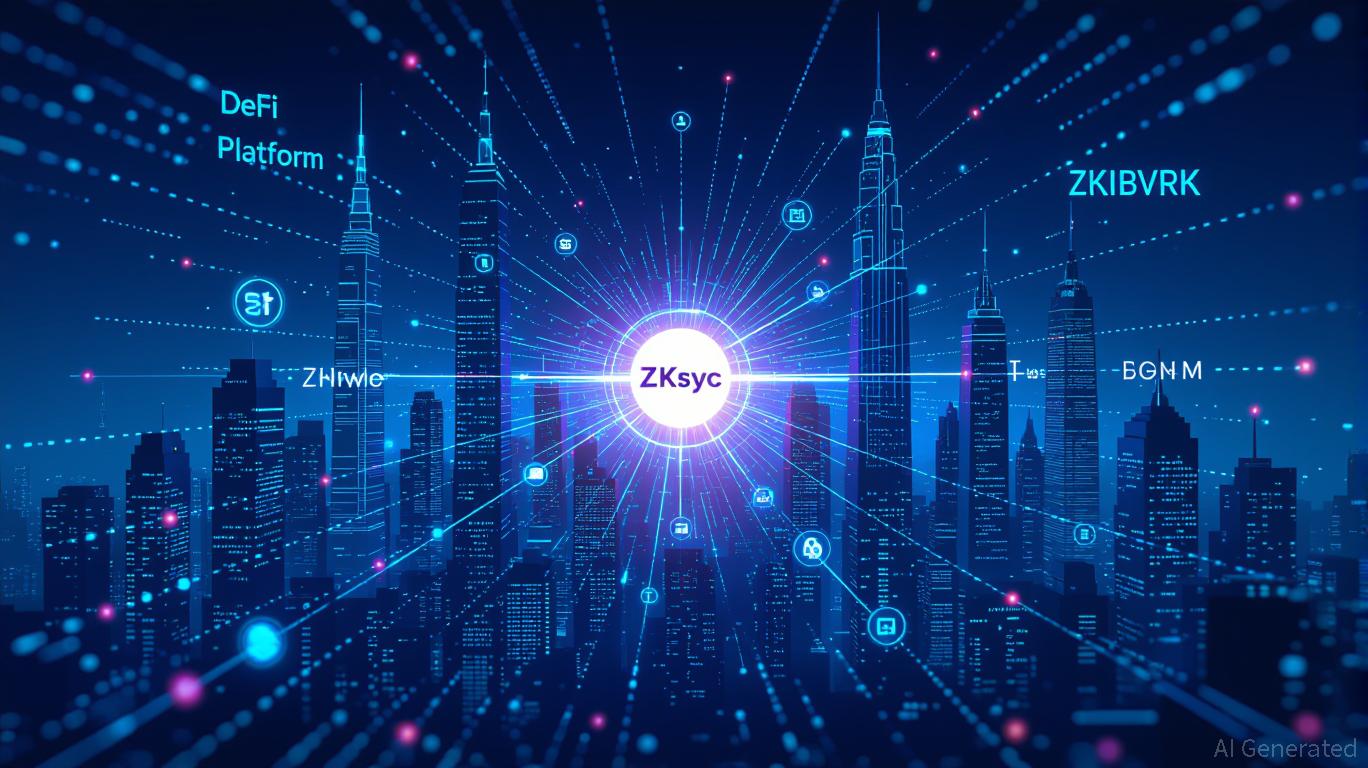
The ZKsync Atlas Upgrade, revealed on October 8, 2025, marks a major evolution in blockchain design. By deploying a modular Layer 2/3 framework, it supports more than 15,000 transactions per second (TPS)—a dramatic improvement over Ethereum’s 30 TPS ceiling, according to the
For DeFi, this translates to zero transaction fees and immediate settlements, addressing two major barriers to widespread use. Picture a decentralized exchange (DEX) where trades are completed in milliseconds without gas fee battles, or a lending service that updates collateral instantly. The
Institutional Embrace and Market Reaction: ZK Gets the Green Light
The industry has taken notice of this shift. The ZK token, native to the ZKsync network, jumped 50% after the upgrade, reflecting strong institutional interest, according to the
The ZK Atlas Upgrade also paves the way for tokenizing real-world assets (RWA) by enabling
Obstacles and Future Prospects
No major innovation comes without challenges. Regulatory uncertainty and the difficulty of integrating ZK with existing systems are still significant obstacles. Yet, ZKsync’s modular approach and support for Blockchain-as-a-Service (BaaS) solutions help reduce these risks, as explained in the
Additionally, the ZKP (Zero-Knowledge Proof) protocol’s verified knowledge economy—where users bid on and confirm factual information—complements ZK infrastructure by closing trust gaps in decentralized systems, as noted in the
Conclusion: Essential for the Next Wave of Finance
The ZK Atlas Upgrade is more than just a technical enhancement—it’s a roadmap for the future of DeFi. By resolving scalability issues without sacrificing security, ZK technology is quickly establishing itself as the foundation of Web3. For investors, this means preparing for a world where blockchain is not just experimental, but a core part of global finance.
With the rapid ascent of the ZK token and growing institutional alliances, the market is already anticipating a future dominated by ZK-driven platforms. Ignoring this development isn’t just missing a trend—it’s overlooking the next $100 billion opportunity.
Disclaimer: The content of this article solely reflects the author's opinion and does not represent the platform in any capacity. This article is not intended to serve as a reference for making investment decisions.
You may also like
Big Week Ahead: Ripple Heads to NYC With Wall Street Heavyweights

 VIPOil Risk Premiums and rToken Dividend Arbitrage Strategies
1. This week we focus on cross-asset positioning under an energy shock and arbitrage opportunities in tokenized-stock cash dividends. We recommend assessing market direction separately from income sources. Higher oil can weigh on growth valuations, lift inflation expectations, and spark expectations of Fed rate hikes, putting pressure on equities and crypto. 2. rToken net cash dividends can be distributed separately, but buying spot, shorting a perpetual, and holding across the record date does not automatically create an arbitrage. First confirm ex-dividend eligibility, platform snapshots, after-tax amounts, and the corporate-action rules for the short leg. Then compare funding fees, spreads, and execution costs. A dividend arbitrage strategy can be applied to STRC. 3. Next week's Fed decision and major technology earnings are key. Lower policy uncertainty can help restore risk appetite, but a sustained rebound still needs confirmation from rates, cloud growth, capital expenditure, and free cash flow. Our base case is a monthly-timeframe rebound in risk assets and crypto as earnings season, the Fed meeting, and the midterm elections pass and uncertainty recedes. Assets in focus: BTC, ETH, SOL, WTI, ASML, MSFT, GOOG, AMZN, CAT, and STRC

Goldman Sachs Names One Trade to Hedge an AI Market Shock

Big Tech Earnings Are a No-Win Test as Investors Punish Both Capex Cuts and Hikes
Crypto prices
More


