
Wendy's Closes Low-Performing Locations to Focus Resources on Expanding Successful Outlets
- Wendy's plans to close 350 underperforming U.S. stores by 2026 to boost profitability and reinvest in high-performing franchisees. - Q3 2025 results showed a 12% profit drop due to weak margins and asset impairments, but adjusted EBITDA rose 2.1% and international sales grew 8.6%. - Analysts remain divided: RBC cut its price target citing closure risks, while Truist maintained a "Buy" rating despite a 51% stock decline in 2025. - The strategy shift prioritizes average unit volume growth over expansion, w
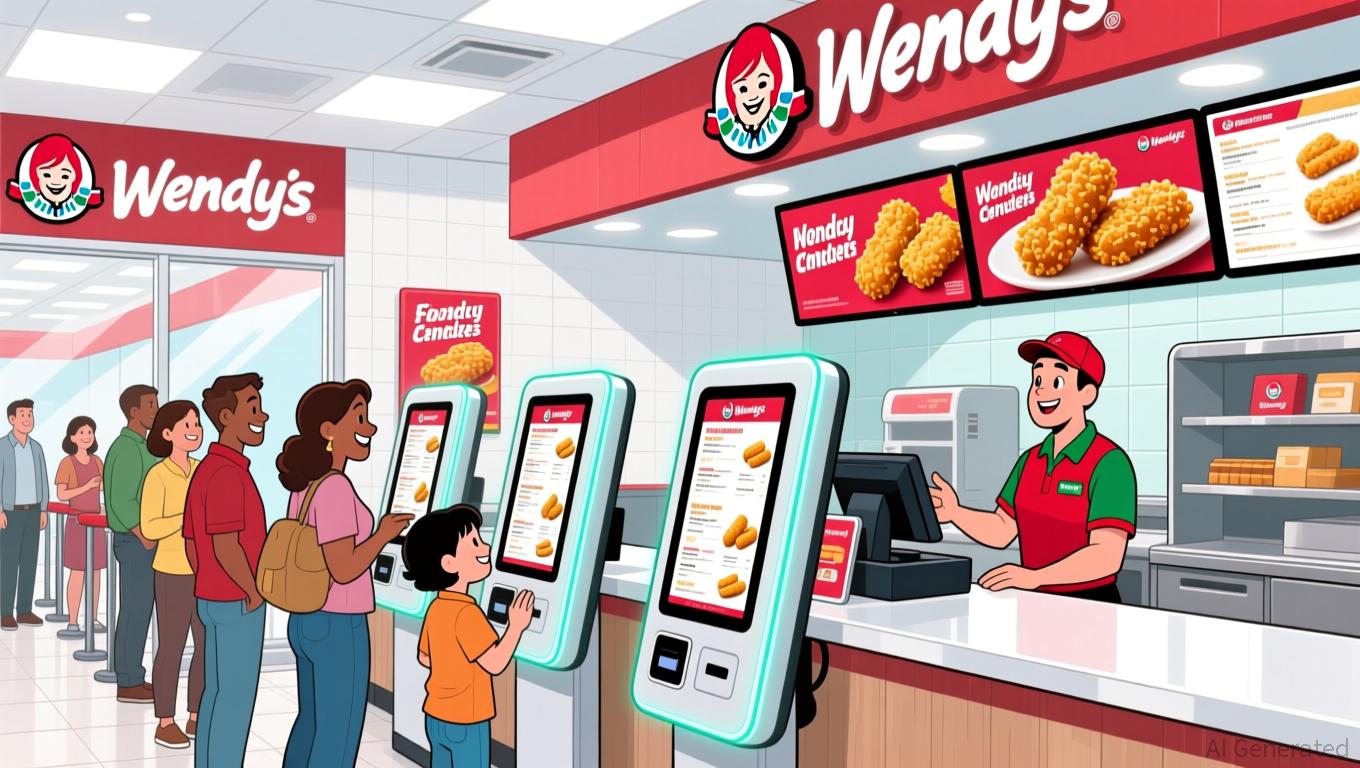
Wendy's (WEN) is speeding up a restructuring initiative that will see as many as 350 underperforming U.S. restaurants shuttered by 2026, with the goal of improving profits and channeling resources toward top-performing franchisees. Interim CEO Ken Cook explained that closing these locations—about a "mid single-digit percentage" of the brand’s 6,000 U.S. outlets—will allow franchisees to reinvest in more successful stores, a move expected to drive greater efficiency and boost sales at nearby restaurants
Financial results for the third quarter of 2025 highlighted the urgency of these changes. Net income fell by 12% to $44.25 million, impacted by slimmer margins at company-run U.S. locations, lower franchise royalty income, and increased asset write-downs
Analysts remain wary. RBC Capital Markets reduced its price target from $10 to $9, citing the anticipated closure of 300 U.S. stores and a projected 9.7% drop in advertising spending for 2026. The firm noted that lagging franchisee locations have weighed on sales, with company-owned outlets outperforming franchisees by 400 basis points in the third quarter
The closures reflect a broader strategic pivot. Cook revealed a shift toward growing average unit volume (AUV) rather than expanding the number of U.S. locations, cutting 2025 capital expenditures by $20 million and reallocating funds to digital improvements and marketing
Wendy's shares jumped 11.66% in pre-market trading after third-quarter results surpassed earnings and revenue expectations, though the stock is down 47% so far this year
Disclaimer: The content of this article solely reflects the author's opinion and does not represent the platform in any capacity. This article is not intended to serve as a reference for making investment decisions.
You may also like
Big Week Ahead: Ripple Heads to NYC With Wall Street Heavyweights

 VIPOil Risk Premiums and rToken Dividend Arbitrage Strategies
1. This week we focus on cross-asset positioning under an energy shock and arbitrage opportunities in tokenized-stock cash dividends. We recommend assessing market direction separately from income sources. Higher oil can weigh on growth valuations, lift inflation expectations, and spark expectations of Fed rate hikes, putting pressure on equities and crypto. 2. rToken net cash dividends can be distributed separately, but buying spot, shorting a perpetual, and holding across the record date does not automatically create an arbitrage. First confirm ex-dividend eligibility, platform snapshots, after-tax amounts, and the corporate-action rules for the short leg. Then compare funding fees, spreads, and execution costs. A dividend arbitrage strategy can be applied to STRC. 3. Next week's Fed decision and major technology earnings are key. Lower policy uncertainty can help restore risk appetite, but a sustained rebound still needs confirmation from rates, cloud growth, capital expenditure, and free cash flow. Our base case is a monthly-timeframe rebound in risk assets and crypto as earnings season, the Fed meeting, and the midterm elections pass and uncertainty recedes. Assets in focus: BTC, ETH, SOL, WTI, ASML, MSFT, GOOG, AMZN, CAT, and STRC

Goldman Sachs Names One Trade to Hedge an AI Market Shock

Big Tech Earnings Are a No-Win Test as Investors Punish Both Capex Cuts and Hikes

Crypto prices
More


