
Corporate power further intensifies the K-shaped split in the economy
- JPMorgan identifies a "K-shaped" U.S. economy with divergent income growth, stagnating for prime-age workers and declining for older cohorts. - Corporate dominance exemplified by Live Nation's antitrust case and Microsoft's governance scrutiny highlights systemic market imbalances. - Younger generations and low-income households adopt cautious spending habits amid weak labor markets and flat household cash balances. - Market fragmentation emerges as TSM shows strong investor confidence while crypto faces
America’s Uneven Economic Landscape
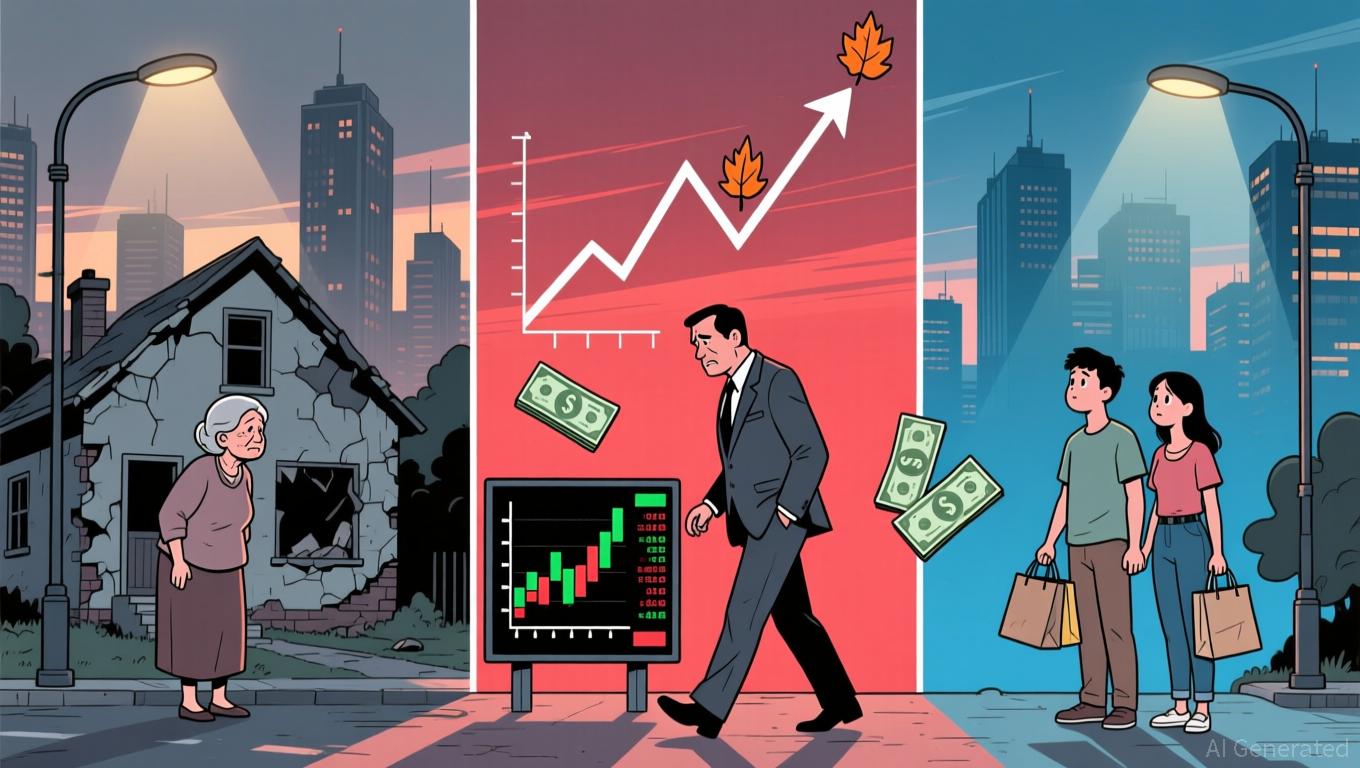
The U.S. economy is currently experiencing a split recovery, with growing frustration among younger people and those with lower incomes. This divide, often called a “K-shaped” recovery, means that while wealthier Americans are seeing different outcomes, many others are facing stagnant or even declining real incomes. Notably, workers in their prime earning years have seen little to no real income growth, and older employees are actually losing ground financially.
Stagnant Wages and Shifting Consumer Behavior
According to recent analysis from JPMorgan, the median real income for Americans aged 25 to 54 increased by just 1.6% as of October 2025—a rate similar to the sluggish job market of the early 2010s. Young adults, especially those between 25 and 29, are falling behind historical career growth trends, largely due to a slow hiring environment that limits opportunities for advancement. Older workers, particularly those aged 50 to 54, are seeing their real incomes decline, putting them in a vulnerable position unless they have significant assets in housing or stocks.
This financial pressure is leading to cautious spending habits, especially among Gen Z and lower-income consumers. Retail data from Black Friday shows mixed results, reflecting a shift toward more deliberate and necessity-driven purchases.
Corporate Power and Antitrust Scrutiny
Concerns over corporate dominance are intensifying. A recent federal court decision found that Live Nation and Ticketmaster’s control over ticket sales for Taylor Swift’s Eras Tour likely breached antitrust laws, allowing a class-action lawsuit to move forward. The company is also under investigation by the Department of Justice and several state attorneys general. Meanwhile, Norway’s massive sovereign wealth fund voted against Microsoft’s CEO retaining his chairmanship, signaling increased attention to corporate governance and its broader societal effects.
The “Age of Extraction” and Consumer Vulnerability
Commentator Tim Wu describes the current era as one marked by concentrated corporate power and weakened worker influence. JPMorgan’s findings highlight that, since early 2024, household cash reserves have remained flat, leaving families with little financial cushion. Corporate strategies that focus on maximizing profits—such as Live Nation’s ticket pricing and Microsoft’s leadership decisions—are contributing to this sense of economic imbalance.
Fragmented Markets and Technological Shifts
Market trends reveal a complex picture. Taiwan Semiconductor Manufacturing Co. (TSM) boasts a strong price-to-earnings ratio of 30.1, reflecting investor optimism about its technological edge. In contrast, cryptocurrency markets remain turbulent. Nvidia’s financial results and Bitcoin’s price swings are closely monitored, as blockchain activity rises and investors look for links between AI hardware demand and crypto trends. Meanwhile, Tether’s recent decision to halt mining in Uruguay due to high energy costs underscores the fragility of crypto infrastructure in the face of regulatory and economic pressures.
What Lies Ahead
Looking forward, both policymakers and investors are at a pivotal moment. The Justice Department’s antitrust case against Live Nation could transform the ticketing industry, while Norway’s approach to active ownership may encourage companies to better align with social values. For many households, the realities of a K-shaped economy mean adjusting expectations and focusing spending on essentials. As TSM’s valuation and the volatility in crypto markets show, financial landscapes remain highly sensitive to both technological advances and broader economic changes.
Disclaimer: The content of this article solely reflects the author's opinion and does not represent the platform in any capacity. This article is not intended to serve as a reference for making investment decisions.
You may also like
Big Week Ahead: Ripple Heads to NYC With Wall Street Heavyweights

 VIPOil Risk Premiums and rToken Dividend Arbitrage Strategies
1. This week we focus on cross-asset positioning under an energy shock and arbitrage opportunities in tokenized-stock cash dividends. We recommend assessing market direction separately from income sources. Higher oil can weigh on growth valuations, lift inflation expectations, and spark expectations of Fed rate hikes, putting pressure on equities and crypto. 2. rToken net cash dividends can be distributed separately, but buying spot, shorting a perpetual, and holding across the record date does not automatically create an arbitrage. First confirm ex-dividend eligibility, platform snapshots, after-tax amounts, and the corporate-action rules for the short leg. Then compare funding fees, spreads, and execution costs. A dividend arbitrage strategy can be applied to STRC. 3. Next week's Fed decision and major technology earnings are key. Lower policy uncertainty can help restore risk appetite, but a sustained rebound still needs confirmation from rates, cloud growth, capital expenditure, and free cash flow. Our base case is a monthly-timeframe rebound in risk assets and crypto as earnings season, the Fed meeting, and the midterm elections pass and uncertainty recedes. Assets in focus: BTC, ETH, SOL, WTI, ASML, MSFT, GOOG, AMZN, CAT, and STRC

Goldman Sachs Names One Trade to Hedge an AI Market Shock

Big Tech Earnings Are a No-Win Test as Investors Punish Both Capex Cuts and Hikes

Crypto prices
More


