
Can Bitcoin hold $62K ahead of Friday’s $1.4 billion options expiry?

Bitcoin (BTC) reclaimed the $63,000 mark on Thursday, but traders fear a correction ahead of Friday’s $1.4 billion options expiry on Deribit. The concerns stem from the US government bond yield climbing toward a level that many view as a warning sign. Is the $62,000 support level at risk?
Key takeaways:
- Rising US Treasury yields signal debt concerns, negatively pressuring risk assets.
- Balanced Bitcoin options put-to-call volumes suggest limited downside from the $62,000 level.
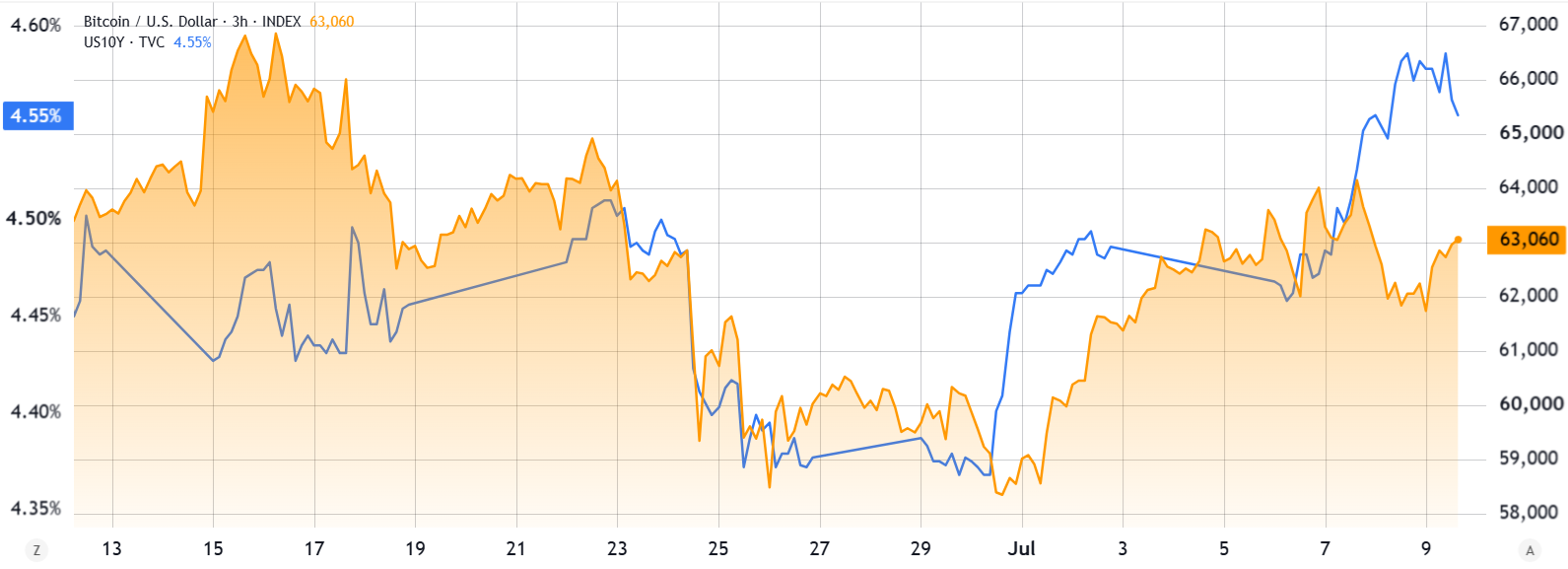
US 10-year Treasury yield (left) vs. Bitcoin/USD (right). Source: TradingView
Bitcoin ETF outflows are not a concern ahead of the Bitcoin options expiry
The 10-year Treasury yield’s approach to 4.6% signals investor anxiety over the expansion of US government debt and prospects for further monetary policy expansion to avert an economic recession. Bitcoin has felt the impact, trading sideways while the Nasdaq-100 Index sits merely 4% below its all-time high.
The AI sector's bullish momentum keeps pulling capital toward equities. Asian chipmaker SK Hynix oversubscribed IPO in the US helped push the sector higher on Thursday, led by Arm Holdings (ARM) 10% gains, Advanced Micro Devices (AMD) 7% rally and Micron’s 7% intraday gains.
Wednesday brought $85 million in net outflows from spot Bitcoin ETFs, ending a short three-day inflow run. Still, the figure does not confirm a reversal in institutional flows. More importantly, demand for Bitcoin options has stayed balanced between calls (buy) and puts (sell).
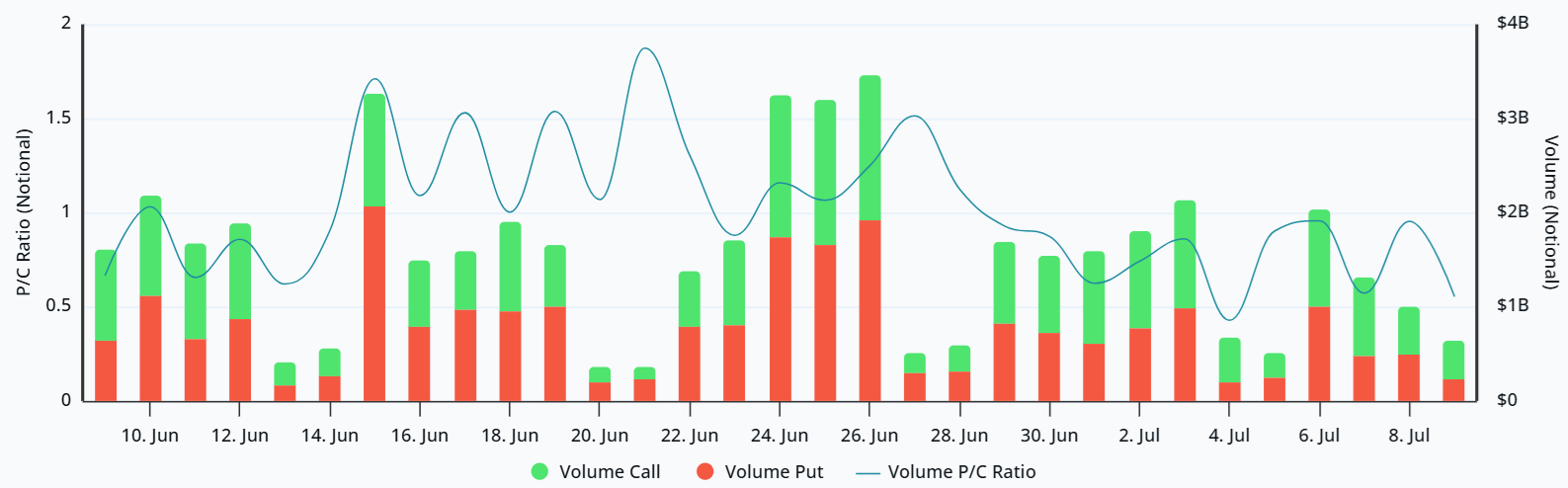
Bitcoin options put-to-call volumes ratio at Deribit. Source: Laevitas
Call options volume has outpaced put instruments over the past four days, reflecting reduced demand for downside movements. However, the upcoming weekly options expiry features an interesting setup as calls up to $62,500 total $137 million, while puts above $61,000 are at $121 million.
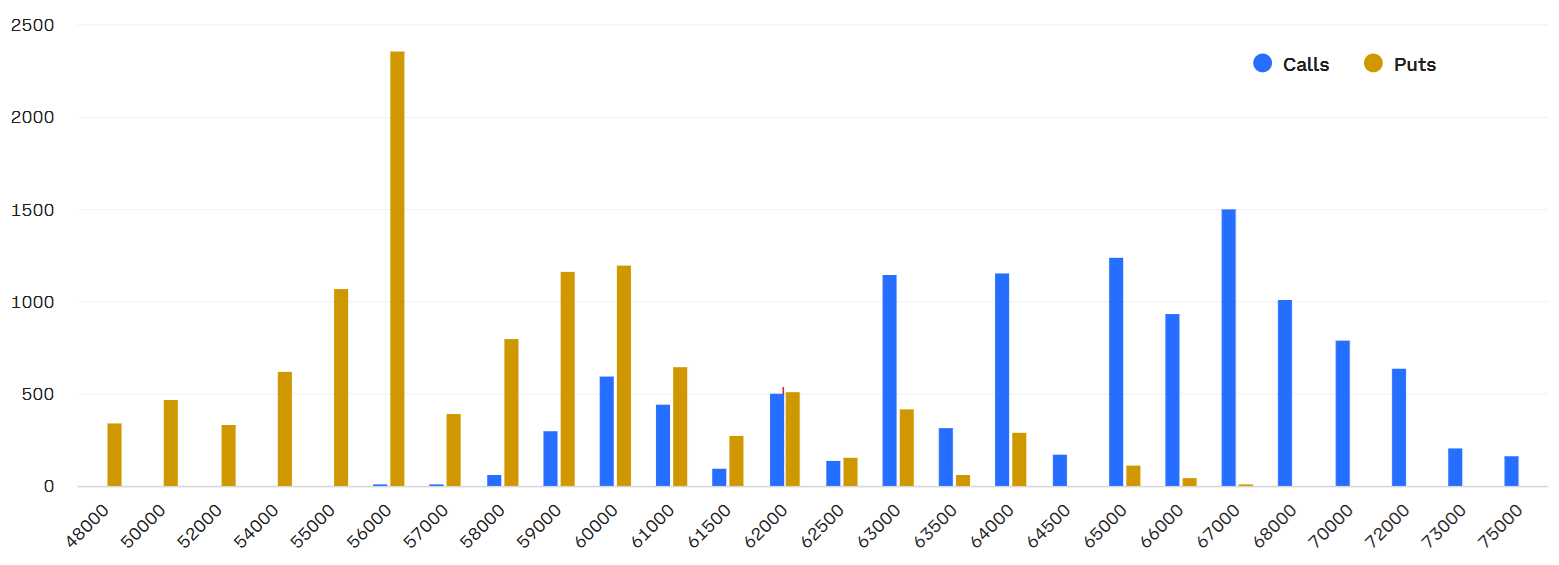
Deribit BTC options open interest for July 10, BTC. Source: Deribit
Bitcoin bulls would gain significant ground with a move above $63,500 by the 8:00 AM UTC expiry on Friday, boosting their advantage to $190 million. Bears hold a smaller $100 million edge below $61,000, limiting their incentive without additional catalysts.
Oil price decline could strengthen the demand for risk-on assets
A temporary truce in the Middle East could ease recession fears and shift money from fixed income into risk markets, likely pushing Bitcoin price higher. In contrast, continued strength in the AI sector drains capital from other investments while traders fear large Treasury issuance to cover growing debt.
Related: Bitcoin peels back to $62K as Fed-wary futures traders cut risk: Is the BTC rally over?
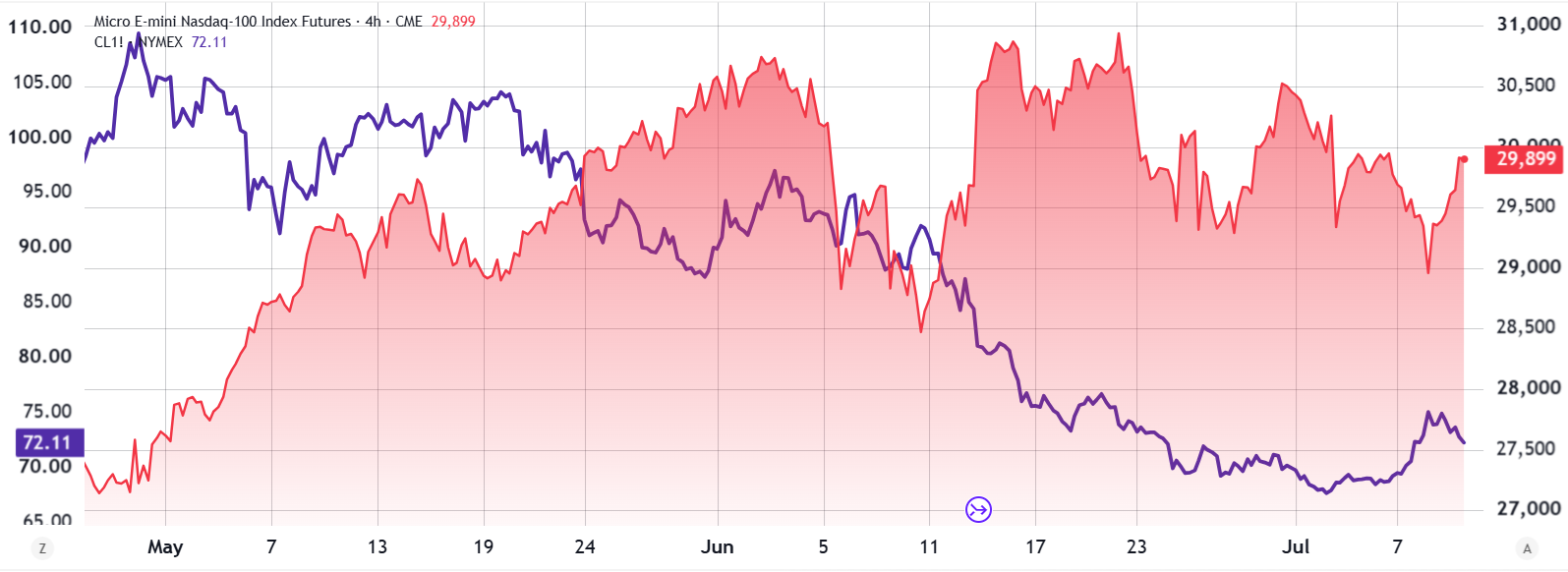
Crude WTI oil futures (left) vs. Nasdaq 100 Index futures (right). Source: TradingView
Traders should closely monitor whether Treasury yields will subside over the next week and if an aggravated war in Iran pushes oil prices higher. But with Bitcoin put options buying remaining restrained in recent sessions, the market appears positioned to strengthen the $62,000 support level.
Bitcoin sits in a delicate spot where a successful expiry resolution above $63,500 could provide short-term relief, but sustained upward momentum would require a boost from the macro side. As long as these dynamics persist, the odds favor limited bullish momentum for Bitcoin in the near term.
Disclaimer: The content of this article solely reflects the author's opinion and does not represent the platform in any capacity. This article is not intended to serve as a reference for making investment decisions.
You may also like
Silver price retreats as rising US yields, Hormuz tensions bolster US Dollar

U.S. August JOLTS job openings fall to a 5-month low, missing expectations for the third consecutive month
In August, job openings in the United States fell to 7.079 million, below economists' expectations of 7.228 million. Job vacancies in the real estate and rental sector were only 50,000, nearly halved from the previous month. The quit rate remained at 1.9%, matching the lowest level since 2020. The ratio of job vacancies to unemployed persons dropped to 1.0. Analysts have noted that net hires implied by the JOLTS report have been lower than the nonfarm payroll report for three consecutive months, indicating a significant downside risk for this Friday’s nonfarm payroll data.
CLARITY Vote Wasn’t the End: 5 Altcoins to Watch Before the Next Crypto Catalyst

AI Predicts Bitcoin Path as Strategy Moves 3,568 Coins
Crypto prices
More


