
AI development slows down and oil prices soar; Japanese and Korean chip stocks are hit first, SK Hynix drops over 5%, SoftBank plunges 11%

AI giants jointly call for slowing the pace of cutting-edge model development, compounded by surging oil prices reigniting inflation concerns, causing Asian stock markets to open under pressure on Monday.
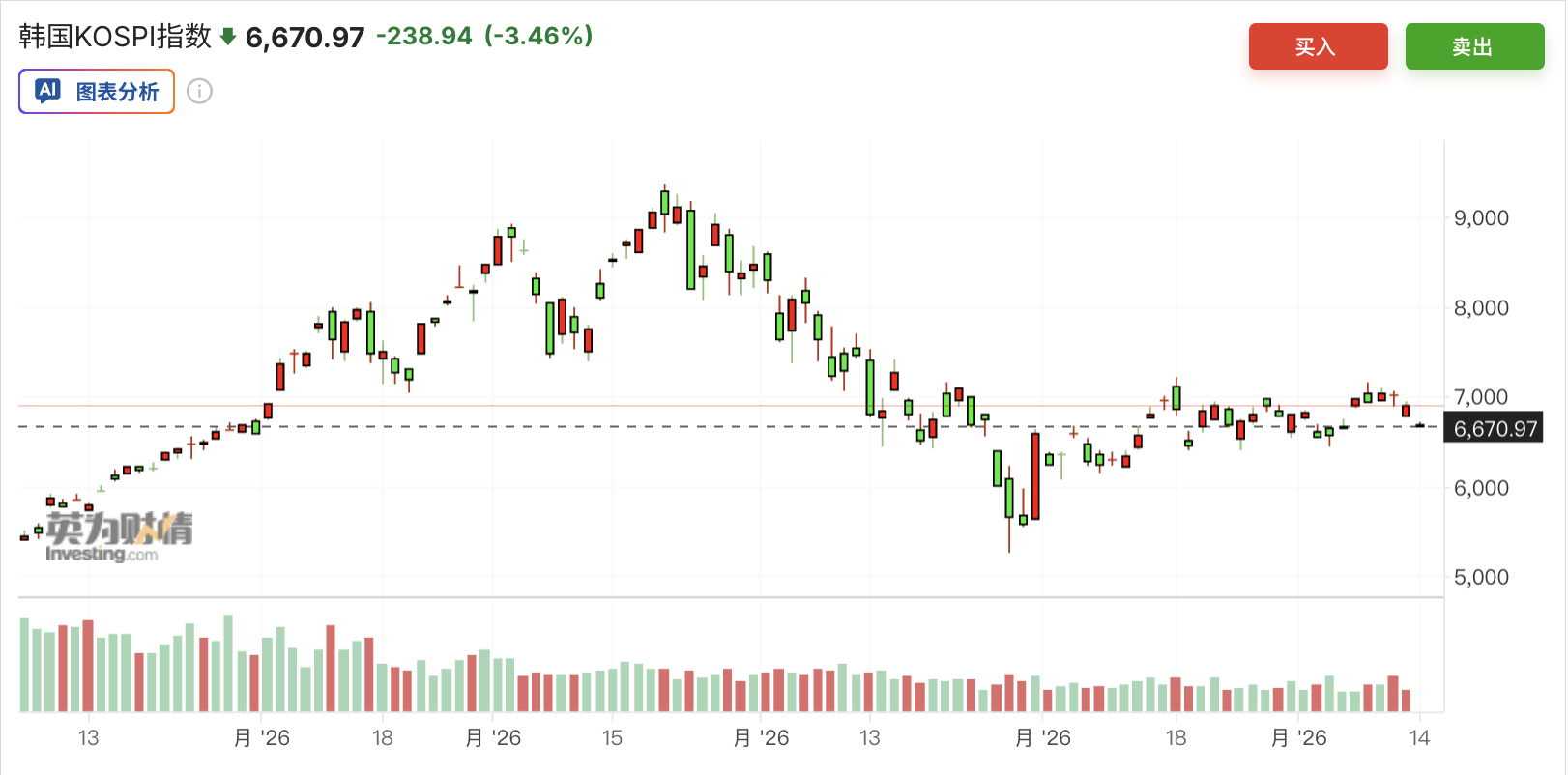
South Korea's KOSPI index dropped over 3%, SK Hynix fell more than 5%, and Samsung Electronics slid over 3%. As the primary beneficiaries of the AI boom, South Korean and Japanese chip stocks bore the brunt.
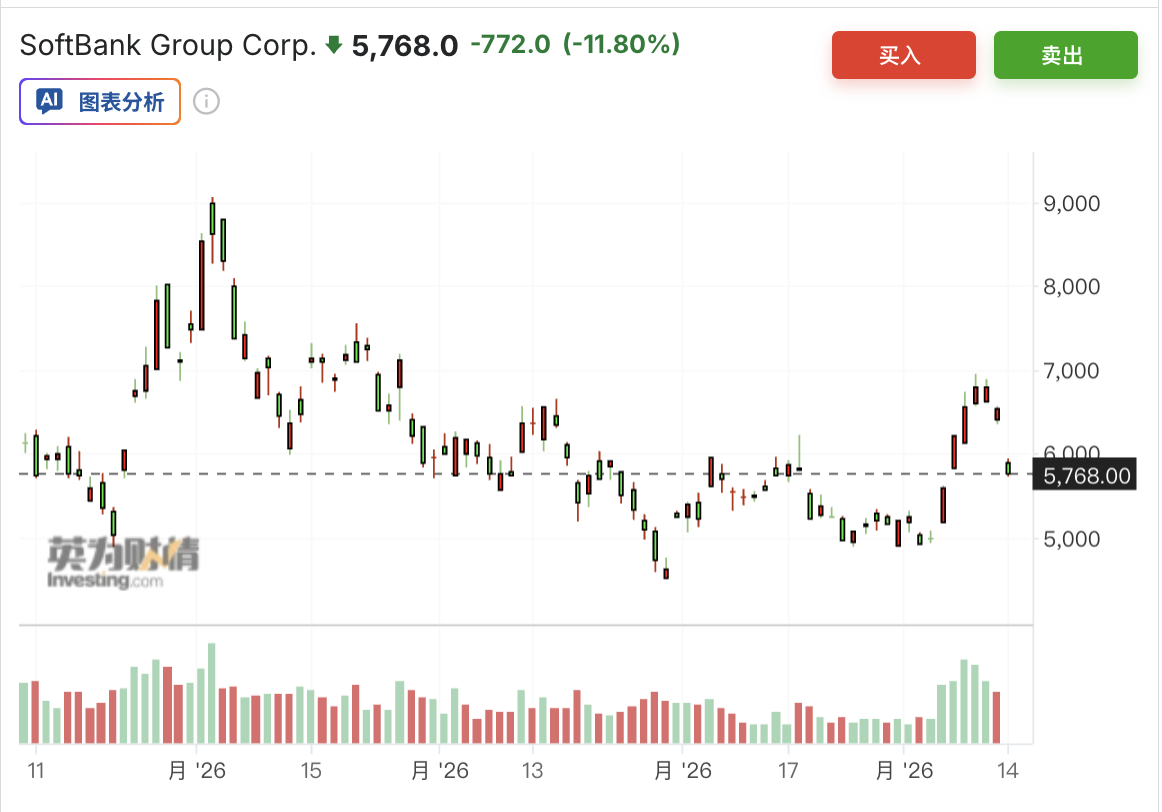
The Nikkei 225 index opened down 0.6%, with losses later expanding to 2%. SoftBank's share price plunged 11%.
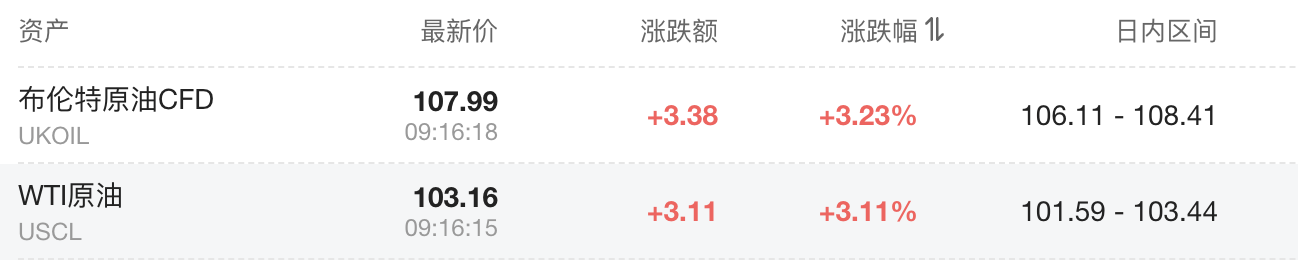
Meanwhile, Brent crude rose more than 3% to $107.99 per barrel, as Saudi Arabia shut down a key pipeline and Oman postponed a meeting originally scheduled for the 14th with Iran and other countries, triggering a sudden surge in the energy market and further escalating concerns about inflation prospects.
Nasdaq 100 index futures fell over 1%, while S&P 500 futures dropped 0.6%. Markets face multiple tests this week: the Federal Reserve will announce its interest rate decision on Wednesday, with swap markets currently pricing in a probability of over 90% for a rate hike; the Bank of England and the Bank of Japan will also release their policy decisions in succession. The three major central bank decisions could reshape the global monetary policy landscape for the remainder of 2026 and possibly longer.
AI Giants Jointly Call for a Slowdown, Chip Stocks Under Pressure
On Saturday, Anthropic CEO Dario Amodei stated that the company will introduce additional safety guarantees such as independent third-party evaluations and called on the entire industry to voluntarily slow development of the most advanced models. OpenAI CEO Sam Altman immediately voiced his support, and xAI’s Elon Musk also commented, “Dario is right.”
The rare consensus among the three major AI leaders has prompted concerns in the market about the sector that has driven this year's equity rallies. Nick Twidale, Chief Market Analyst at AT Global Markets in Sydney, said: "As investors assess the impact of these strategic shifts by top AI companies on valuations, the start of this week could be quite turbulent. Large Asian tech firms supporting these AI giants’ supply chains are likely to feel the impact first."
However, some market participants believe this shock is mainly emotional. Kerry Craig, Global Market Strategist at JPMorgan Asset Management, noted: “Unless the need to slow development actually transforms into lowered capital expenditure guidance or delayed model releases, this is more likely to be sentiment-driven rather than valuation or profit-driven.”
In corporate news, sources indicate Anthropic has selected Nasdaq as the listing venue for its potential record-breaking IPO. Sam Altman stated that OpenAI will not proceed with IPO plans this year, as the company is currently focused on resolving AI safety issues.
Oil Prices Surge, Reviving Inflation Worries and Raising Fed Hike Expectations
Sudden changes in the energy market have added further pressure. Saudi Arabia shut down a key oil pipeline following a drone attack, and a meeting between Iran and Gulf states was postponed. Brent crude rose 2.8% to $107.55 per barrel, while U.S. West Texas Intermediate (WTI) crude rose 2.5% to $102.51 per barrel, pushing oil prices back above $100.
Surging oil prices echoed the U.S. inflation data released last Friday. According to the U.S. Bureau of Labor Statistics, in August, core CPI excluding food and energy rose 0.3% month-on-month and 2.4% year-on-year; overall CPI rose 0.4% month-on-month and 3.4% year-on-year, both beating expectations.
The inflation data drove U.S. Treasury yields higher. The 2-year Treasury yield rose 4 basis points last Friday, while the 10-year yield approached the critical 5% level, now at 4.95%. Swap market pricing indicates the probability of a Fed hike on Wednesday has risen above 90%.
Martin Whetton, Head of Financial Markets Strategy at Westpac Banking Corp, said: "The expectation for a rate hike at the September FOMC meeting is very clear, with market pricing at 90%. After the CPI data release on Friday, Treasury yields rose across the board, and Asia’s fixed income market will remain dominated by this today."
Analysts point out that with oil prices back above $100 and renewed Middle East tensions, global inflationary pressures will be hard to alleviate, leaving little room for the respite that policymakers desire and likely keeping borrowing costs elevated for longer.
Disclaimer: The content of this article solely reflects the author's opinion and does not represent the platform in any capacity. This article is not intended to serve as a reference for making investment decisions.
You may also like
Pi Network Price Prediction: Can PI Hold Its Wedge Breakout Before the Upgrade?
As AI controversies escalate, hedge funds buy tech stocks at the fastest pace in 15 months
Hedge funds have recorded net purchases of US TMT stocks on 10 out of the past 11 trading days, rebuilding tech long positions at the fastest pace in 15 months. However, an AI policy storm has struck at the "worst possible time"—calls by AI giants to slow down development have been rejected, and regulatory uncertainty has directly hit Asian tech stocks such as Softbank. As the tech sector's bullish run coincides with Super Central Bank Week, the sector now faces a severe test.
Apple Pre-sale Tracker: iPhone 18 Pro Series Shows Weak Overseas Demand Signals, Duo Review Positive but Hardware Lags Behind
According to a survey by Jefferies, after the launch of the iPhone 18 Pro, delivery wait times in the four major markets—the US, UK, Germany, and Japan—have shortened by 5 to 11 days compared to last year, with no wait time in the US. Given stable production capacity, this is a clear sign of weak demand. Although the China and Hong Kong markets have performed better against the trend, there are still suspicions of speculative stockpiling. The new foldable Duo has been praised for its software experience, but its $2,000 price tag comes with a 254-gram body and dual-camera setup, leaving its hardware lagging significantly behind Android competitors. Jefferies maintains an "underperform" rating, with a target price implying a 21% downside from the current level.
SUI holds $0.71 support as analysts cite key buy signal, eyes on possible recovery
Crypto prices
More


