

XRP and XLM have entered crucial price ranges that could influence their short-term direction after a broad cryptocurrency market downturn driven by recent US inflation data and changing expectations around the Federal Reserve’s monetary policy decisions.
XRP and XLM approach key support as inflation data and Fed outlook weigh on crypto
By:Cointurk
Bitget offers one-stop trading for cryptocurrencies, stocks, and gold. Trade now!
A welcome pack worth 6200 USDT for new users! Sign up now!
Market decline follows US inflation release
XRP traded near $1.32, registering a 5.13% decline over 24 hours, while XLM fell 4.54%. Financial analyst Tyler Hill noted that this market weakness extended well beyond these tokens. Major cryptocurrencies such as Bitcoin, Ethereum, BNB, Solana, Tron, and Dogecoin also experienced losses, and Zcash dropped approximately 11% during the session covered.
The investor retreat came on the heels of the latest US Producer Price Index report, which arrived in line with Wall Street estimates. According to Hill, many traders had positioned for a softer print, which could have lowered the chances of a Federal Reserve interest rate increase at the upcoming FOMC gathering.
Instead, the released figures supported the expectation that the central bank may keep a tighter monetary posture. In Hill’s view, broader markets are now responding to the possibility of a Fed move to constrain liquidity, which triggered a widespread downturn across equities and cryptocurrencies alike.
Amid the volatile climate, Hill observed, “The whole entire market is now factoring in a potential Fed move to constrain liquidity,” pointing to red numbers flashing across major asset classes.
Upcoming catalysts could tip direction
Despite the recent losses, several factors could still influence market sentiment over the next week. Key events include the Consumer Price Index data release on Friday, a reported Clarity Act vote on Tuesday, and the highly anticipated FOMC meeting on Wednesday. Hill characterized the current setup as especially uncertain, noting that the market’s response remains tough to predict given the multiplicity of variables at play.
XRP is currently testing a crucial region between $1.31 and $1.34. Hill explained that if the price rebounds from this range, especially with renewed bullish divergence supporting the move, XRP could target resistance around $1.50 and potentially higher. Conversely, a decisive move below this area could push XRP down to a “golden zone” between $1.22 and $1.11, implying a decline of 10% to 18% from current marks. Hill described the token’s technical position as being “on the edge of a cliff,” stating that the next 24 to 48 hours are critical for its near-term outlook.
Hill interprets both XRP and XLM as demonstrating healthier support behavior compared with previous broad bear market selloffs, but cautions that resilience depends on these levels remaining intact against a backdrop of evolving inflation data and regulatory decisions.
XLM follows a parallel trajectory
Meanwhile, XLM confronts its own make-or-break range between $0.175 and $0.171. Should this liquidity zone provide sufficient support, Hill sees potential for a recovery move up to $0.195. However, a clear breach could expose the token to further downside, with secondary support expected between $0.165 and $0.15.
This period of technical decisiveness comes as the digital asset ecosystem undergoes a fundamental transformation. While traditional investment markets often depend on intermediaries and complex broker systems, platforms like 1stepSwap now allow investors to hold tokenized shares of major US companies, gold, and silver directly in their crypto wallets. By enabling real-world asset tokenization and instant price discovery across markets, this shift is rapidly removing middlemen from the equation.
Many market participants continue to monitor macroeconomic indicators closely, given their impact on both digital asset and conventional finance sectors. How XRP and XLM react around these major support zones, as well as the outcome of upcoming economic events, may set the tone for their recovery or further decline in the weeks ahead.
0
0
Disclaimer: The content of this article solely reflects the author's opinion and does not represent the platform in any capacity. This article is not intended to serve as a reference for making investment decisions.
Understand the market, then trade.
Bitget offers one-stop trading for cryptocurrencies, stocks, and gold.
Trade now!
You may also like
AI development slowdown combined with surging oil prices hit Japanese and Korean chip stocks first, SK Hynix falls more than 5%, SoftBank plunges 11%
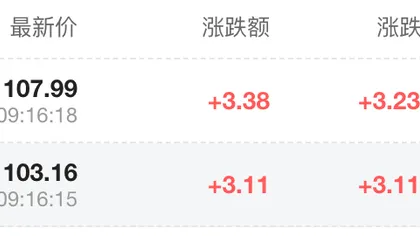
AI giants have made a rare joint call to slow down the development of advanced models. The South Korean and Japanese stock markets have declined, with the Seoul Composite Index falling over 3% and the Nikkei 225 Index dropping more than 2%. SoftBank plunged 11% in a single day, while SK Hynix dropped over 5%. Meanwhile, Saudi Arabia has shut down oil pipelines, pushing Brent crude prices up to $107. Combined with the US CPI exceeding expectations, the probability of a Fed rate hike on Wednesday is now over 90%. The double whammy has led to a turbulent opening for Asian markets.
华尔街见闻•2026/09/14 01:31
ASIC and optical interconnects drive high-speed growth! Bank of America strongly supports the soaring Marvell (MRVL.US), claiming there's still 55% upside potential
Bank of America maintains its $365 price target for Marvell, citing its focus on expanding revenue per AI system through custom AI accelerators (i.e., AI ASIC/XPU) and supporting optical interconnect chips, driven by massive demand for AI agents. Compared to the September 11 closing price of $236.10, this target implies a potential upside of approximately 54.6%.
智通财经•2026/09/14 01:26

Crypto prices
More
Bitcoin
BTC
$76,816.72
-0.53%

Ethereum
ETH
$2,483.14
-1.61%

Tether USDt
USDT
$0.9995
-0.02%

BNB
BNB
$716.7
-1.73%

XRP
XRP
$1.34
-1.63%

USDC
USDC
$0.9999
+0.02%

Solana
SOL
$99.59
-2.37%

TRON
TRX
$0.3385
-0.52%

Hyperliquid
HYPE
$77.88
-1.88%

Zcash
ZEC
$1,061.45
-6.06%
How to buy BTC
Bitget lists BTC – Buy or sell BTC quickly on Bitget!
Trade now
Become a trader now?A welcome pack worth 6200 USDT for new users!
Sign up now